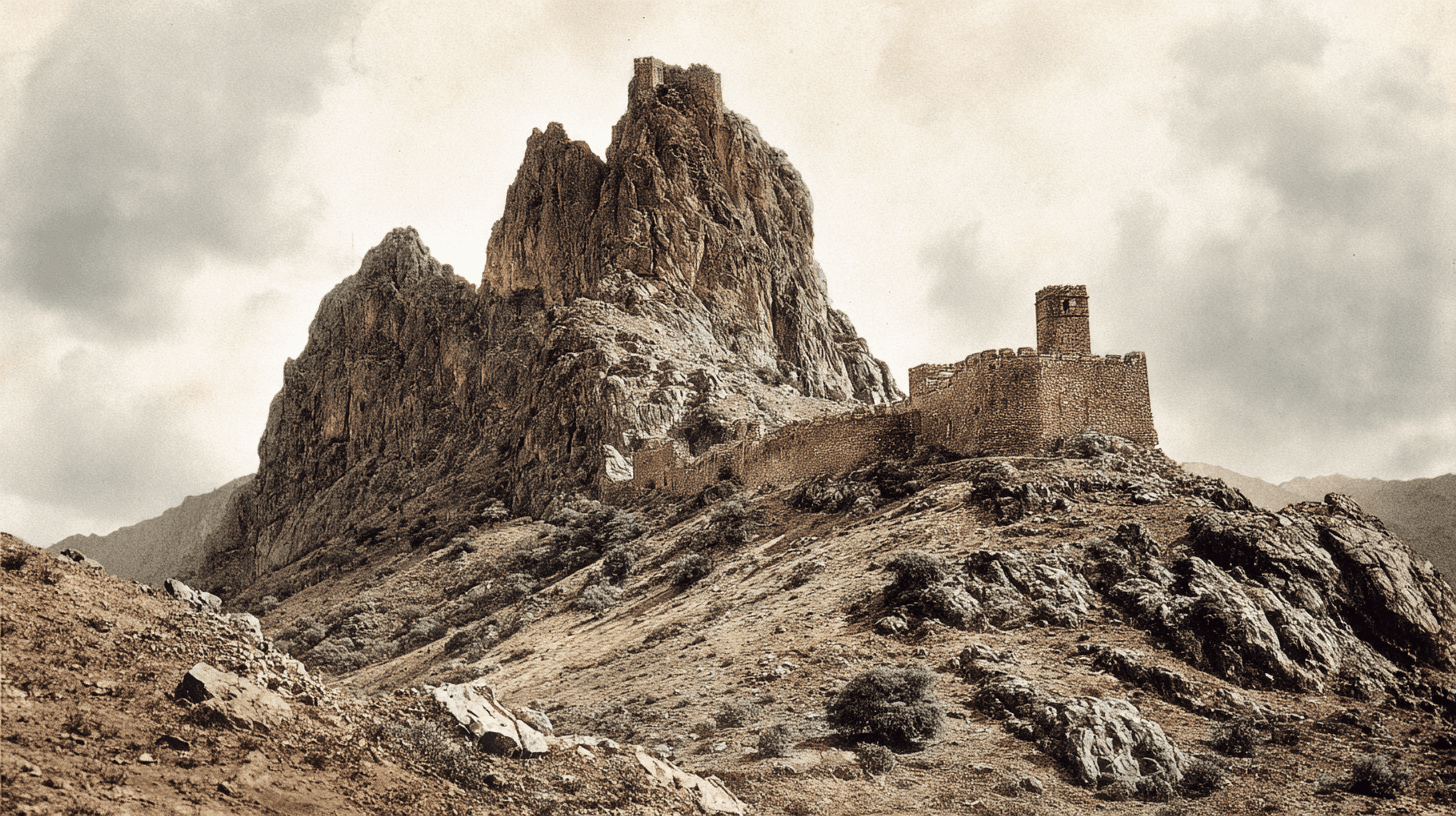
The American Hostage
A Moroccan bandit kidnapped an American millionaire. Teddy Roosevelt sent warships.
The telegram arrived during the Republican National Convention.
Ion Perdicaris, a wealthy Greek-American living in a Tangier villa, had been kidnapped from his home by Ahmed al-Raisuni, a Berber chieftain who controlled the mountains outside the city. Raisuni wanted money, prisoners released, and recognition of his authority over the Rif. He was holding an American citizen to get it.
President Theodore Roosevelt saw opportunity.
"This government wants Perdicaris alive or Raisuni dead," Roosevelt cabled, and made sure the press got the quote. He dispatched seven warships to Tangier harbor. The Atlantic Fleet sat offshore, guns pointed at the medina. The message was clear: America protects its own.
The convention went wild. Roosevelt won the nomination. The slogan played perfectly — tough, decisive, American. There was just one problem: Perdicaris wasn't actually American. He'd quietly renounced his citizenship during the Civil War to avoid conscription and protect his Southern business interests. Roosevelt knew this. He sent the warships anyway.
Raisuni was more complicated too. He wasn't just a bandit — he was a political player, a sharif (descendant of the Prophet) who saw himself as fighting a corrupt sultan and creeping European colonization. The kidnapping was theater, designed to embarrass the Moroccan government and force negotiations. It worked. The Sultan paid the ransom and met most of Raisuni's demands. Perdicaris was released unharmed, having rather enjoyed his captivity. He and Raisuni apparently got along well.
Everyone got what they wanted. Roosevelt got his slogan and his presidency. Raisuni got money, power, and fame. Perdicaris got a story. The Sultan got humiliated — which is exactly what Raisuni intended.
The whole affair was later made into a film: "The Wind and the Lion" (1975), with Sean Connery as Raisuni and Candice Bergen as a fictionalized Perdicaris. The film made Raisuni a romantic hero. The real man was more ambiguous — charming, brutal, eventually captured by the Spanish and left to die in a cage.
The warships sailed home. The hostage went back to his villa. America had announced itself on the world stage, over a man who wasn't even American, against a bandit who was also a revolutionary, in a crisis that was mostly theater.
Welcome to Morocco.
The Facts
- •Ion Perdicaris was kidnapped May 18, 1904
- •Roosevelt's 'Perdicaris alive or Raisuli dead' cable was sent June 22, 1904
- •Perdicaris had secretly renounced US citizenship in 1862
- •Seven US warships were sent to Tangier
- •Raisuni received approximately $70,000 ransom
- •'The Wind and the Lion' (1975) heavily fictionalized the story
- •Raisuni died in Spanish captivity in 1925
Sources
- Tuchman, Barbara. 'Perdicaris Alive or Raisuli Dead.' American Heritage
- Rogerson, Barnaby. 'The Last Storytellers.' Eland
- State Department archives, 1904