The Perfume of the Lion
In 1832, Delacroix became the first European to paint a Moroccan harem. He had to sketch in secret.
He wasn't supposed to be there.
Eugène Delacroix came to Morocco in 1832 as part of a French diplomatic mission to Sultan Moulay Abd al-Rahman. He was thirty-three years old, already famous in Paris for his violent, colorful canvases. He expected exoticism. He found something else: a living antiquity.
"The Greeks and Romans are here at my door," he wrote home. "I have laughed at the Greeks of David, except for the sublime one he had in his heart."
The light, the color, the people — everything overwhelmed him. He sketched constantly, filling notebooks with street scenes, costumes, horses, architecture. But he wanted more. He wanted inside.
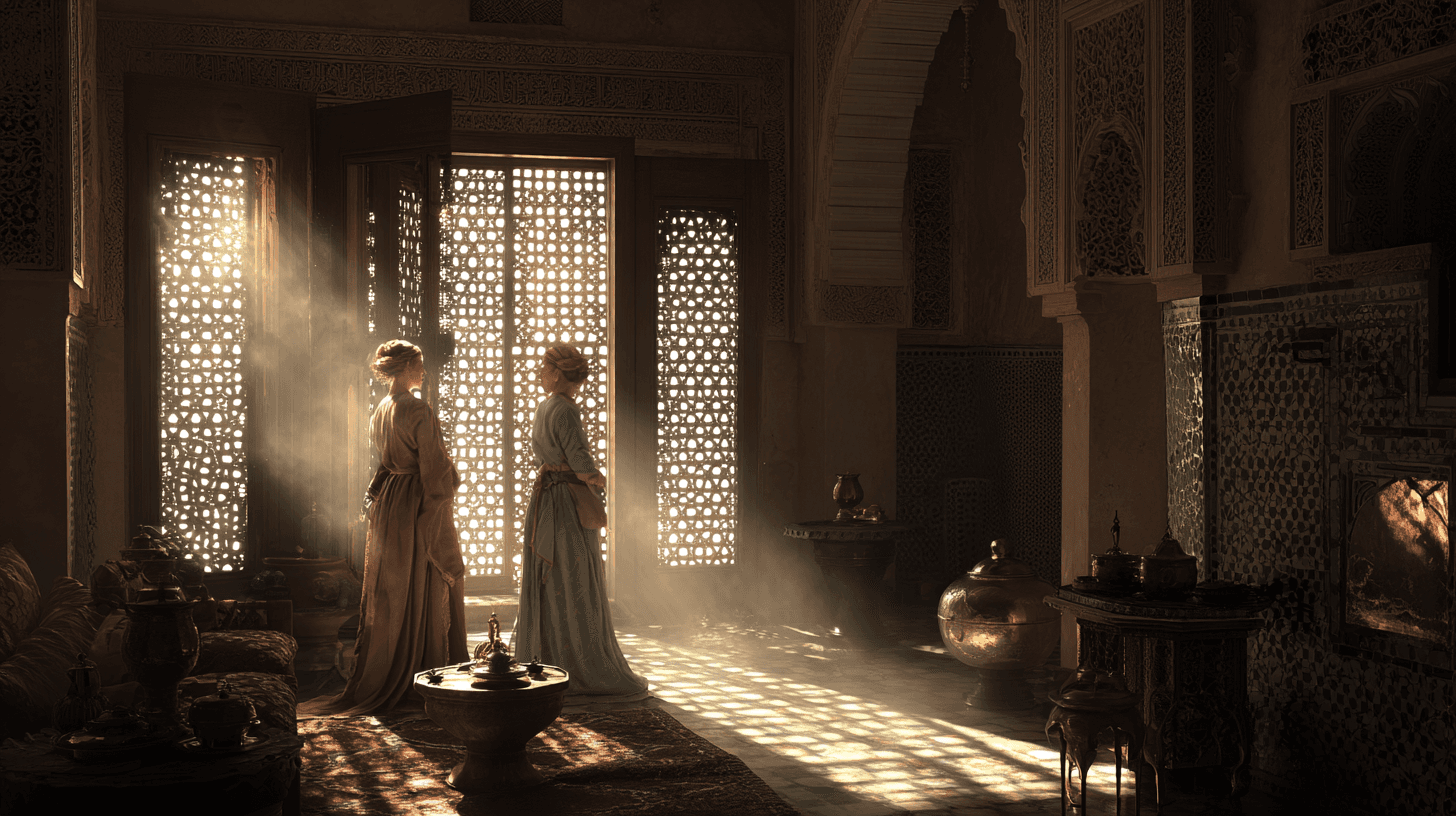
Through a connection of the French consul, Delacroix gained access to a harem in Algiers — the private women's quarters of a Muslim household. No European painter had ever documented this world. It was forbidden, intimate, and explosive.
He couldn't paint openly. He drew in secret, quick sketches hidden in his notebook. He memorized. He inhaled — later describing the experience as intoxicating, overwhelming, almost unbearable in its sensory richness. "It is a place painted for artists," he wrote. "It is beautiful. It is like Homer's time."
He stayed only hours. The paintings took years.
"Women of Algiers in their Apartment" wasn't finished until 1834, two years after his trip. He returned to the subject again and again for three decades, painting variations from memory and imagination. The images defined Western fantasy about North Africa: languid women, rich fabrics, filtered light, erotic mystery.
The paintings were both revolutionary and problematic. They broke European art's classical obsession, opening the door to color, light, and the "exotic" that would influence Impressionism. They also fixed the harem in Western imagination as a space of Oriental fantasy — a vision that says more about European desire than Moroccan reality.
Delacroix never returned to Morocco. He didn't need to. He spent the rest of his life painting what he'd seen in six months.
"This journey will be useful to me the rest of my days," he wrote. He was right.
The Facts
- •Delacroix visited Morocco January-July 1832
- •He was part of a diplomatic mission to Sultan Moulay Abd al-Rahman
- •He filled seven notebooks with sketches
- •'Women of Algiers in their Apartment' was completed in 1834
- •The harem visit actually occurred in Algiers, not Morocco
- •Picasso later painted 15 variations of 'Women of Algiers'
- •Delacroix's Morocco journals were published posthumously
Sources
- Jobert, Barthélémy. 'Delacroix.' Princeton University Press
- Delacroix, Eugène. 'Journal.' Plon
- Thornton, Lynne. 'The Orientalists.' ACR Edition