The Magician from Memphis
The American who saved Moroccan craftsmanship
Both his parents were dead before he turned twenty.
Bill Willis blew his inheritance on a trip to Europe, studied at the École des Beaux-Arts in Paris, opened an antiques shop near the Spanish Steps in Rome that "dazzled for a moment," and landed in Morocco in 1966 to attend the wedding of his friends Paul and Talitha Getty. He never left.
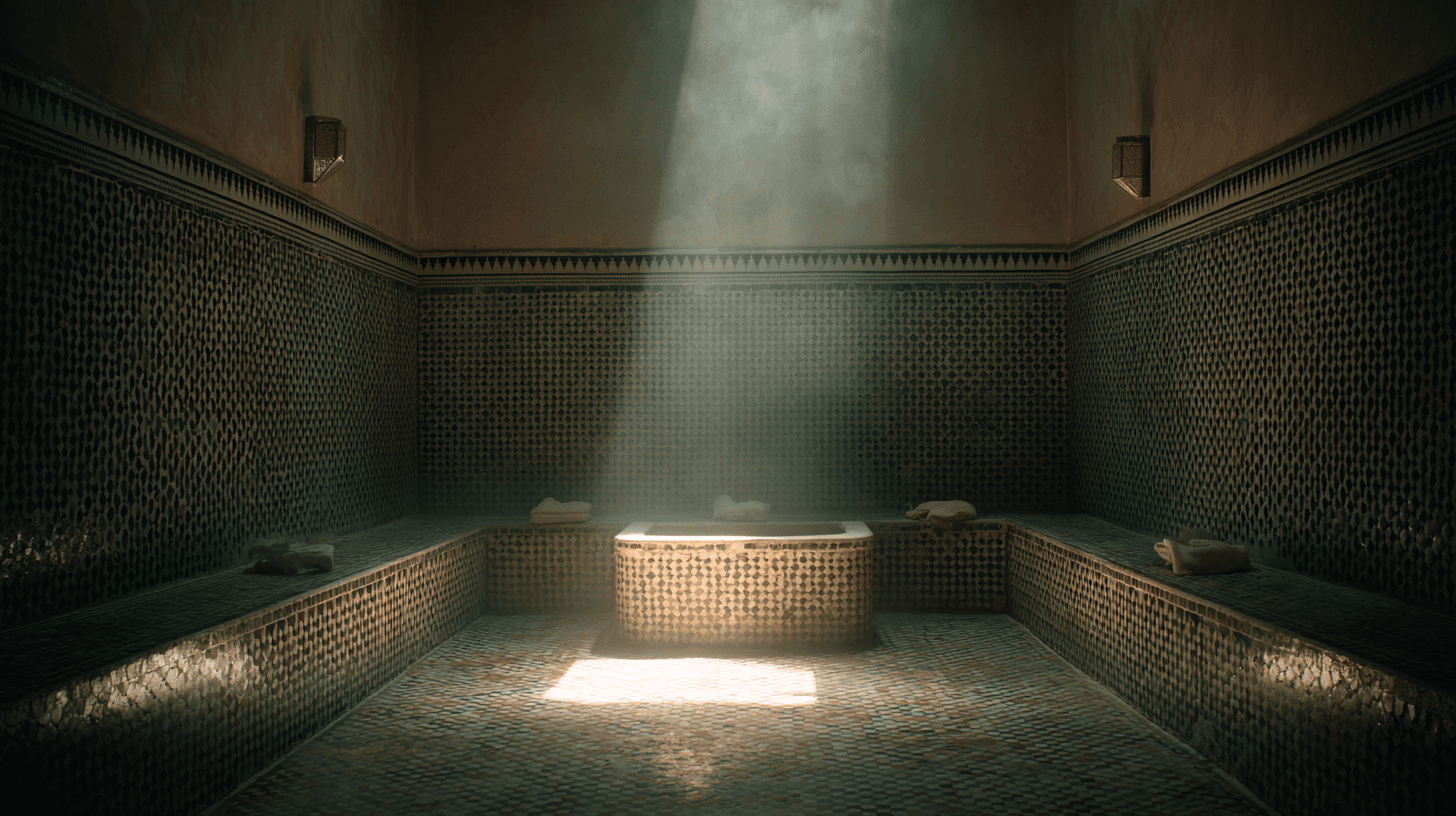
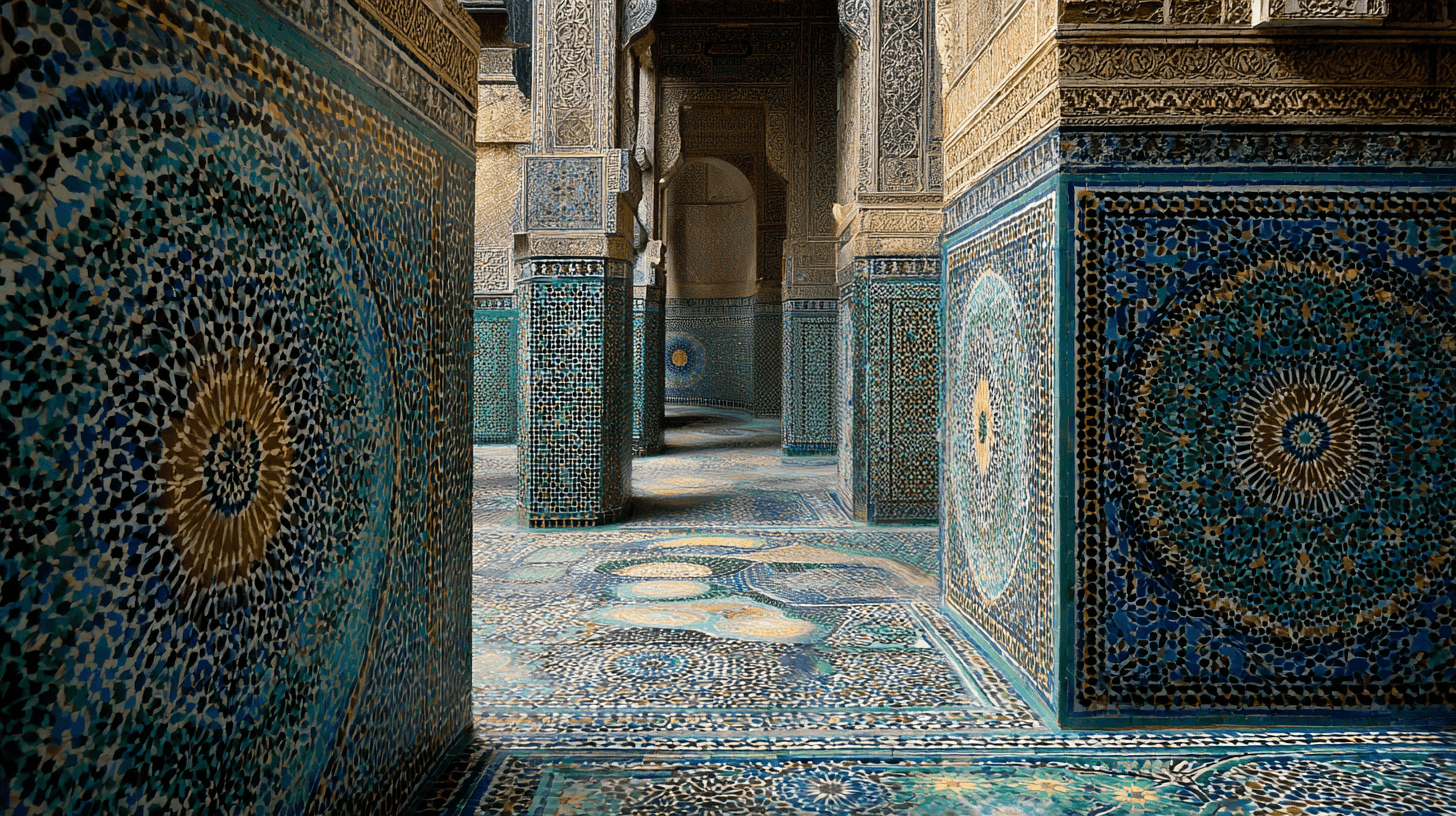
The Gettys had bought a ruined eighteenth-century palace called the Palais de la Zahia for $10,000 and asked Willis to make it livable. He wandered the medina, following sounds of hammering and scraping, discovering craftsmen still working with skills that dated to medieval times. One maalem — master craftsman — named Houman opened every door for him: workers skilled in zellige (glazed tile mosaic), gebs (carved white plaster), tadelakt (the polished waterproof plaster traditionally used in hammams), and mashrabiya (intricately carved cedar screens).
Willis didn't copy tradition. He reinvented it.
He took tadelakt out of the bathhouse and put it on living room walls. He commissioned zellige patterns no one had seen before. He designed fireplaces and staircases and vaulted ceilings that felt both ancient and modern — "as if the Alhambra had been decorated by a Bauhaus graduate," one observer noted.
Morocco had nearly forgotten its own architectural vocabulary. Willis remembered it for them.
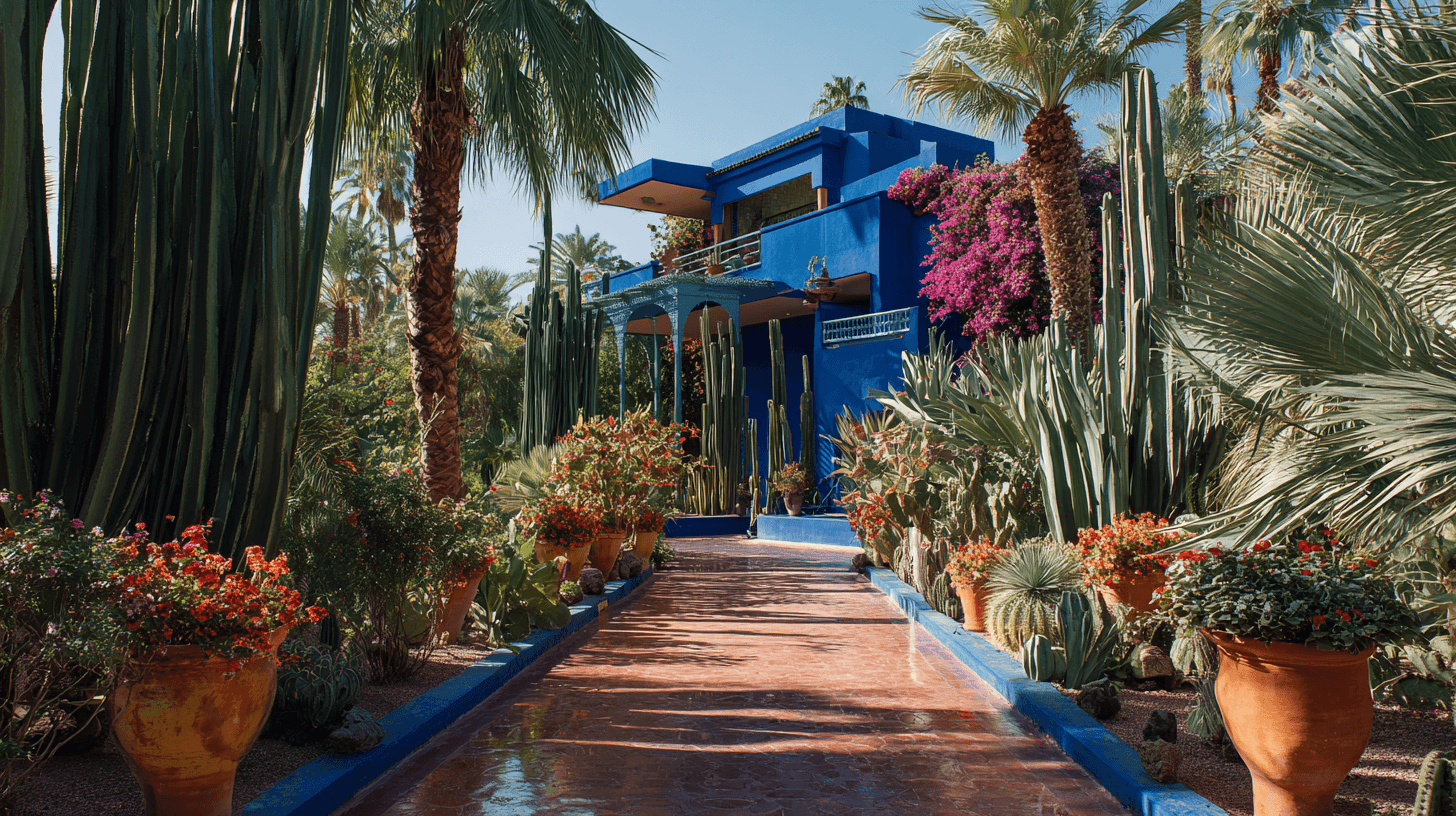
His client list read like a social register of the twentieth century: the Gettys (three times — he redecorated the Palais de la Zahia after each successive sale), the Rothschilds, the Agnellis, Yves Saint Laurent and Pierre Bergé (two houses, including the Villa Oasis beside the Jardin Majorelle). He designed Dar Yacout, the theatrical restaurant that became a Marrakech landmark. He designed La Trattoria. He designed the museum at the Jardin Majorelle.
In 2004, Kathy Kriger — the former diplomat building Rick's Café — came to him for the interior. He was seventy-one and not working much anymore, but he took the job. The curved arches, the tadelakt walls, the careful balance of Moroccan craft and Art Deco glamour — that's Willis.
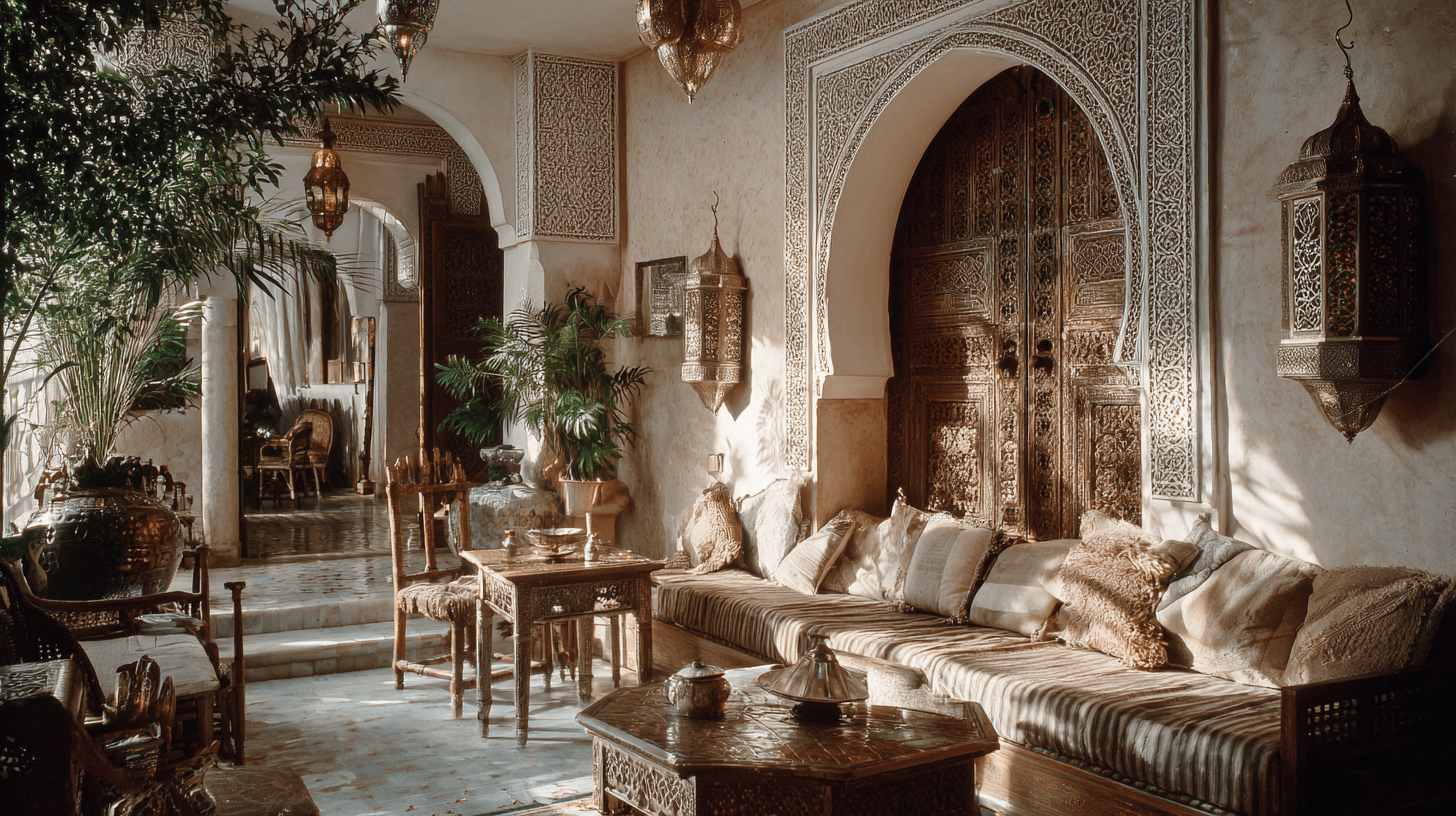
His own house, Dar Noujoum, sat in the Sidi Bel Abbès quarter of the medina, a former royal harem that he transformed into something luminous and strange. The salon was his favorite room — large and square, unlike the typical long narrow Moroccan spaces. "They are the only spaces that can be furnished with European pieces," he said. "After many years of sitting on squat banquettes at low tables, I yearned for Western comfort."
Willis was not an easy man. He drank too much. He stayed up too late. He hung up on the Baroness Marie-Hélène de Rothschild when she called with urgent requests, claiming that "in Morocco, we have time." His friends described him as "allergic to discipline" and "outrageous at points."
Pierre Bergé said it simply: "He never achieved the full due of his talent because of this complete lack of personal discipline. He wasted away so much of his potential in partying."
And yet.
Willis died in Marrakech in January 2009. His house is falling into ruin. But walk into any high-end riad in the city and you'll see his influence — the tadelakt walls, the reimagined zellige, the fusion of Moroccan craft and contemporary design that he invented from scratch.
Every beautiful interior in Marrakech is, in some way, his descendant.
The Facts
- •Born Memphis, Tennessee, 1937
- •Arrived Morocco 1966 for Getty wedding, never left
- •First major commission: Palais de la Zahia for Paul and Talitha Getty ($10,000 purchase)
- •Popularized tadelakt (polished plaster) outside hammams
- •Designed Villa Oasis for YSL and Pierre Bergé
- •Designed Dar Yacout restaurant, La Trattoria, Hotel Tichka
- •Designed Rick's Café interior (2004) for Kathy Kriger
- •Designed museum at Jardin Majorelle
- •Died Marrakech January 2009
- •His own home Dar Noujoum is now in ruins
Sources
- Bill Willis Film official website — biography and contributors|The Swinging Sixties, 'Bill Willis' biography|Catherine M. Austin Interior Design, 'Missing Marrakech: The Brilliant Bill Willis'|Maison Gerard gallery, Bill Willis biography|Marian McEvoy, 'Bill Willis' (book, Jardin Majorelle)