The Little Polished Stone
Islamic geometry born from prohibition
The word means 'little polished stone,' which tells you everything about where this came from and nothing about what it became.
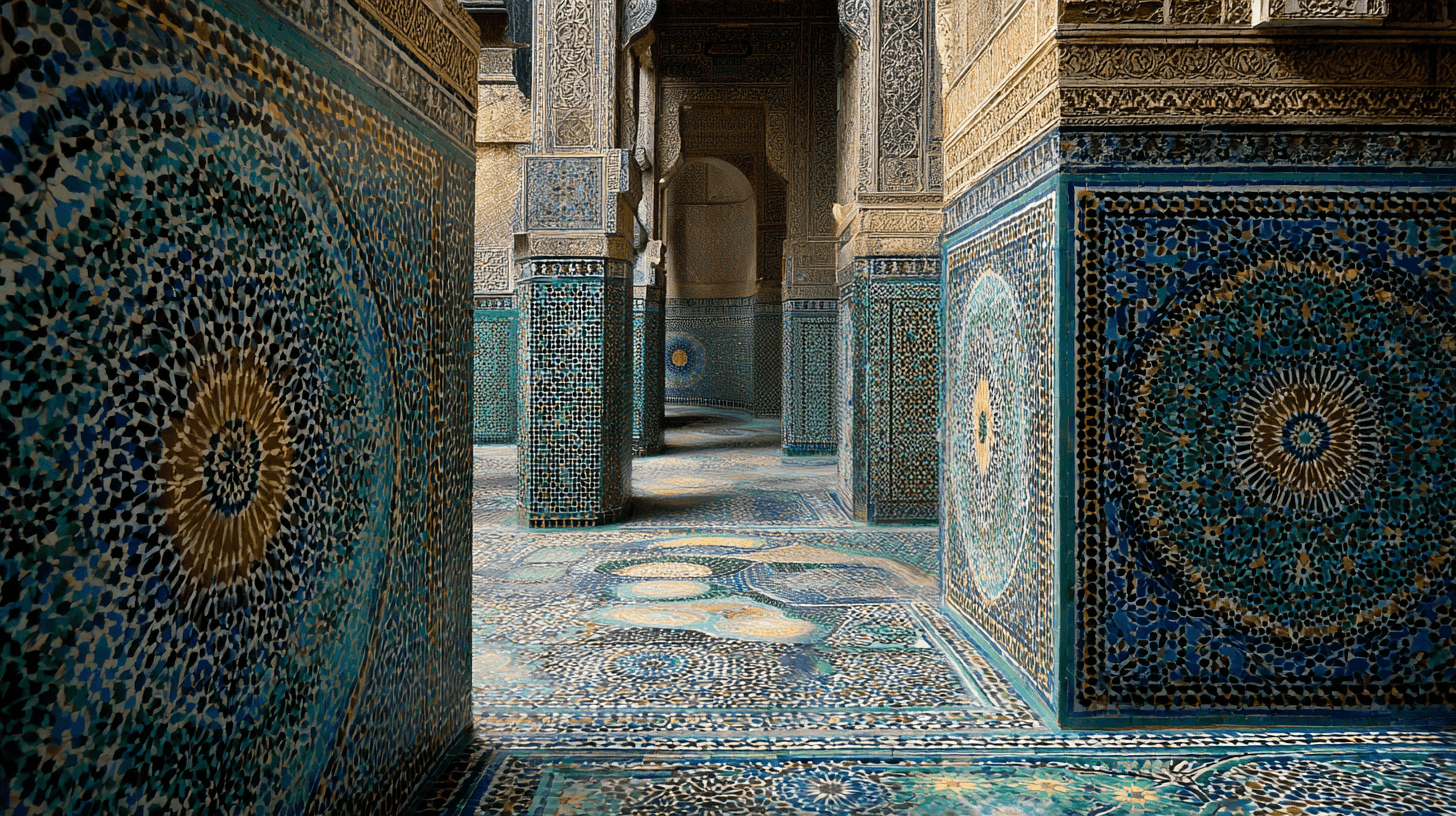
Roman mosaics used tesserae—small cubes fitted together to create images. When Islam arrived, figural imagery had to go—but the method remained. Craftsmen assembled geometric patterns instead: stars, polygons, infinite tessellations. Zellige was born from this prohibition.
The earliest reliably dated zellige in Morocco appears on the Koutoubia minaret, mid-twelfth century. Green and white predominated.
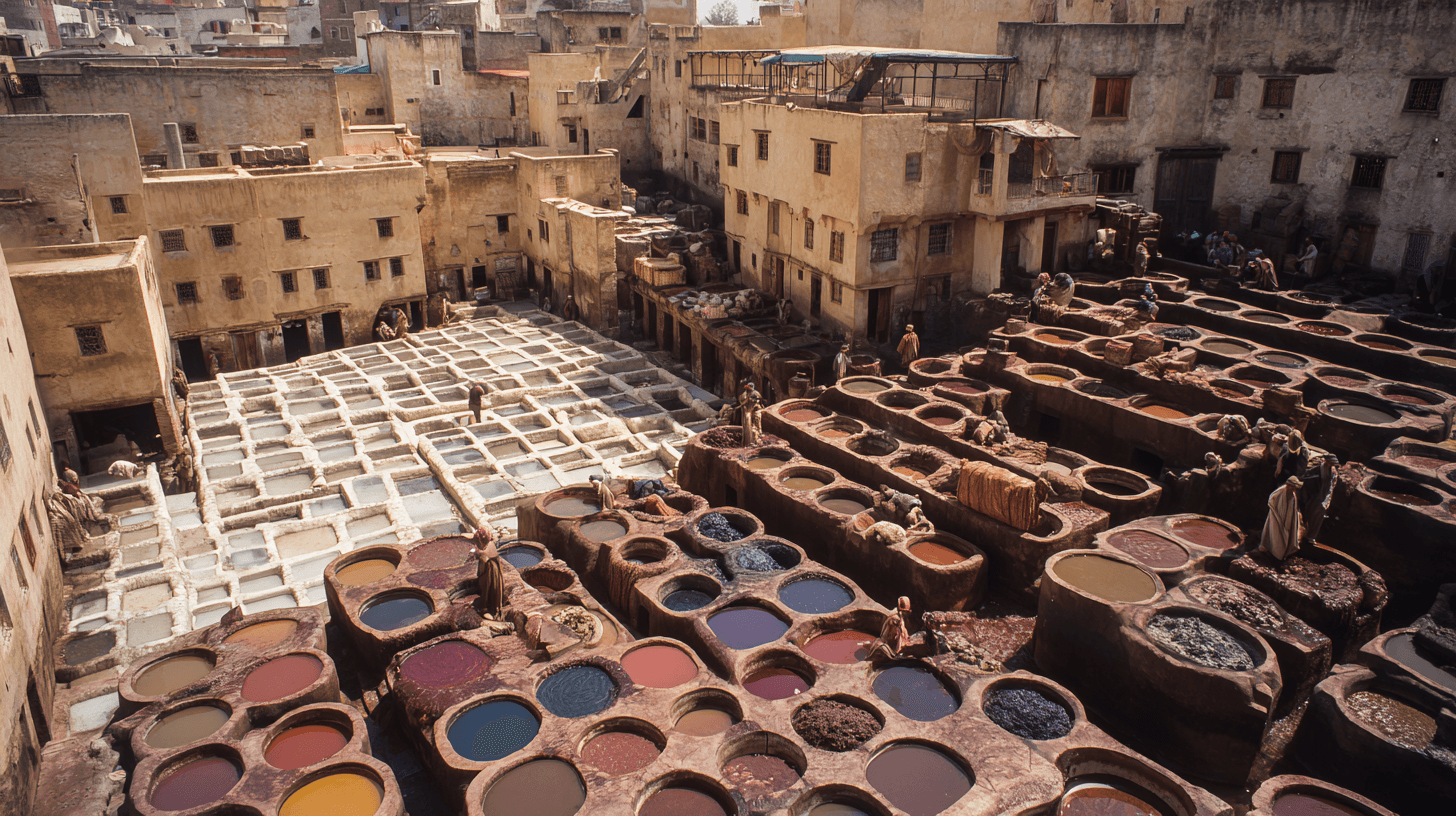
The Marinid dynasty refined zellige into the form we recognize today: smaller pieces, more colors. The madrasas of Fez—Ben Youssef, Bou Inania, El-Attarine—became showrooms for the craft.
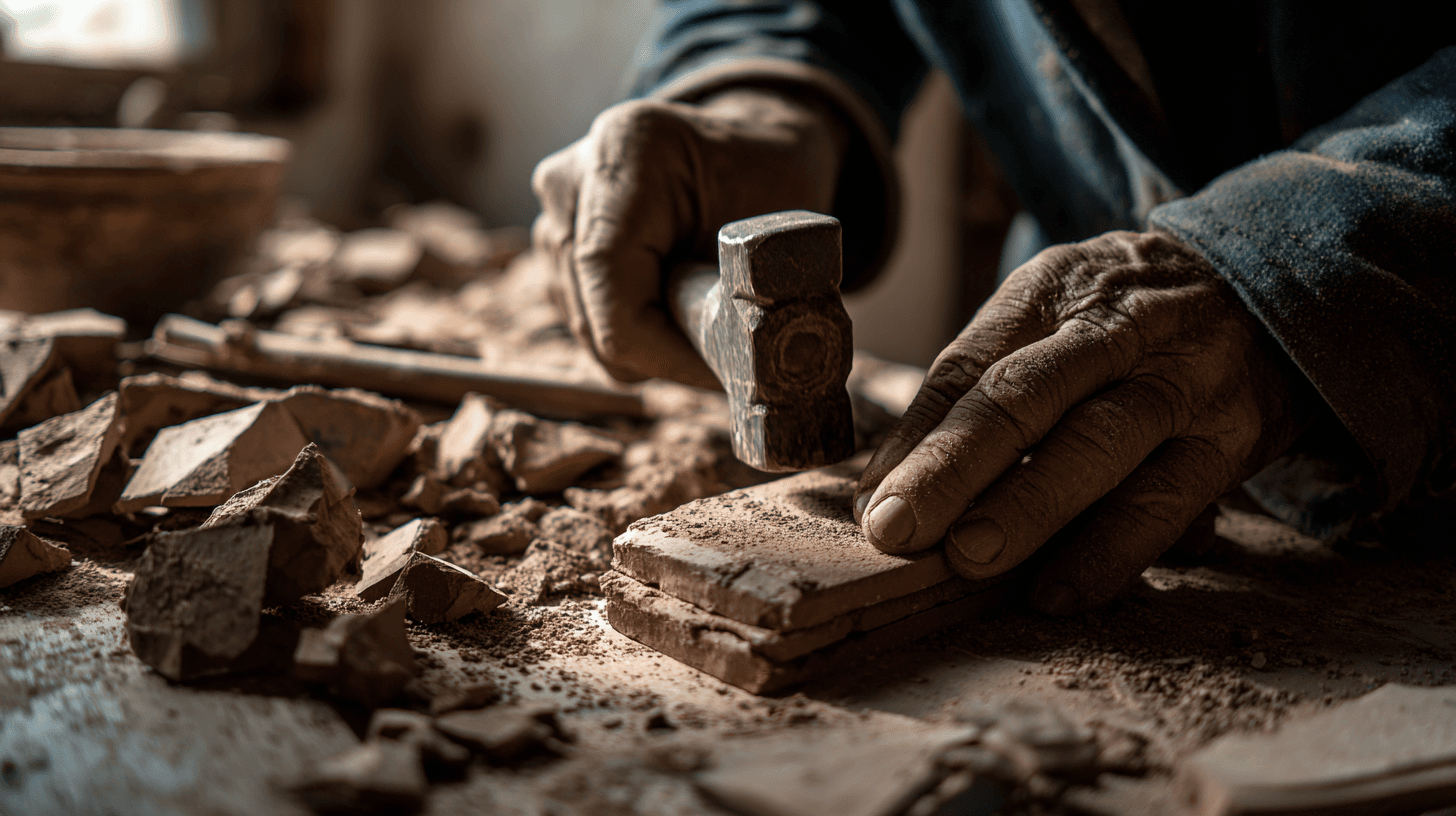
The making has not changed. Clay from the earth around Fez is shaped, dried, glazed, and fired. Then the maalem flips the tile face-down and chips away the back with a small hammer. The cuts are made freehand, by eye.
Sources
- Bloom, Jonathan, Arts of the City Victorious: Islamic Art and Architecture in Fatimid North Africa and Egypt (Yale University Press, 2007) Paccard, Andre, Traditional Islamic Craft in Moroccan Architecture (Editions Atelier 74, 1980) Castera, Jean-Marc, Arabesques: Decorative Art in Morocco (ACR Edition, 1996) Encyclopaedia Britannica, 'Zellij'