The Color of Light
How Marrakech taught a couturier to see
They arrived in February 1966 and it rained for a week.
Yves Saint Laurent and Pierre Bergé checked into the Mamounia — then dilapidated, not yet the palace it would become — and watched water pour from the sky. The other guests tormented the concierge, as if he could do something about the weather. Saint Laurent, who had been dismissed from Dior after a nervous breakdown during his military service, who had started his own house only to find himself exhausted and fragile at thirty, sat in the lobby and waited.
On the fifth day, the sun came out.
"We finally discovered that famous light which you cannot see anywhere else," Bergé remembered later. "The Moroccan sun probes every recess and corner. The birds were singing and the Atlas Mountains, covered with snow, made our horizon warmer and greater."
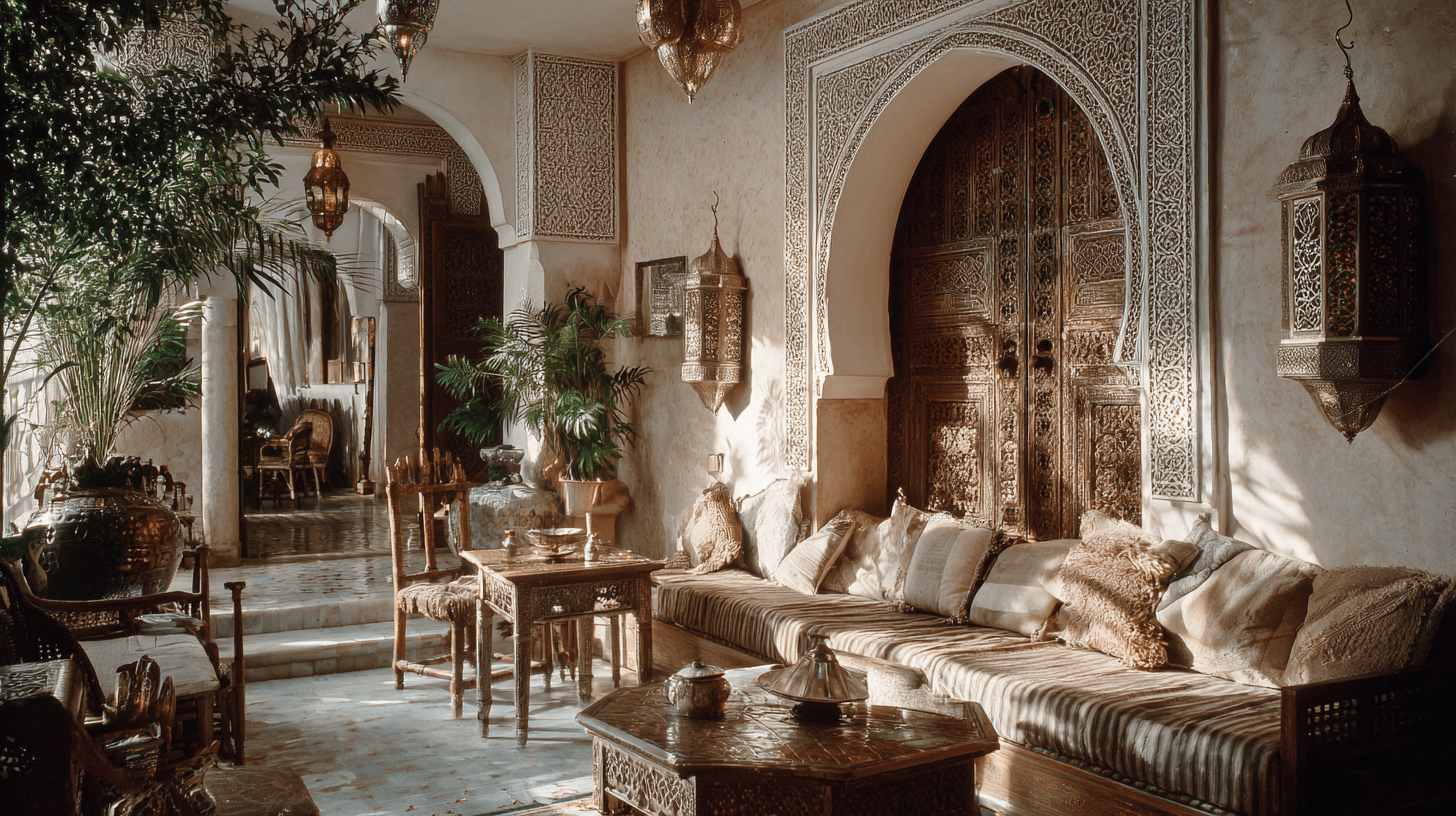
By the time their plane lifted off for Paris, they had already signed the papers for a house in the medina — Dar el-Hanch, the House of the Snake, named for a serpent Saint Laurent would paint on the living room wall. They would return twice a year for the rest of his life.
"Marrakech taught me color," Saint Laurent said. "Before Marrakech, everything was black."
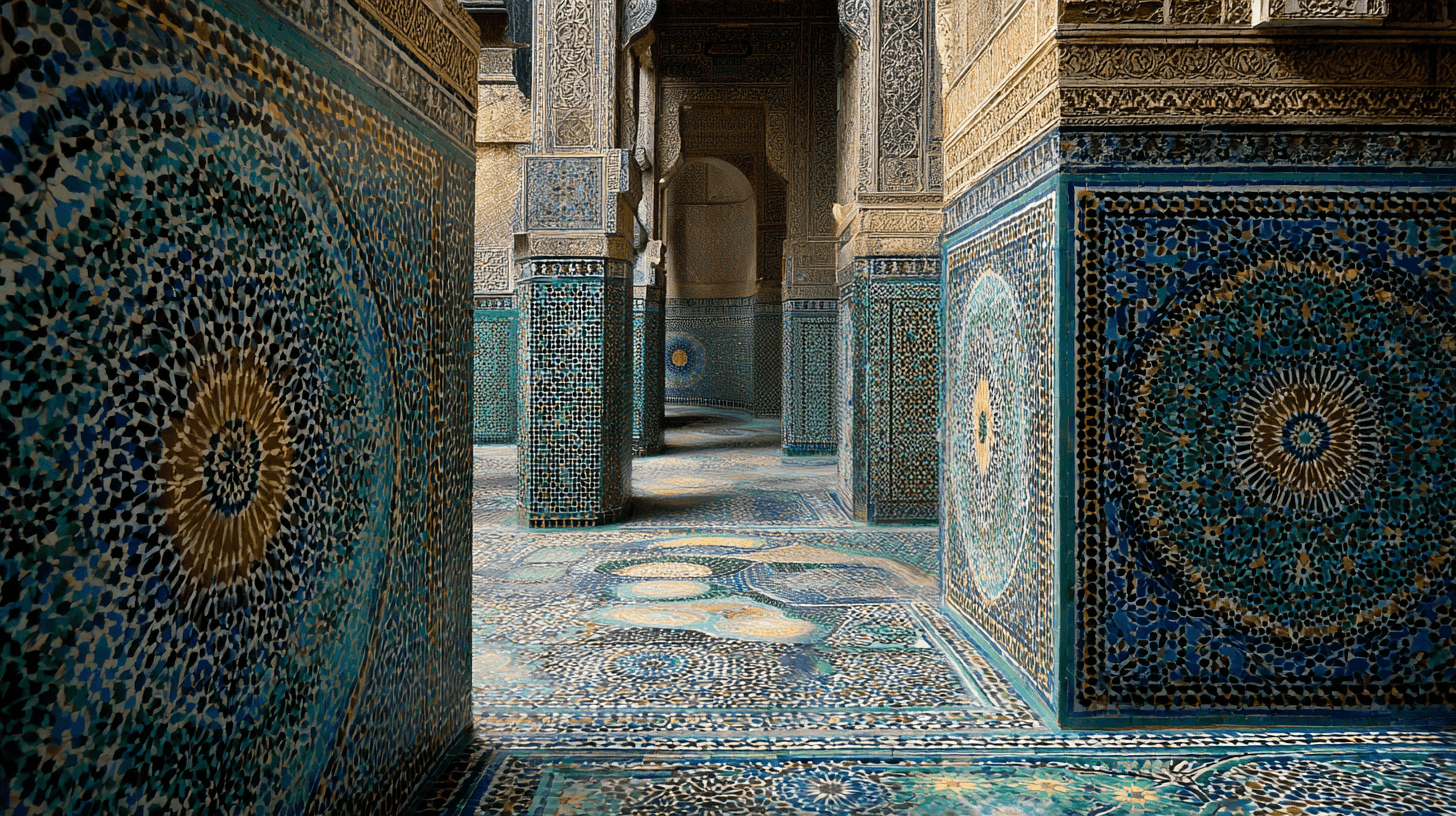
It's not a metaphor. Look at his collections before and after 1966. The shift is visible. The famous Mondrian dresses of 1965 were geometric, intellectual, restricted to primary colors. After Morocco, his palette exploded — fuchsia and turquoise, coral and saffron, the specific pinks and blues and purples of djellabas in the souk.
"At every street corner in Marrakech," he said, "you encounter astonishingly vivid groups of men and women, which stand out in a blend of pink, blue, green, and purple caftans. It's astonishing to realize that these groups, which seem to be drawings or paintings and which evoke Delacroix's sketches, are really just improvised from life."
Saint Laurent had been born in Oran, Algeria. Morocco was a return to the light of his childhood, filtered through adult eyes. Twice a year, on December 1 and June 1, he would fly to Marrakech to sketch his collections — hundreds of drawings in the garden, away from the pressure of Paris.
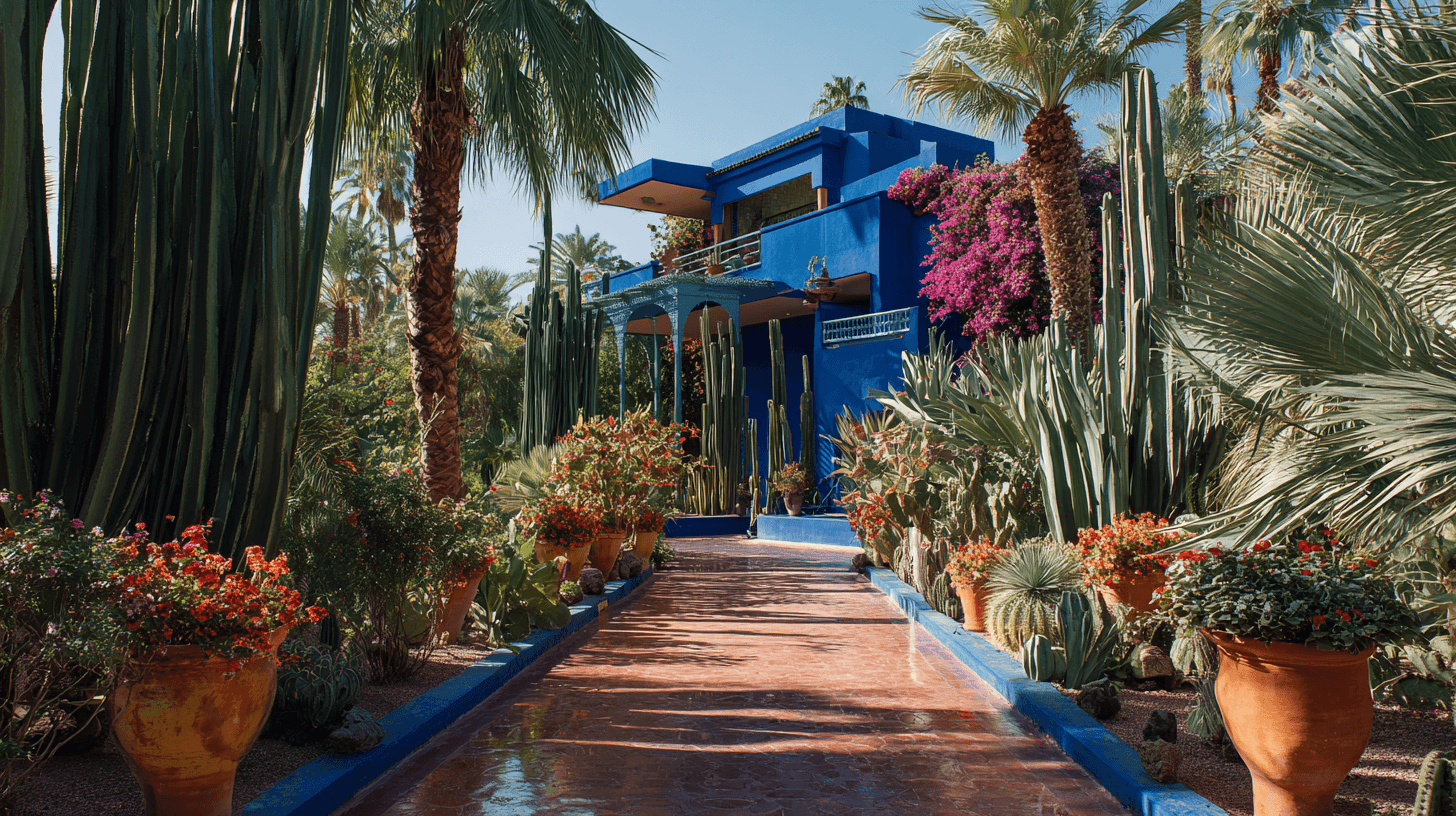
The garden was Majorelle.
In 1980, Saint Laurent and Bergé heard that the Jardin Majorelle — the extraordinary botanical garden created by French painter Jacques Majorelle between the 1920s and 1940s, with its famous cobalt blue villa — was scheduled for demolition to make way for a hotel. They bought it. They restored it. They added to it. They kept it open to the public, as Majorelle had done.
Saint Laurent died in Paris in 2008. His ashes were scattered in the Jardin Majorelle.
A museum bearing his name opened next door in 2017, on a street now called Rue Yves Saint Laurent. Pierre Bergé, who had overseen every detail, died weeks before the opening. He is buried in France, but his life's work remains in Marrakech — 5,000 garments, tens of thousands of sketches, and a garden where the light still probes every corner.
The Facts
- •First visit February 1966 — rained for a week before the sun emerged
- •Dar el-Hanch ('House of the Snake') was their first Marrakech home
- •Bought Jardin Majorelle in 1980 to save it from demolition
- •Saint Laurent's ashes scattered in the garden June 2008
- •Musée Yves Saint Laurent Marrakech opened October 2017
- •The museum holds 5,000 garments and thousands of sketches
- •900,000+ visitors to Jardin Majorelle annually — Morocco's most visited attraction
- •Pierre Bergé died September 2017, weeks before museum opening
Sources
- Musée Yves Saint Laurent Paris, 'Le Maroc' — official biography|WWD, 'Saint Laurent and Pierre Bergé on Morocco' (October 2017)|Sotheby's, 'Pierre Bergé & Yves Saint Laurent's Moroccan Legacy' (August 2018)|Domus, 'Yves Saint Laurent's Morocco' (June 2025)