The Cave at the Edge of the World
Hercules rested here after separating the continents
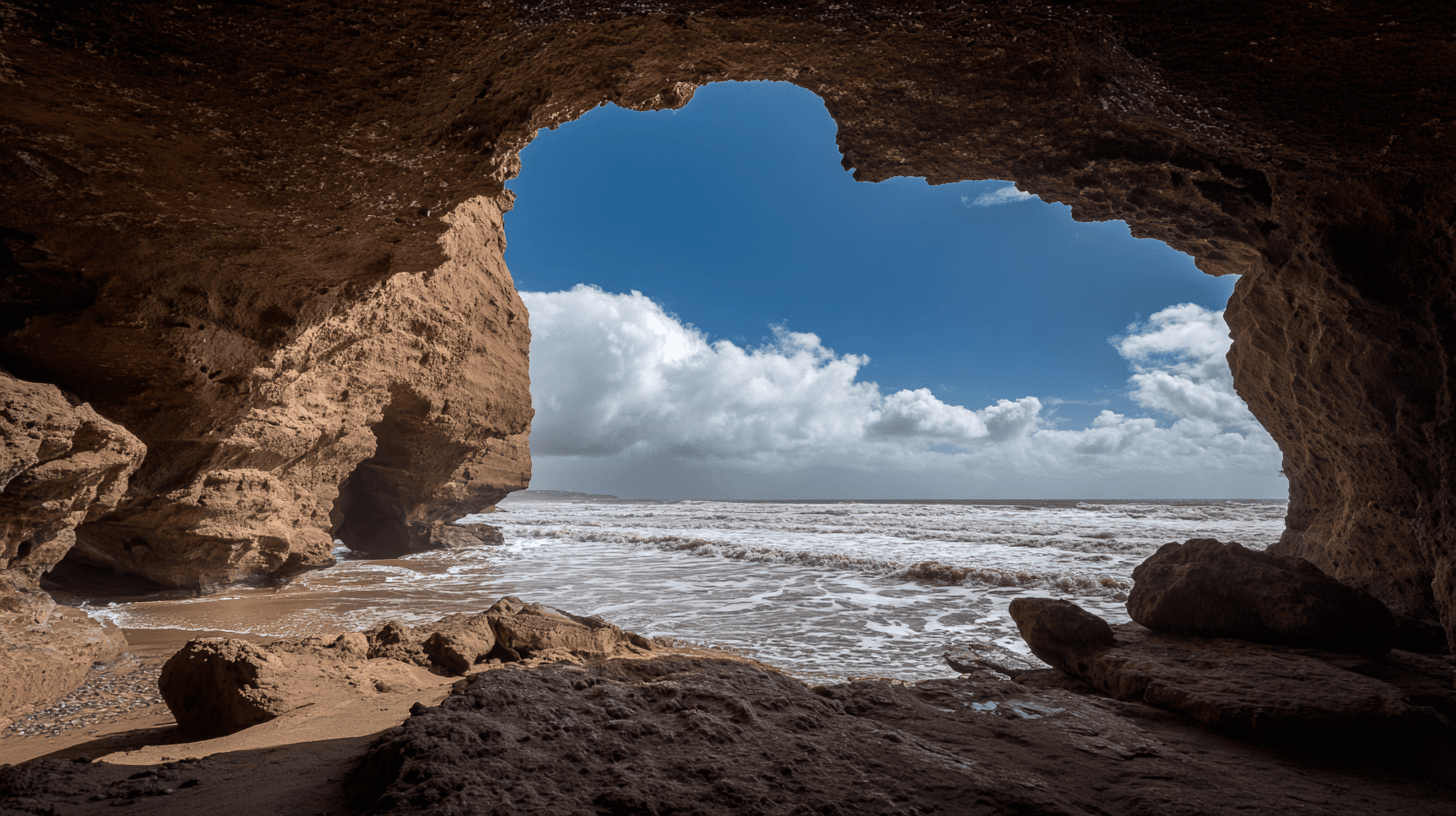
The cave mouth opens to the Atlantic.
Look closely at the shape — the way the rock frames the sea — and you'll see it: the outline of Africa. The bulge of West Africa. The horn. The curve down to the Cape. It's not perfect, but it's close enough to make you wonder.
The Greeks called this the Cave of Hercules.
After completing his tenth labor — smashing through the mountains to create the Strait of Gibraltar — Hercules needed rest. He found this cave at Cap Spartel, the northwestern tip of Africa, and slept. When he woke, he continued his labors. But the cave remained, marked by his presence.
That's the myth. The reality is older and stranger.
The caves are natural — carved by the Atlantic over millennia. But humans have been using them for at least 5,000 years. Neolithic tools have been found in the sediment. Phoenician traders knew the caves. Roman ships used Cap Spartel as a landmark.
In the 19th century, the caves became a tourist attraction. Entrepreneurs added stairs, lighting, a café. They may have "improved" the cave opening to enhance the Africa silhouette — or the shape may have been there all along. No one can prove it either way.
What remains is the location: the exact point where the Mediterranean becomes the Atlantic, where Europe looks across at Africa, where the ancient world ended and the unknown began.
Hercules probably wasn't here. But standing in the cave mouth, watching the Atlantic swells roll in from the west, you understand why someone needed to invent him.
The Facts
- •The Caves of Hercules are 14km west of Tangier
- •Neolithic artifacts date human use to at least 3000 BCE
- •The cave has two openings — one to land, one to sea
- •The sea opening is said to mirror the shape of Africa
- •Cap Spartel lighthouse (1864) marks the northwestern tip of Africa
Sources
- Strabo. 'Geographica.' Book XVII
- Gilman, Antonio. 'The Archaeology of Prehistoric Morocco.' Hespéris-Tamuda
- Cap Spartel archaeological surveys