Medina Data
Population density, building height, street width, mosque count — the metrics of Morocco's old cities
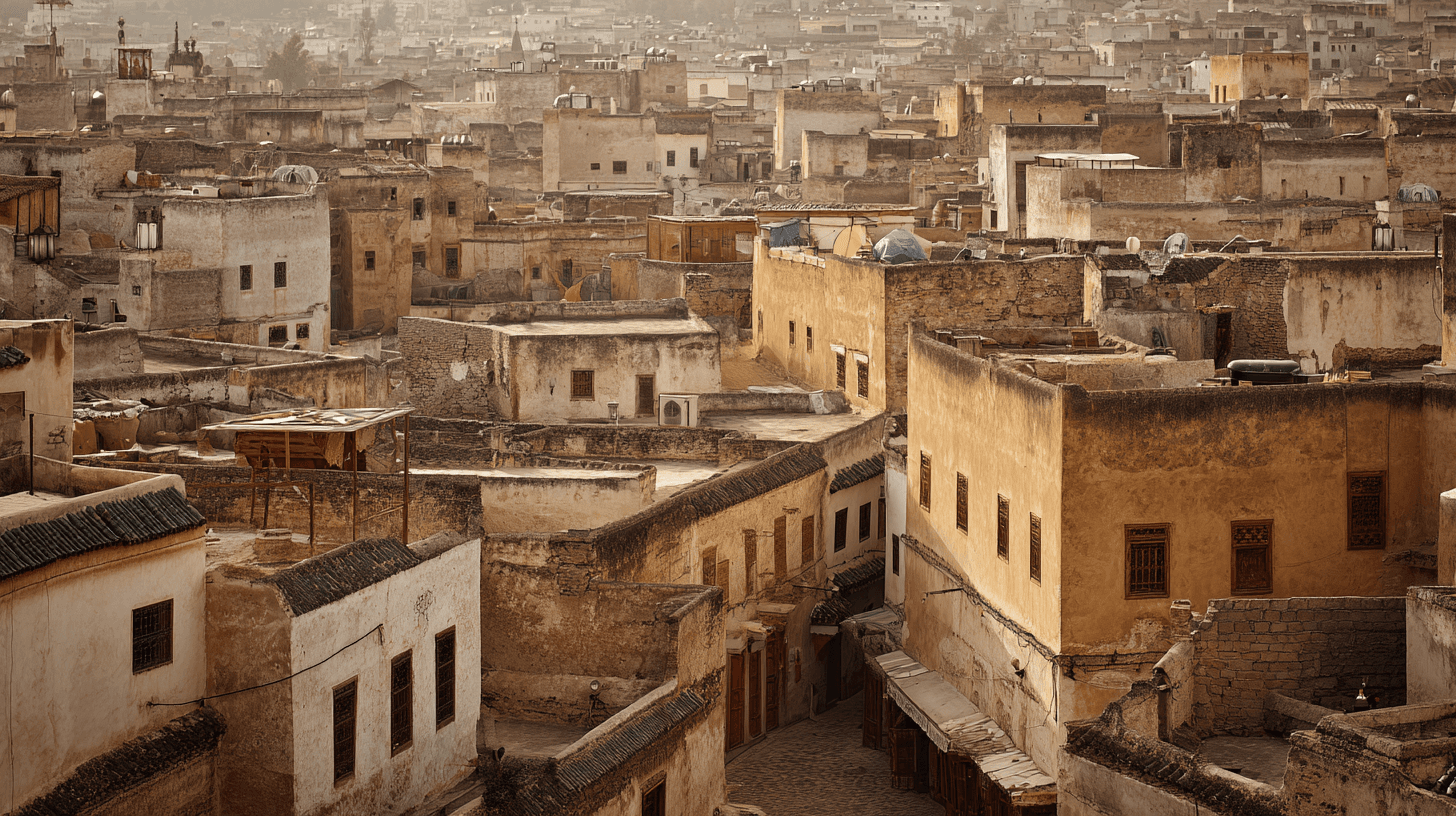
The medina of Fes el-Bali is the largest car-free urban zone in the world. Approximately 156,000 people live within 280 hectares — a density of over 55,000 people per square kilometre. For comparison, Manhattan averages 27,000. The medina achieves twice Manhattan's density at a maximum building height of three to four storeys. No elevators. No parking structures. No wide boulevards. No architects named in magazines. Just a thousand years of people working out how to live closely without killing each other, which may be the most underrated engineering achievement in urban history.
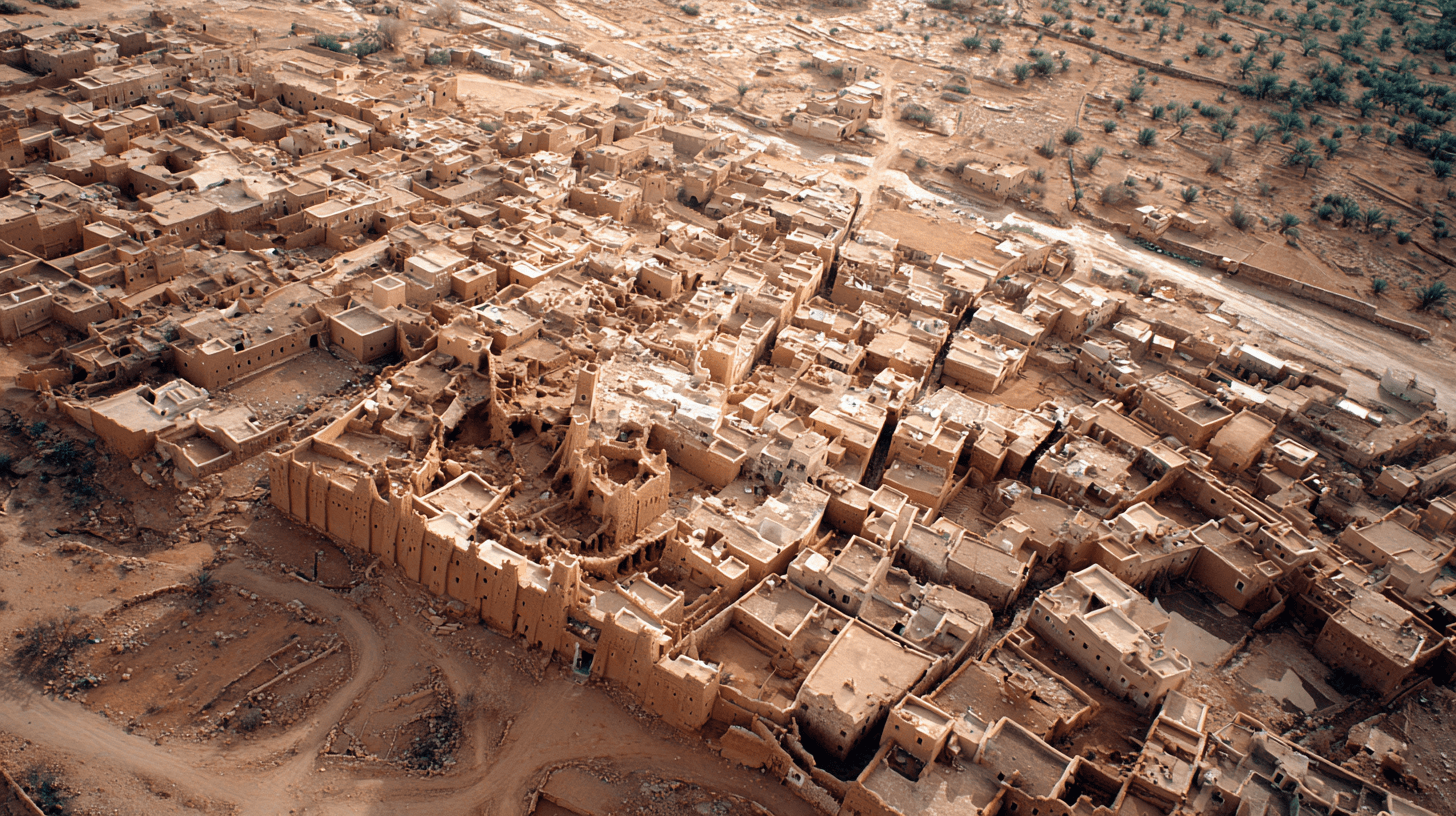
The street network is dendritic — branching from wide commercial arteries into progressively narrower residential lanes that terminate in dead ends. The pattern looks chaotic from above. From the ground, it is a privacy gradient so precisely calibrated that you can feel the shift from public to private in the width of the passage beneath your feet. The most public spaces — souks, mosques, fondouks — sit on the main arteries. The most private — homes — sit at the ends of dead-end derbs accessible only to residents and their guests. Strangers are noticed. This is by design.
Shade coverage exceeds 70% in most medinas during summer months. The narrow streets — often less than two metres wide — combined with projecting upper floors and covered passages create continuous shade. Surface temperatures in shaded medina streets can be 10-15°C lower than exposed modern streets nearby. The medina is a passive cooling machine that requires no electricity, no maintenance budget, and no consultant. It simply works, as it has for a millennium.
Every neighbourhood has a mosque, a hammam, a fountain, a bakery, and a primary school within walking distance. The 15-minute city — a concept promoted by contemporary urbanists as though they have just invented the future — has existed in Moroccan medinas for a thousand years. The difference is that the medina achieves it at a fraction of the infrastructure cost and with none of the TED talks.
Water infrastructure is embedded. Fountains punctuate every quarter. The traditional system drew from rivers, aqueducts, and khettaras. Modern piped water has replaced the old sources, but the distribution points remain. The hammam consumes the most water per neighbourhood — it is both bath and social centre, the place where the business of the community is conducted, one scrub at a time.
The data contradict the assumption. The medina is not a relic. It is a prototype — a dense, walkable, thermally efficient, socially organised urban form that modern cities are spending billions trying to reinvent. The irony is that it already exists, has existed for centuries, and can be visited for the price of a plane ticket and a pair of comfortable shoes.
We walk the medinas of Fes and Marrakech differently than most. The density is the design. The shade is the infrastructure.
Tell us about your trip →Interactive Module
Data and visualisation by Dancing with Lions
The Facts
- •Fes el-Bali: largest car-free urban zone in the world
- •~9,000 streets and alleys
- •~150,000 residents in the medina
- •11,000+ buildings
- •30+ fondouks
- •300+ mosques
- •UNESCO World Heritage since 1981
- •Deliveries by mule and handcart only
Sources
- Stefano Bianca, Urban Form in the Arab World (2000); Haut-Commissariat au Plan (HCP); Hamid Triki, Marrakech (2005)