Rome in North Africa
Volubilis, Lixus, Banasa — Morocco's Roman ruins and the province of Mauretania Tingitana
Mauretania Tingitana — Rome's westernmost African province — occupied the northern third of modern Morocco. Its capital was Tingis (Tangier). Its most impressive city was Volubilis, near modern Meknes. The province was annexed in 40 CE when the Emperor Caligula murdered the last Mauretanian king, Ptolemy (a descendant of both Cleopatra and the Numidian kings).
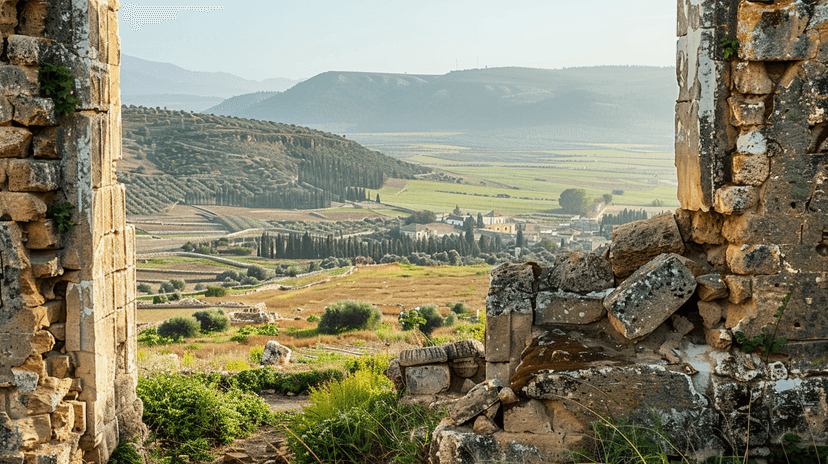
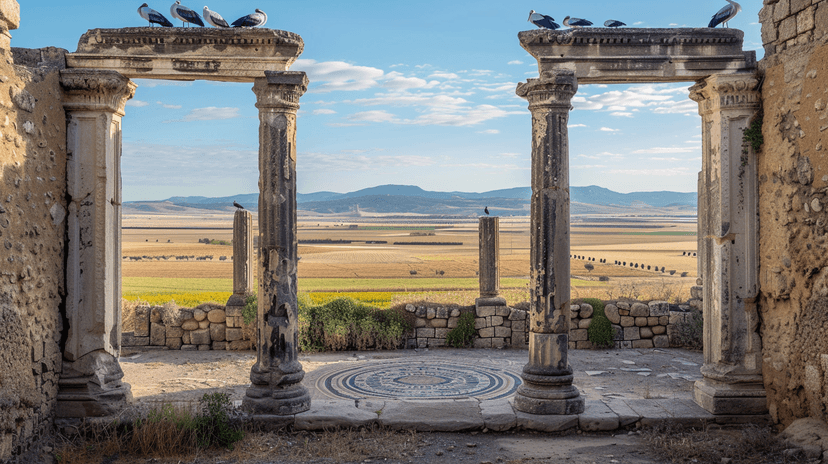
Volubilis sits on a fertile plateau with views to the holy town of Moulay Idriss Zerhoun. The site was inhabited long before Rome — Phoenician and Carthaginian traders used it — but the monumental city is Roman. The Capitoline temple, the basilica, the forum, the triumphal arch of Caracalla (217 CE), and the residential quarter with its extraordinary mosaics date from the 2nd and 3rd centuries CE.
The mosaics are the highlight. The House of Orpheus, the House of the Acrobat, the House of the Labours of Hercules — each contains floor mosaics of remarkable quality. Orpheus charming the animals. Bacchus in his chariot. The Nereids riding sea creatures. The tesserae are small, the colours vivid, the subjects drawn from the standard Roman mythological repertoire adapted with local elements.
Lixus, near Larache on the Atlantic coast, is older and wilder than Volubilis. A Phoenician settlement from the 7th century BCE, it grew under Roman rule into a significant fish-processing centre — the garum (fermented fish sauce) factories are still visible. The site sits on a hilltop above the Loukkos River estuary, unexcavated in parts, overgrown, atmospheric.
Banasa, in the Gharb plain, and Thamusida, near Kenitra, complete the major Roman sites. Both are less visited and less preserved than Volubilis but contain significant remains — walls, baths, and the traces of agricultural estates that exported grain and olive oil to Rome.
Rome withdrew from Mauretania Tingitana in the late 3rd century — one of the earliest imperial retreats. The cities continued under local governance. Volubilis was still inhabited when Islam arrived in the 7th century. Its stones were quarried by Moulay Ismail to build Meknes — the Roman city feeding the Moroccan one.
Explore the full interactive module — with site maps, mosaic catalogues, and the archaeological timeline — at Dancing with Lions: https://www.dancingwiththelions.com/data/rome-north-africa
Interactive Module
Data and visualisation by Dancing with Lions