The Khettaras
Underground rivers built by hand 2,000 years ago
The boy drops a stone into the shaft. Four seconds of silence. Then a splash, faint as a whisper, rising from forty meters below. His grandfather nods. The water is still there.
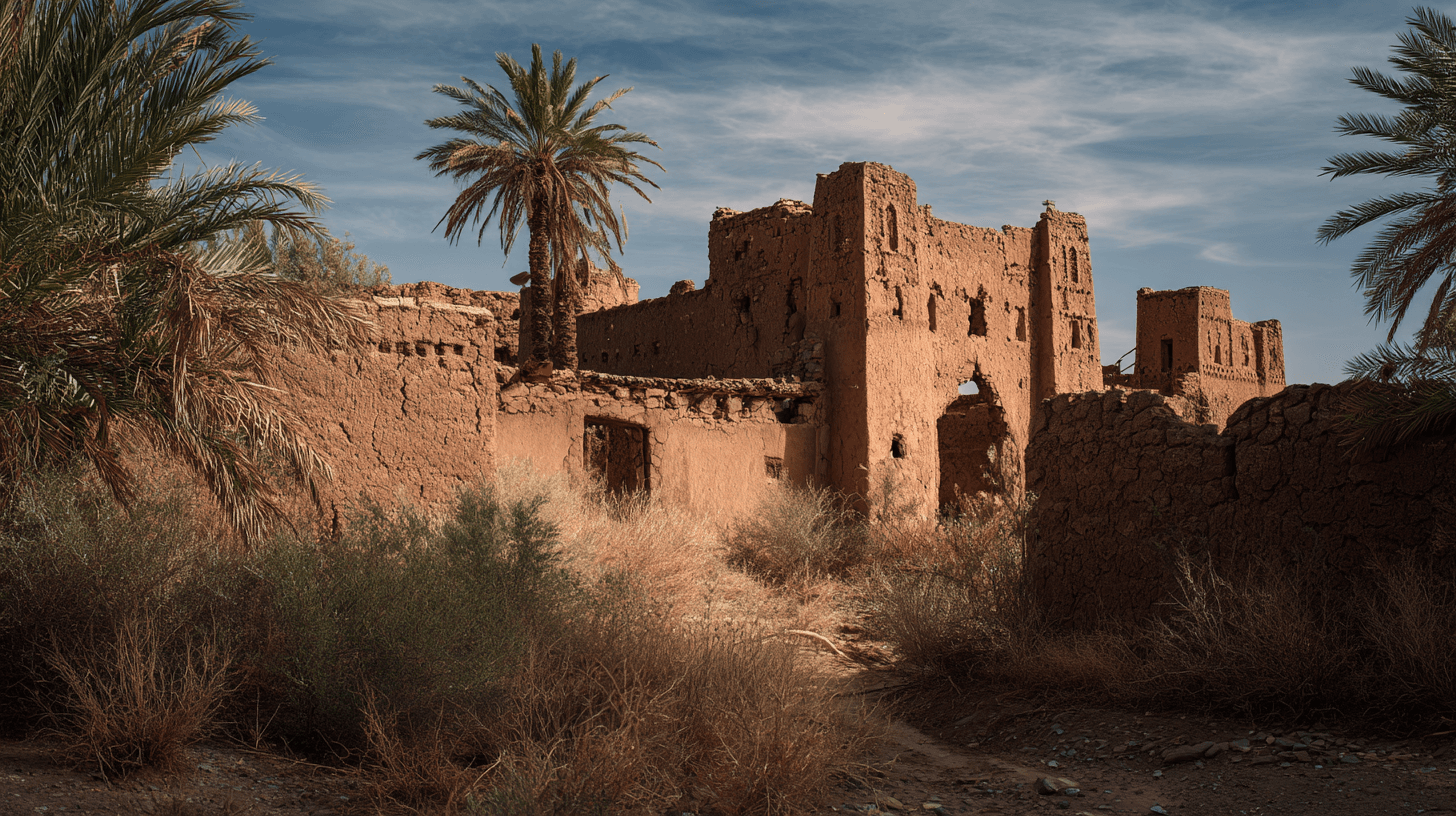
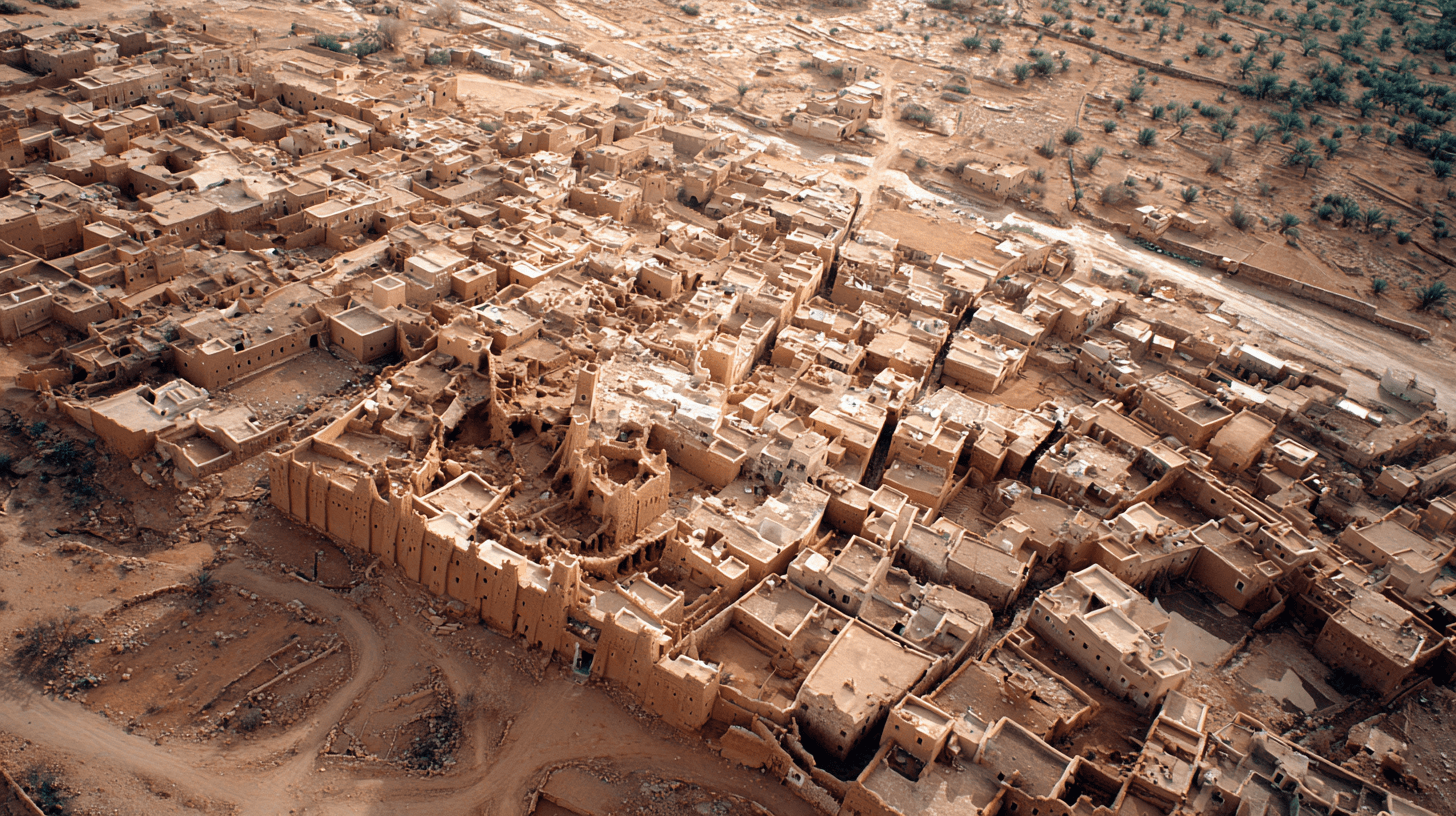
Beneath the surface of the Tafilalet, an invisible network of tunnels carries water from the Atlas Mountains to the desert. The khettaras have been running for two thousand years — longer than Rome's aqueducts remained in use, longer than most civilizations have existed.
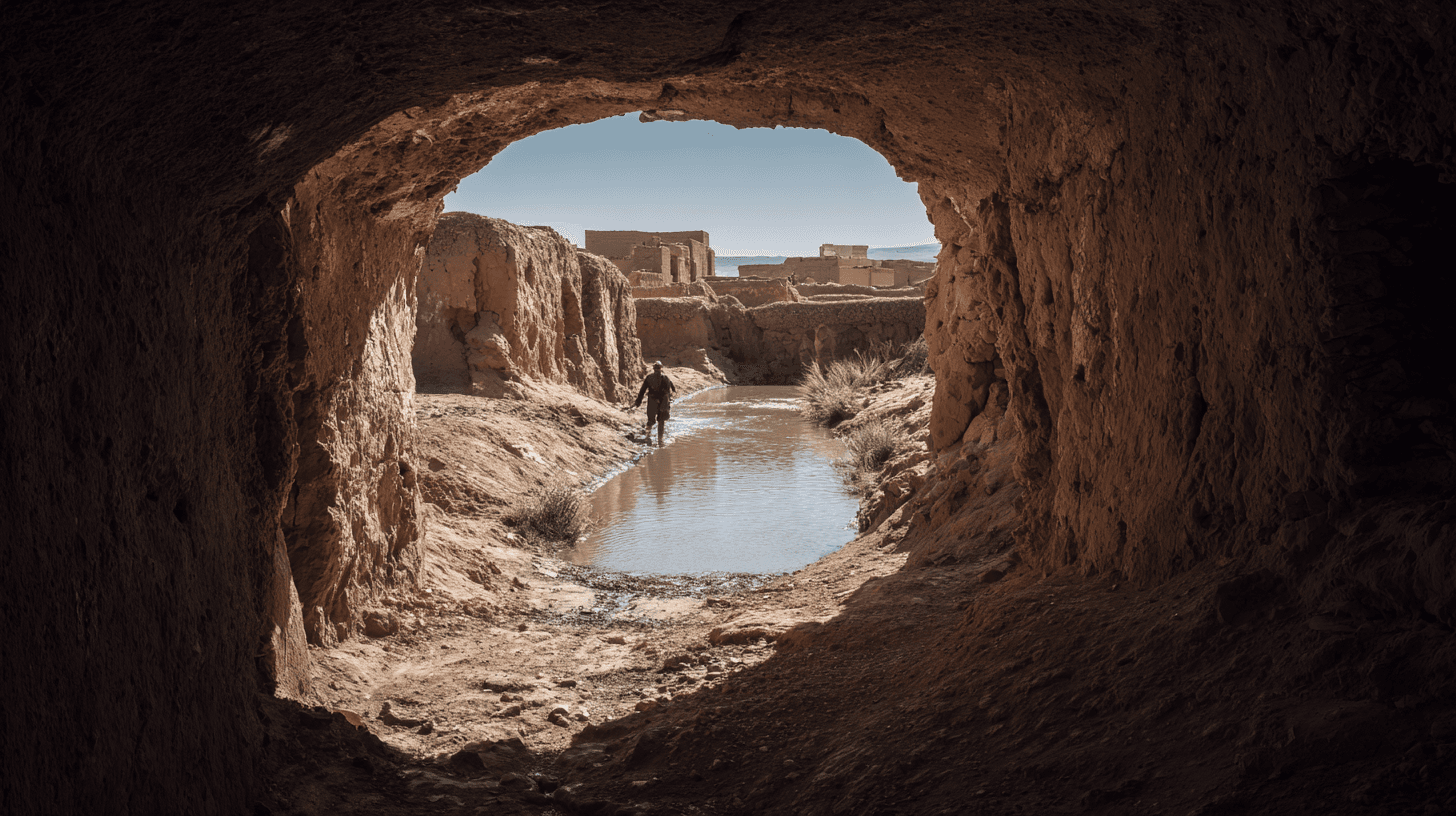
The engineering is elegant in its simplicity. A mother well, dug into the water table at the base of the mountains. A gently sloping tunnel, carved by hand, that uses gravity alone to move water across distances that would break a man carrying buckets. Vertical shafts every twenty meters, both for excavation and ventilation. The gradient must be precise: too steep and the water erodes the tunnel; too shallow and silt accumulates. The margin for error over ten kilometers is measured in centimeters.
At the height of the system, more than three hundred khettaras irrigated the Tafilalet, supporting date palms, gardens, and the great trading city of Sijilmassa. The tunnels required constant maintenance — a dedicated class of workers called the khettariyyin who spent their lives underground, clearing debris, shoring up walls, listening for the voice of the water.
Today, fewer than twenty khettaras still flow. Diesel pumps are faster. But they drain the aquifer that took millennia to fill. The khettaras took only what the mountain gave. The pumps take everything.
In Erfoud, an old man named Hassan still maintains his family's khettara. His father did, and his father before him. The tunnel runs for seven kilometers. He cleans it twice a year, crawling through passages no wider than his shoulders, by the light of a candle that tells him if the air is still safe to breathe.
He does not know if his sons will continue. But he knows the water still flows. Four seconds to the splash. The mountain still remembers.
The Facts
- •Mother wells can reach 50+ meters deep
- •Tunnels extend up to 20km with gradients of 1-2%
- •Over 300 khettaras once served the Tafilalet
- •Construction required specialized khettariyyin workers
- •UNESCO recognized the system as Intangible Cultural Heritage
- •Oldest systems date to 1st century CE
- •Vertical shafts spaced 10-20 meters apart
Sources
- English, Paul. 'Qanats and Lifeworlds in Iranian Plateau Villages.' Yale University
- Lightfoot, Dale. 'The Origin and Diffusion of Qanats in Arabia.' Geographical Journal
- UNESCO Intangible Cultural Heritage documentation, 2015