The Kasbahs
Fortresses of earth that return to earth
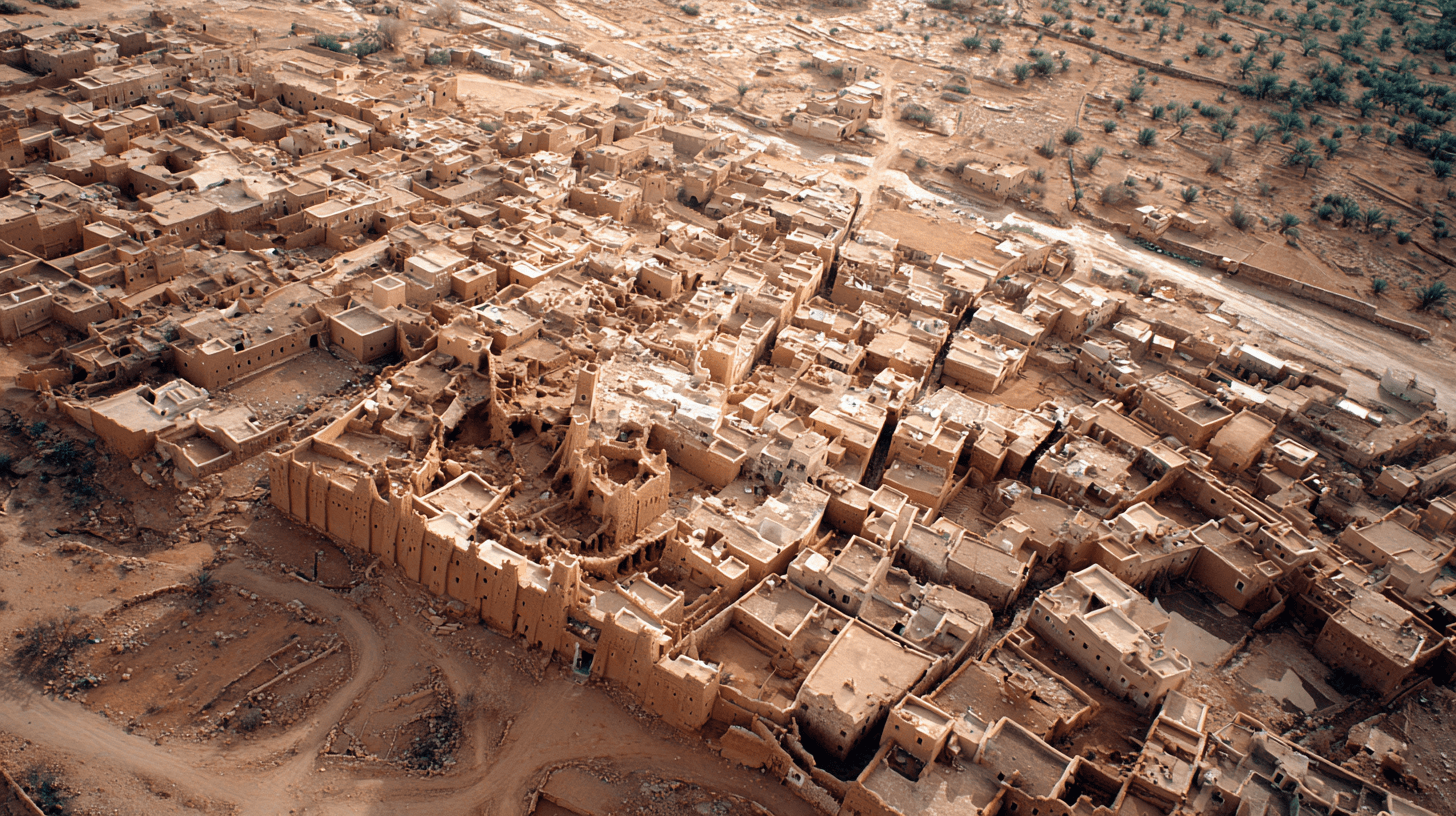
The walls are melting. You can see it — the rain-carved channels, the collapsing corners. A kasbah is not built to last forever. It is built to return to the earth from which it came.
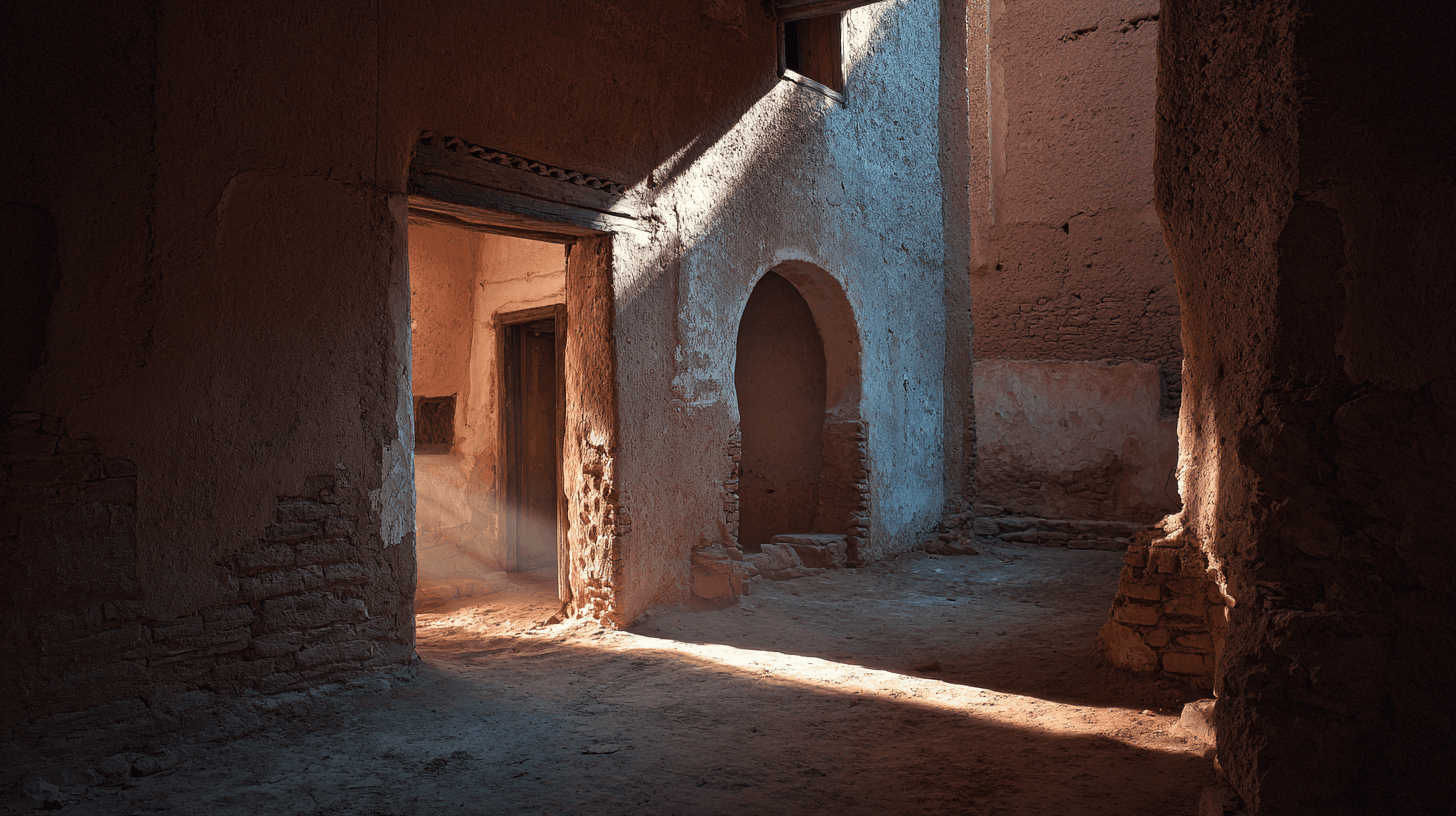
A kasbah is a fortress made of pisé — rammed earth mixed with straw, pounded between wooden forms, stacked layer by layer until the walls rise high enough to defend against whatever the landscape sends. The technique is older than history. The material is the ground beneath your feet.
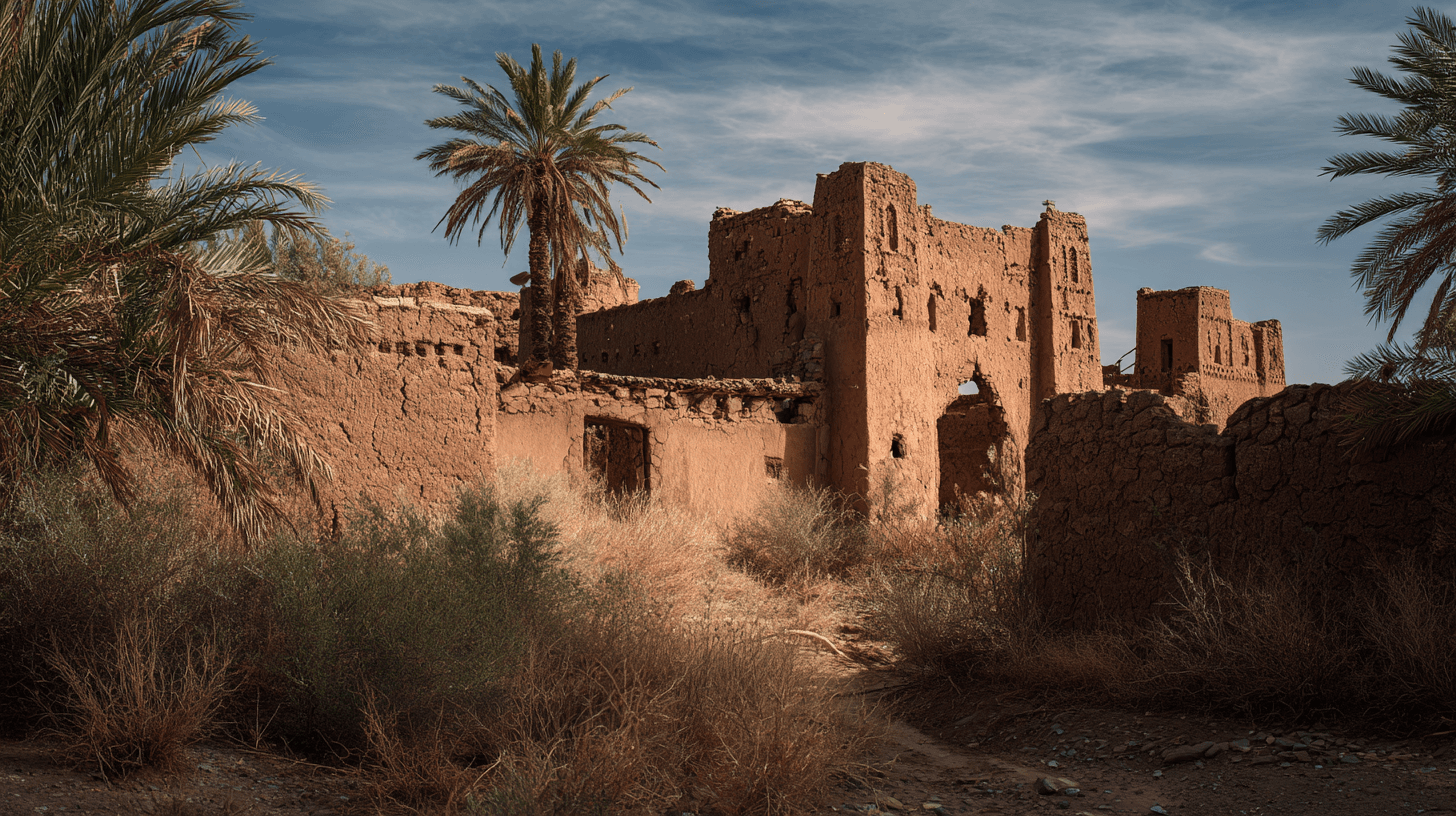
In the Draa Valley, the kasbahs rise from the palms like natural formations. Their color matches the surrounding hills — because they are made of those hills, literally. The earth was dug nearby, mixed with water and straw, and compacted into walls that were never painted because they were already perfect.
The geometry is Islamic but the material is African, and the combination produces something found nowhere else. Crenellated towers. Geometric window screens. Walls that taper as they rise, giving the buildings a stability against earthquake and erosion. The kasbah reads as ancient because it is ancient, because the techniques haven't changed because they didn't need to.
But pisé has a fatal flaw: it cannot resist water. A kasbah requires constant maintenance — replastering after every rain, rebuilding sections that have washed away, vigilance without end. When the families who lived in them left for cities, when the labor of maintenance became uneconomic, the kasbahs began to return to the earth.
This is not tragedy. It is the design. Pisé buildings were always temporary in geological terms. They rose from the soil; they return to the soil. The materials can be reused. The earth that was once a wall becomes earth again, ready to be a wall again when someone needs one.
Some kasbahs have been restored for tourism — Ait Benhaddou is the famous example, used in a hundred films. These restorations fight the material's nature, replacing pisé with concrete, sealing surfaces that want to breathe. The buildings survive. Whether they remain kasbahs is a different question.
In the valleys beyond the tour buses, the melting continues. Walls soften, towers collapse, rooms open to the sky. It looks like death. It is actually something closer to composting — built form returning to the cycle from which it was temporarily borrowed. The kasbah doesn't fight its fate. It accepts it, as the people who built it accepted the desert's terms.
The Facts
- •Pisé: rammed earth mixed with straw
- •Walls can be 1+ meter thick at base
- •Technique dates back 10,000+ years globally
- •Thousands of kasbahs once lined the Draa Valley
- •Ait Benhaddou is UNESCO World Heritage Site
- •Requires constant maintenance to prevent erosion
- •Many families abandoned kasbahs for modern housing
- •Material naturally regulates temperature (cool in summer, warm in winter)
Sources
- Meakin, Budgett. 'The Land of the Moors.' Macmillan
- Jacques-Meunié, Djinn. 'Architectures et Habitats du Dadès.' Klincksieck
- UNESCO World Heritage documentation, Ait Benhaddou