The Riad
Inward architecture, hidden gardens
The door in the wall is plain. Ordinary. You would walk past it without looking. Then it opens, and you fall into a garden surrounded by sky.
A riad is not a house with a courtyard. It is a courtyard that happens to have rooms around it. The distinction matters. In Western architecture, outdoor space is what's left over after you build the building. In a riad, the outdoor space is the building. Everything else serves it.
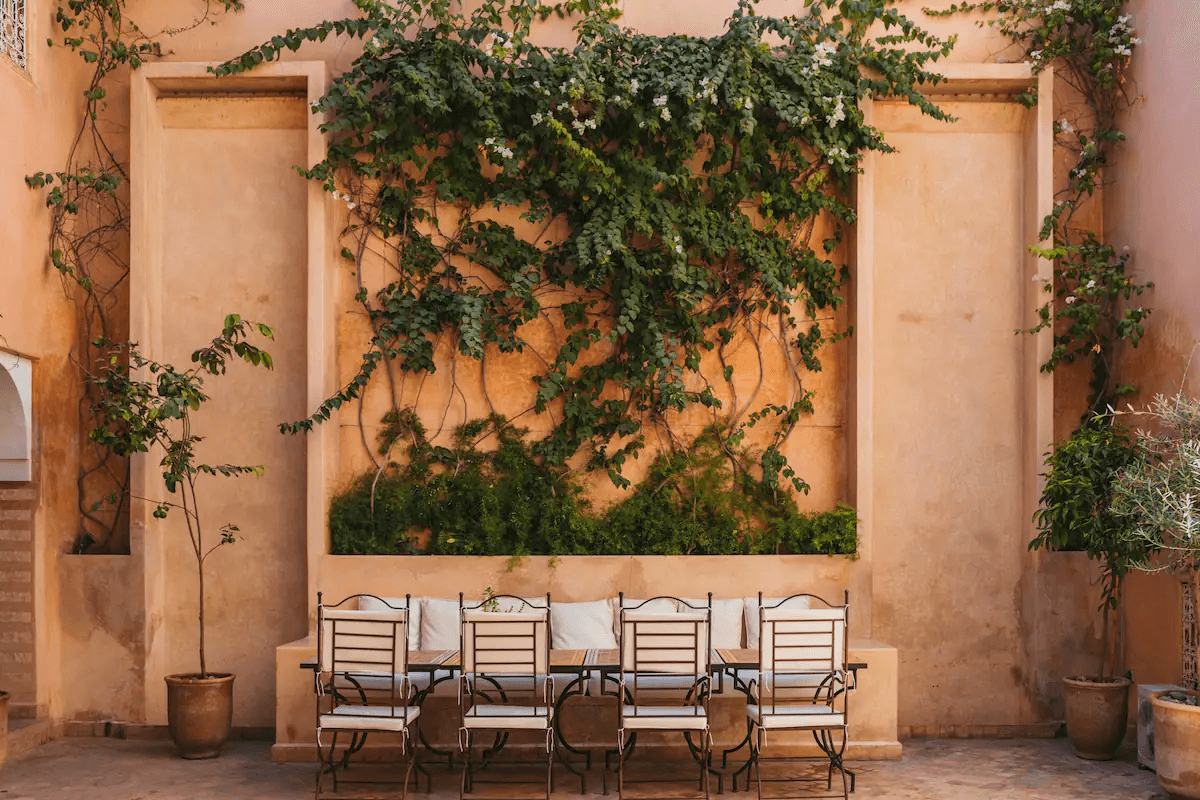
The word comes from the Arabic for garden — ryad — and the garden is the point. At the center, a fountain. Around the fountain, fruit trees — orange, lemon, pomegranate. Around the trees, the tiled floor of the courtyard. Around the courtyard, the rooms. Above everything, the sky, framed by the walls that hide the house from the street.
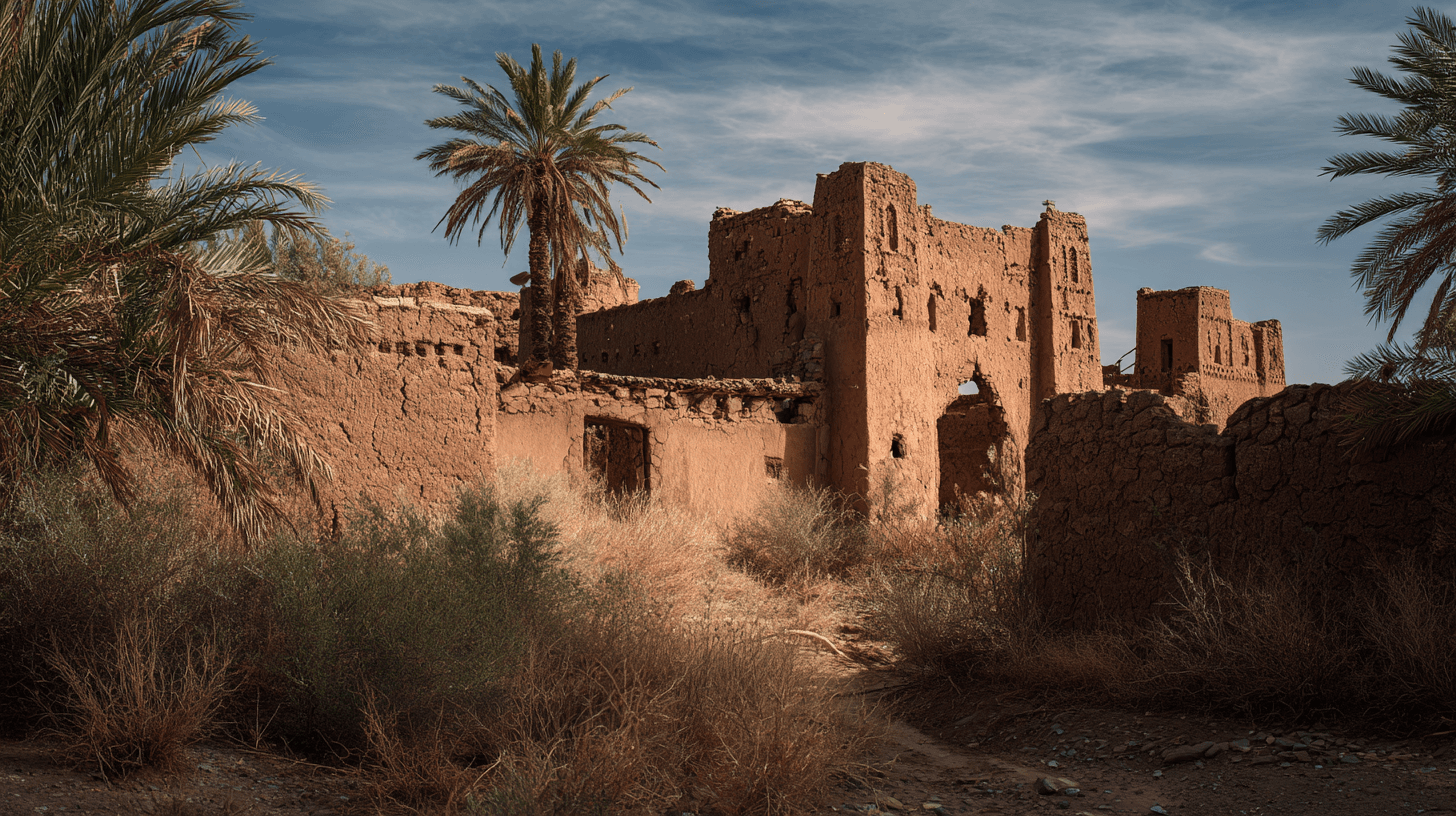
This is inward architecture. The riad presents nothing to the outside world: blank walls, small windows, a door that reveals nothing. Islamic culture values privacy, and the riad enforces it absolutely. What happens inside stays inside. The street sees only a surface.
The design is also climate engineering. The courtyard creates a microclimate — cooler than the street in summer, sheltered from wind in winter. The fountain adds humidity to the dry air. The tall walls shade the garden through the hottest hours. A well-designed riad needs no air conditioning because it is air conditioning, built into the structure.
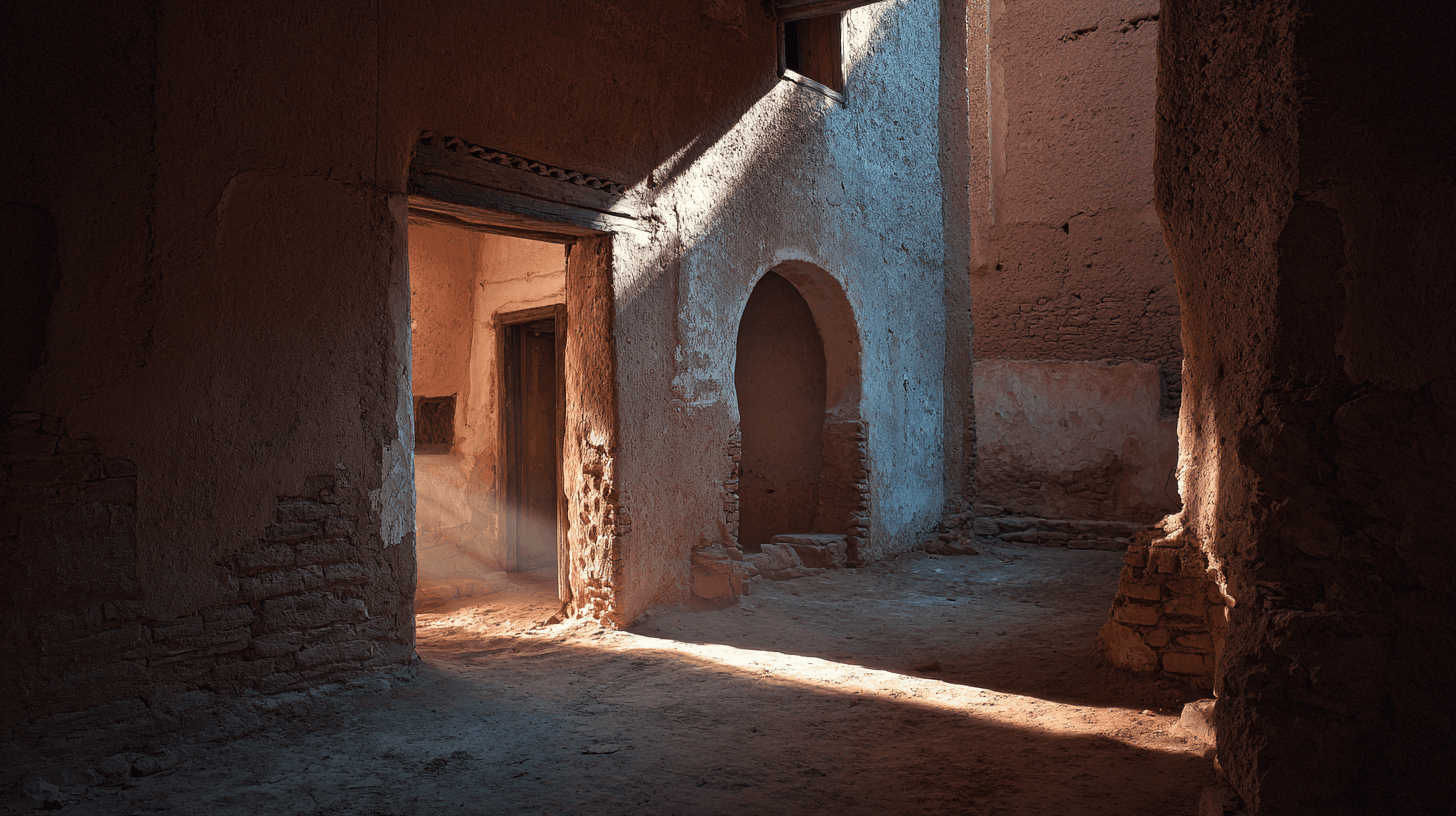
Light enters from above, falling into the courtyard and filtering through doorways into the surrounding rooms. The quality of light changes through the day — bright and vertical at noon, golden and angled at sunset. Living in a riad means living in constant relationship with the sky, seeing it framed, watching it change, feeling the day's rhythm through the shifting illumination.
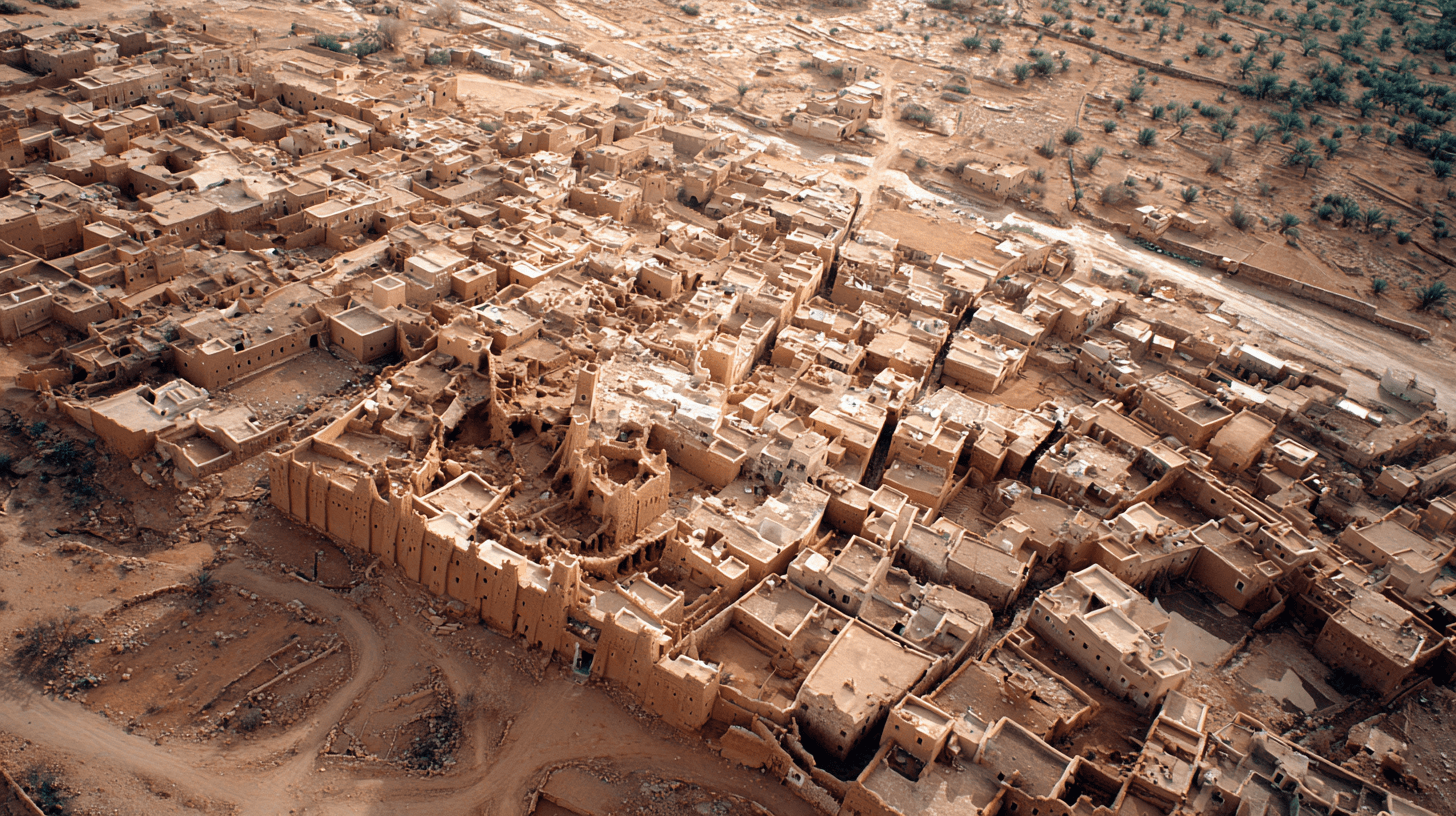
The largest riads were palaces. The smallest were single-family homes. But the principle remained constant: everything faces inward, everything serves the garden, the world outside does not exist once you close the door.
Now many riads are guesthouses, and tourists sleep in rooms built for family privacy. The architecture survives because it still works — still cool, still quiet, still beautiful. The garden at the center knows nothing of commerce. The fountain still plays. The oranges still ripen. The sky, framed by ancient walls, is the same sky that has always been there, held like a secret above the hidden heart of the house.
The Facts
- •Name derives from Arabic 'ryad' (garden)
- •Central courtyard with fountain is defining feature
- •Exterior walls typically windowless or minimally windowed
- •Design predates modern climate control
- •Microclimate can be 10°C+ cooler than exterior
- •Largest riads in Fes and Marrakech were palatial
- •Many converted to guesthouses since 1990s
- •UNESCO recognizes medina architecture including riads
Sources
- Wilbaux, Quentin. 'La Médina de Marrakech.' L'Harmattan
- Revault, Jacques. 'Palais et Demeures de Fès.' CNRS
- Touri, Abdelaziz. 'Le Maroc Andalou.' Ministère de la Culture