The Ksour
Fortified villages on the edge of the Sahara
One gate. One wall. Two hundred families inside. The ksar was never just a village. It was a statement: we survive together, or we don't survive at all.
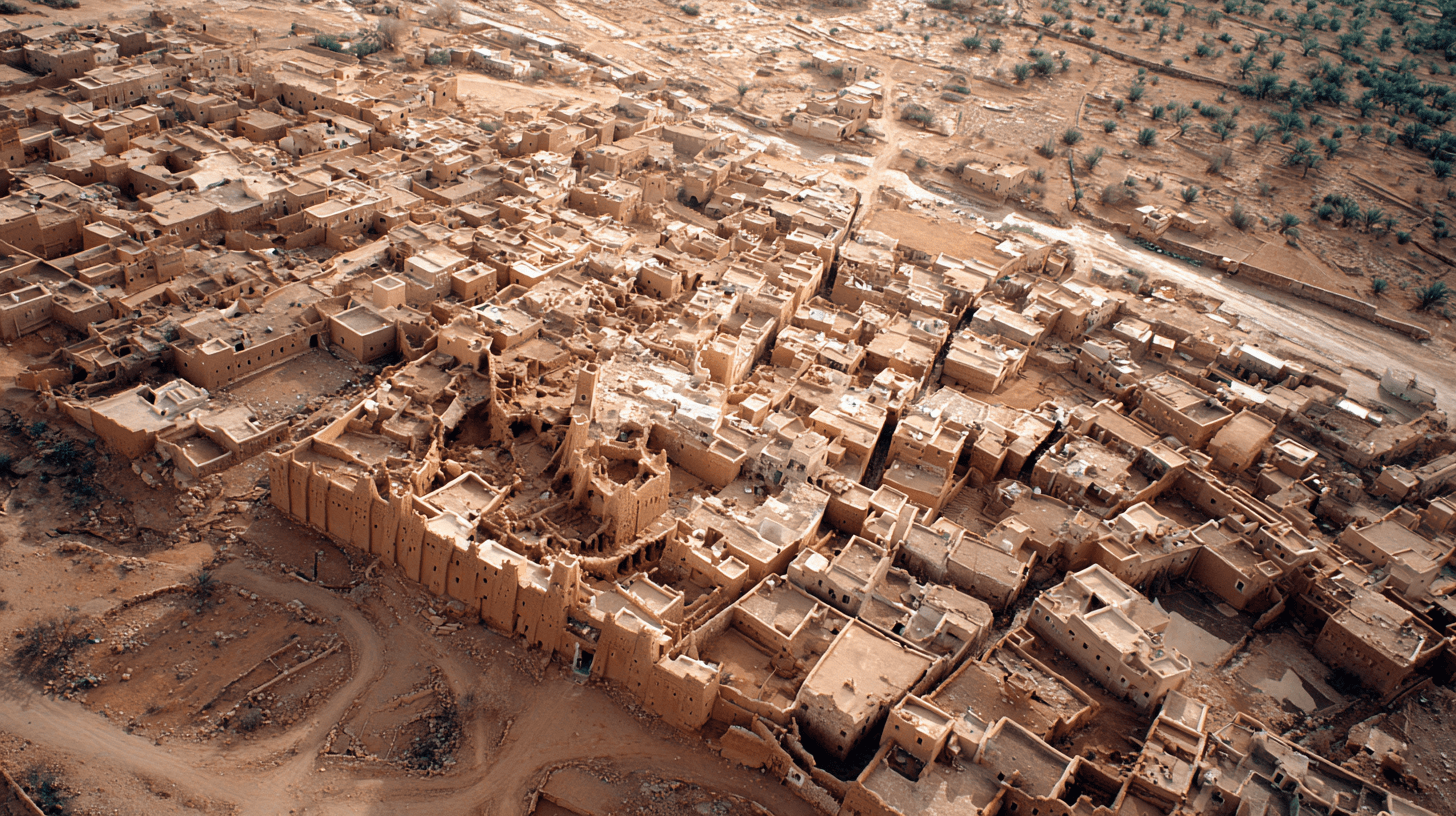
The ksour (plural of ksar) are fortified villages built at the edge of the Sahara. Where a kasbah housed a single wealthy family, a ksar housed a community — farmers, craftsmen, merchants, all living within walls built for collective defense.
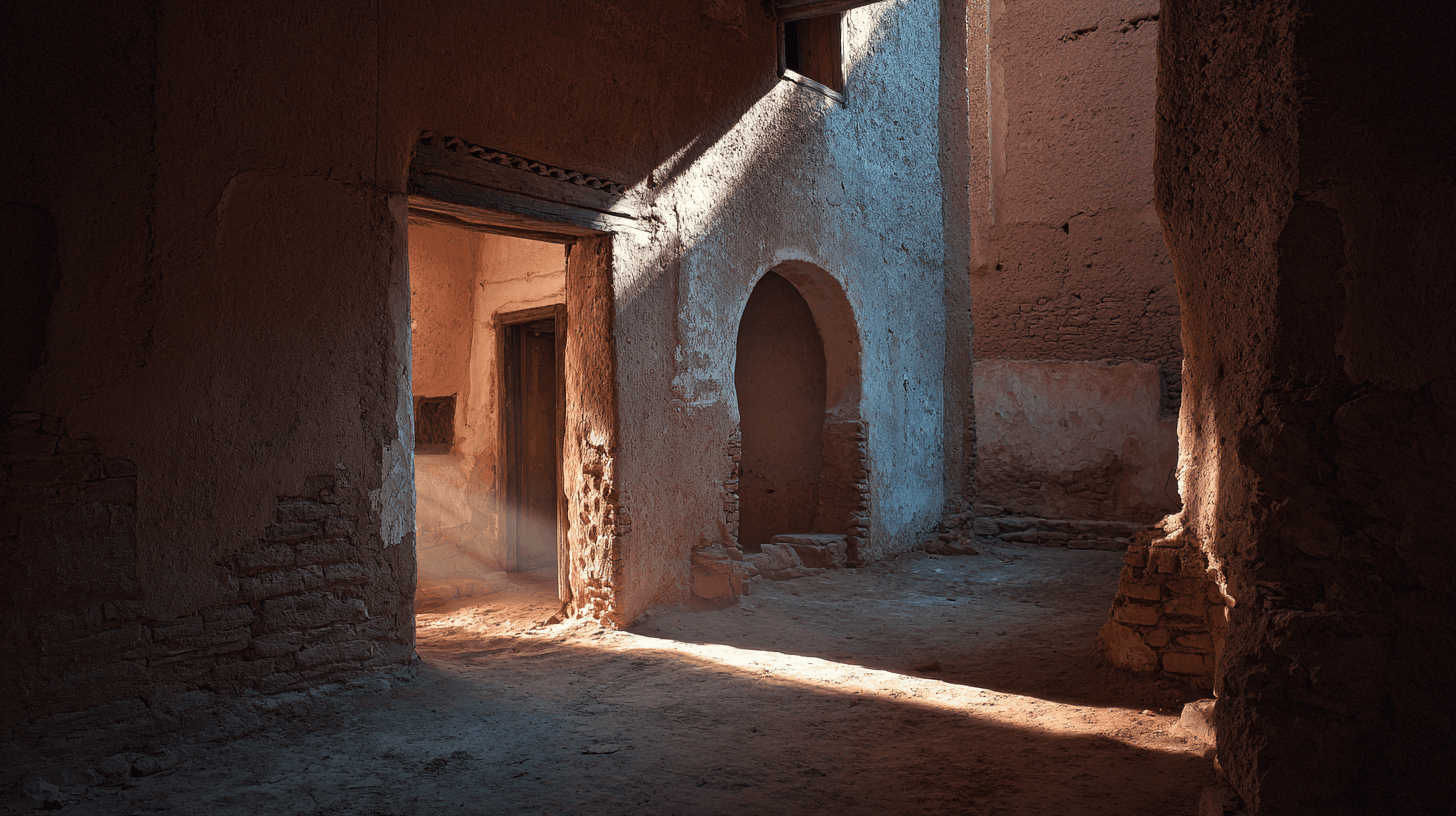
The architecture enforces cooperation. One entrance means one point to defend. Narrow streets mean attackers cannot use their numbers. Shared granaries at the center mean everyone's survival depends on protecting the common store. The ksar is not a collection of houses that happens to have a wall. It is a single structure in which families occupy cells.
Each ksar developed its own governance. Councils of elders set rules about water use, about maintenance duties, about behavior that might bring danger to the community. Disputes were resolved internally — calling outside authorities meant admitting the ksar could not manage its own affairs. The walls held more than buildings; they held a social contract.
The ksour cluster along the river valleys that slash through the hammada — the Draa, the Dades, the Todra. Water made settlement possible; danger made fortification necessary. The dangers were real: desert raiders, tribal conflicts, the general instability that preceded and followed French colonization. The ksour were not quaint. They were functional responses to violent possibility.
Inside the walls, life organized itself vertically. Ground floors for animals and storage. Upper floors for living. Rooftops for sleeping in summer, for drying food, for women's work away from male eyes. The vertical structure created privacy in density, personal space within collective constraint.
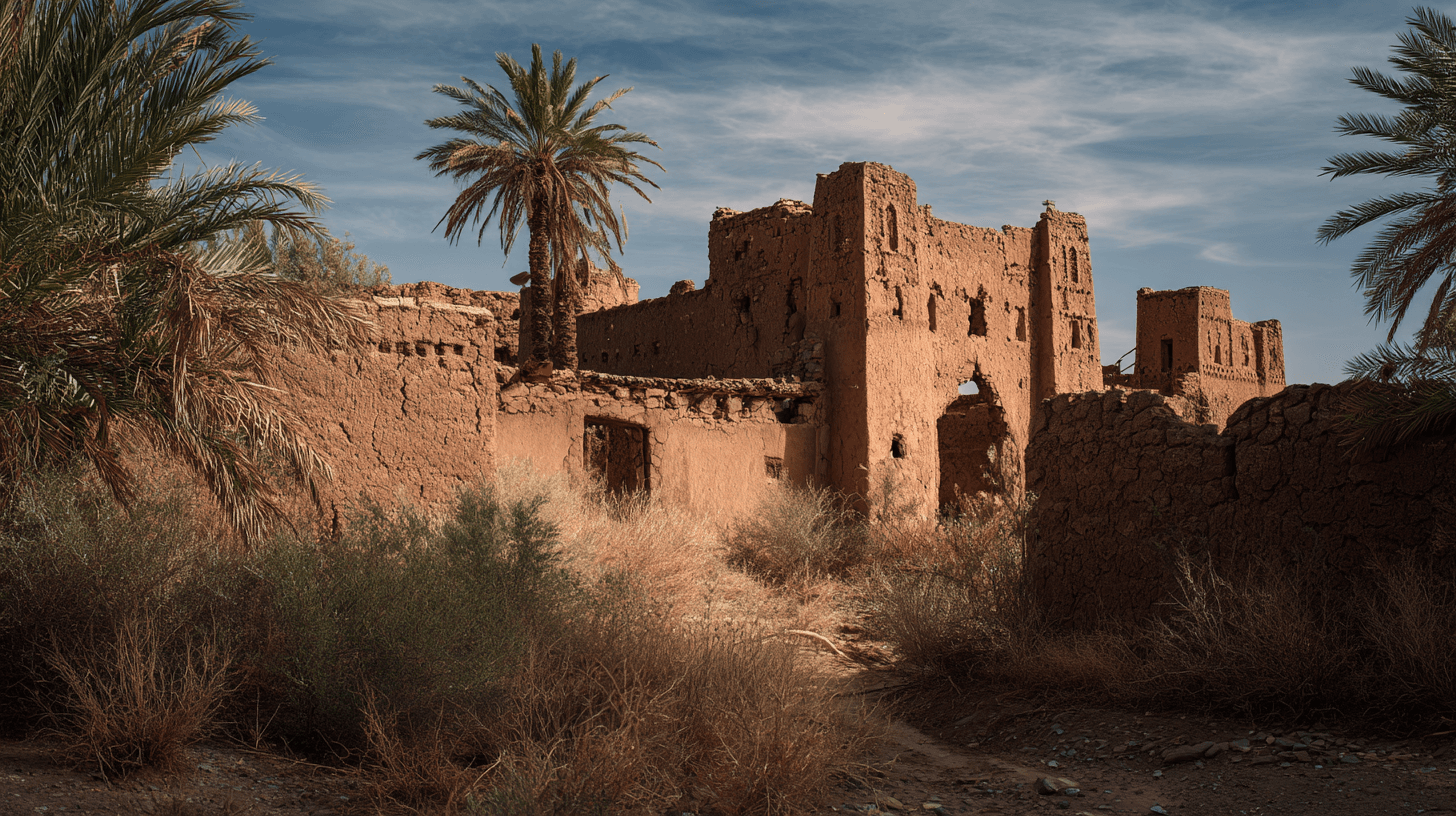
When Morocco stabilized in the late 20th century, the ksour lost their defensive purpose. Families could safely build outside the walls, with more space, more light, modern conveniences. The old centers hollowed out. Some ksour are now empty, their mud walls softening into the earth.
But not all. In some valleys, families have stayed. They repair the walls, maintain the gates, live within structures that make less sense every year except in one way: they are beautiful, they are theirs, and they connect the living to everyone who came before. The ksar survives because someone decides, each morning, that it should.
The Facts
- •Ksour housed entire communities (vs. kasbahs for single families)
- •Single fortified entrance was standard
- •Shared granaries stored communal food reserves
- •Councils of elders governed internal affairs
- •Construction primarily pisé (rammed earth)
- •Major concentration in Draa, Dades, Todra valleys
- •Many depopulated since mid-20th century
- •Some UNESCO-listed (Ait-Ben-Haddou area)
Sources
- Naji, Salima. 'Art et Architectures Berbères du Maroc.' Edisud
- Terrasse, Henri. 'Kasbas Berbères de l'Atlas et des Oasis.' Horizons de France
- Moroccan Ministry of Culture documentation