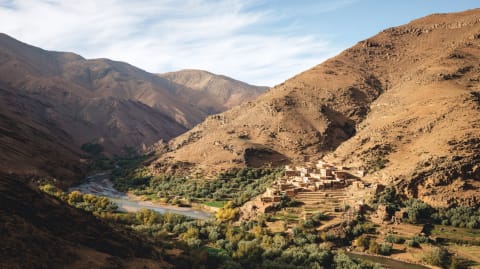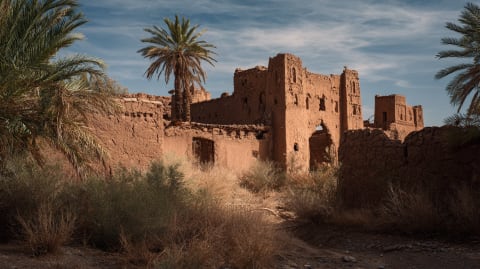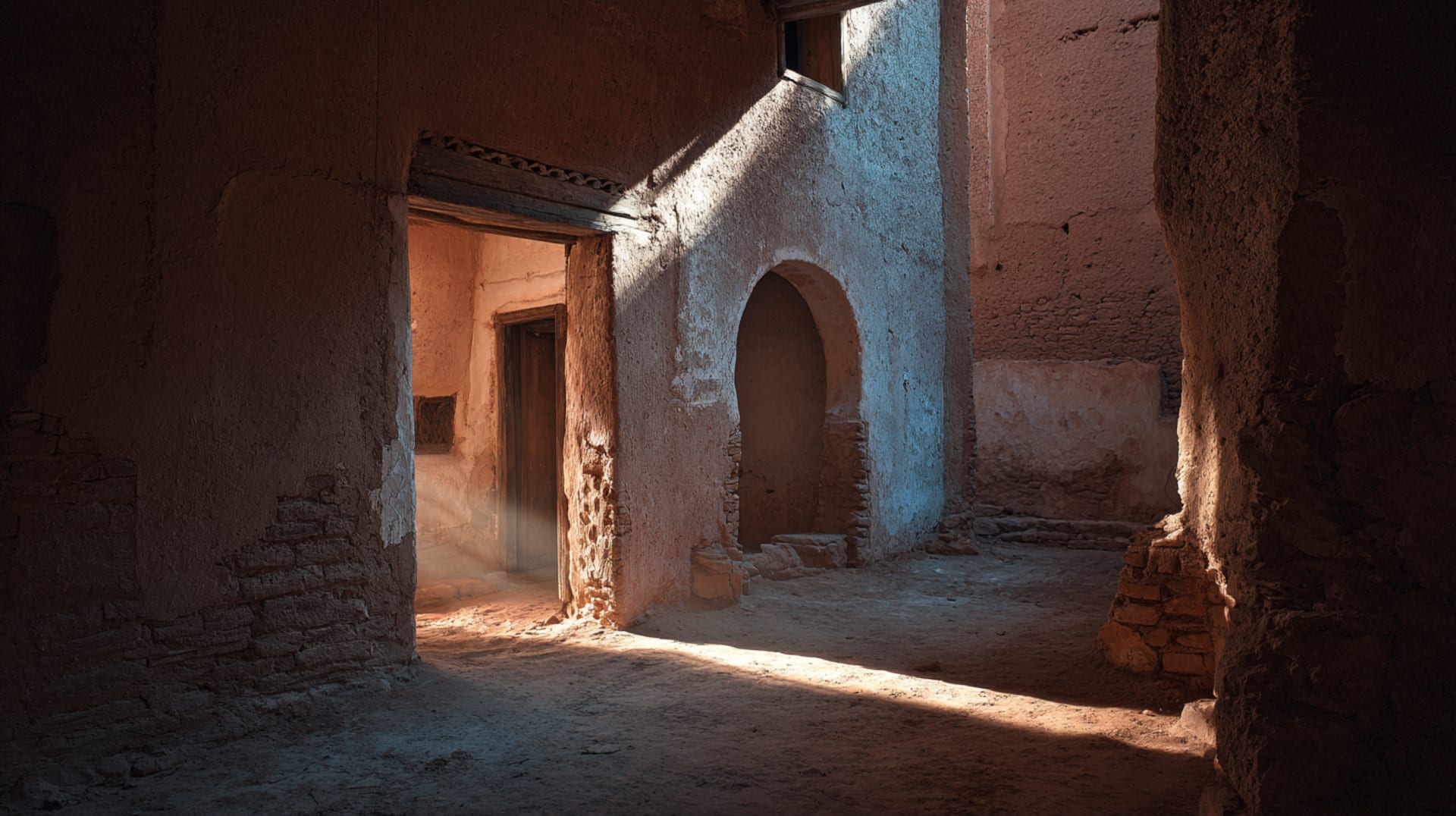
Step through the doorway. The temperature drops fifteen degrees in three seconds. Outside, the Draa Valley shimmers at 45°C. Inside, the air is cool, still, almost subterranean. The kasbah walls are two feet thick, made of rammed earth that has been absorbing and releasing heat for four hundred years. Nobody calls it a thermal battery. It doesn't need a name. It just works.
The principle is simple enough that it sounds like it shouldn't work this well. Dense materials absorb heat slowly during the day, storing it in their mass. At night, when desert temperatures plummet, the walls release that stored heat inward. The cycle reverses with the seasons: in summer, the walls stay cool from winter's stored cold; in winter, they radiate summer's captured warmth. The building remembers the last season and uses it against the current one. This is thermal mass architecture, and Morocco perfected it centuries before anyone invented the term — or the electricity bill.
But the kasbahs of the Draa go further. The walls aren't just thick — they're layered. Exterior pisé faces the sun. Interior surfaces are finished with tadelakt, which reflects light and resists moisture. Between them: air pockets, wooden beams, and the accumulated dust of centuries. Every layer does something. Nothing is decorative that isn't also functional, and nothing is functional that isn't also, in its quiet way, beautiful.
The courtyard is a heat engine designed to look like a garden. Narrow and deep, it admits only a few hours of direct sunlight to the floor each day. The walls rise three storeys, casting shadows that rotate like sundials. By late afternoon, the entire ground floor is in shade. Hot air rises out of the courtyard; cool air is drawn in at ground level. The effect is a convection current — the building breathes, pulling cool air through the rooms the way lungs pull air through the body.
The windows are small and few. This looks austere until you understand that every window is a heat leak. The builders knew this. They placed windows high, where they catch light but not direct sun, and sized them to illuminate without overheating. The carved plaster screens — moucharabieh — break sunlight into scattered points that light the room without raising its temperature. The technology is geometry. The energy source is the sun, used not as fuel but as opponent.
Modern cooling costs the Draa Valley dearly — diesel generators powering air conditioning in concrete buildings that trap heat like ovens. The kasbahs next door, unpowered, stay cool. The comparison is unflattering to everyone who approved the concrete. The old builders understood something that the new ones are beginning to relearn: in the desert, the best strategy is not to fight the heat but to negotiate with it. The kasbah negotiates beautifully.
The walls are two feet thick. Step inside and the temperature drops fifteen degrees. Six days through the kasbahs and you feel the engineering.
Tell us about your trip →The Facts
- —Kasbah walls are 2 feet thick rammed earth
- —Temperature drops 15°C in 3 seconds stepping inside
- —Thermal mass absorbs heat by day, releases at night
- —System works without electricity or mechanical cooling
- —Morocco perfected thermal mass centuries before air conditioning
- —Draa Valley summer temperatures reach 45°C
- —Same principle used in pisé construction across North Africa
Sources
- Fathy, Hassan. Natural Energy and Vernacular Architecture. University of Chicago Press, 1986
- Ragette, Friedrich. Traditional Domestic Architecture of the Arab Region. Edition Axel Menges, 2003
- Sibley, Magda. "The Architecture of Islamic Public Baths of North Africa." Architectural Research Quarterly, 2012
Further Reading
Practical questions