The Palace of Revenge
Built to humiliate the Portuguese. Stripped to humiliate its builder.
The palace was designed as an insult.
In 1578, Sultan Ahmad al-Mansur defeated Portugal so completely that their king died on the battlefield. The ransom for prisoners flooded Morocco with Portuguese gold. Al-Mansur decided to build a palace that would make Portuguese ambassadors weep — a building so magnificent that they'd understand, in marble and gilt, exactly what their defeat had cost them.
He named it El Badi: "The Incomparable."
The construction took 25 years. The courtyard alone measured 135 by 110 meters — large enough to hold an army, which it sometimes did. The walls were covered in Italian marble and onyx. The ceilings used Irish oak (the Portuguese had stripped their own forests). The fountains flowed with rose water. 360 rooms surrounded the central pool. Gold was everywhere.
When the palace was finished, al-Mansur asked his court jester what he thought. The jester replied: "When it's demolished, it will make a fine ruin."
He was right.
In 1672, Sultan Moulay Ismail needed to build his own capital at Meknes. He could have quarried new stone. Instead, he stripped El Badi. Every panel, every marble column, every gilded door was carried north over ten years of systematic demolition. He wasn't just taking materials — he was erasing a rival dynasty's glory.
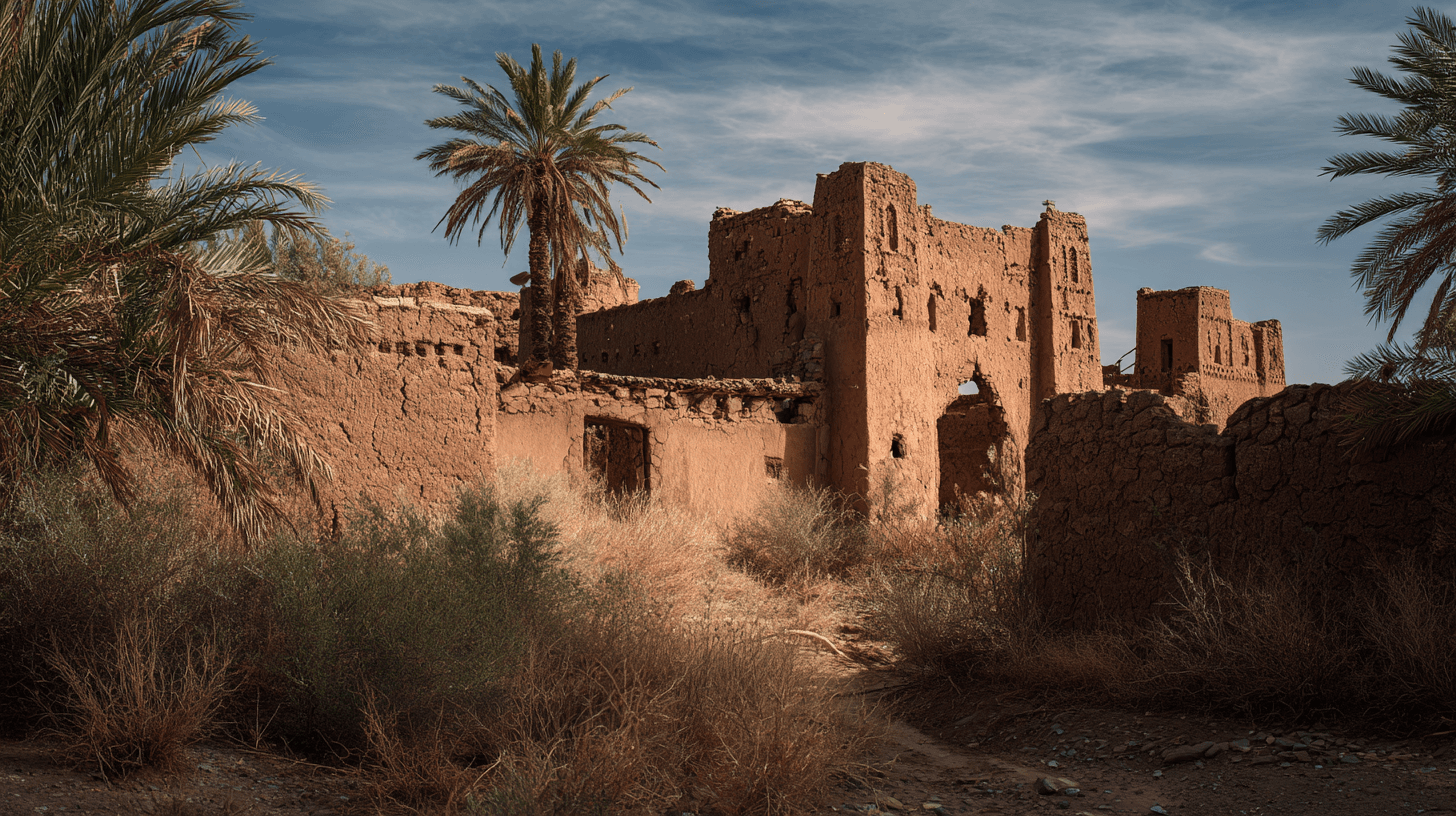
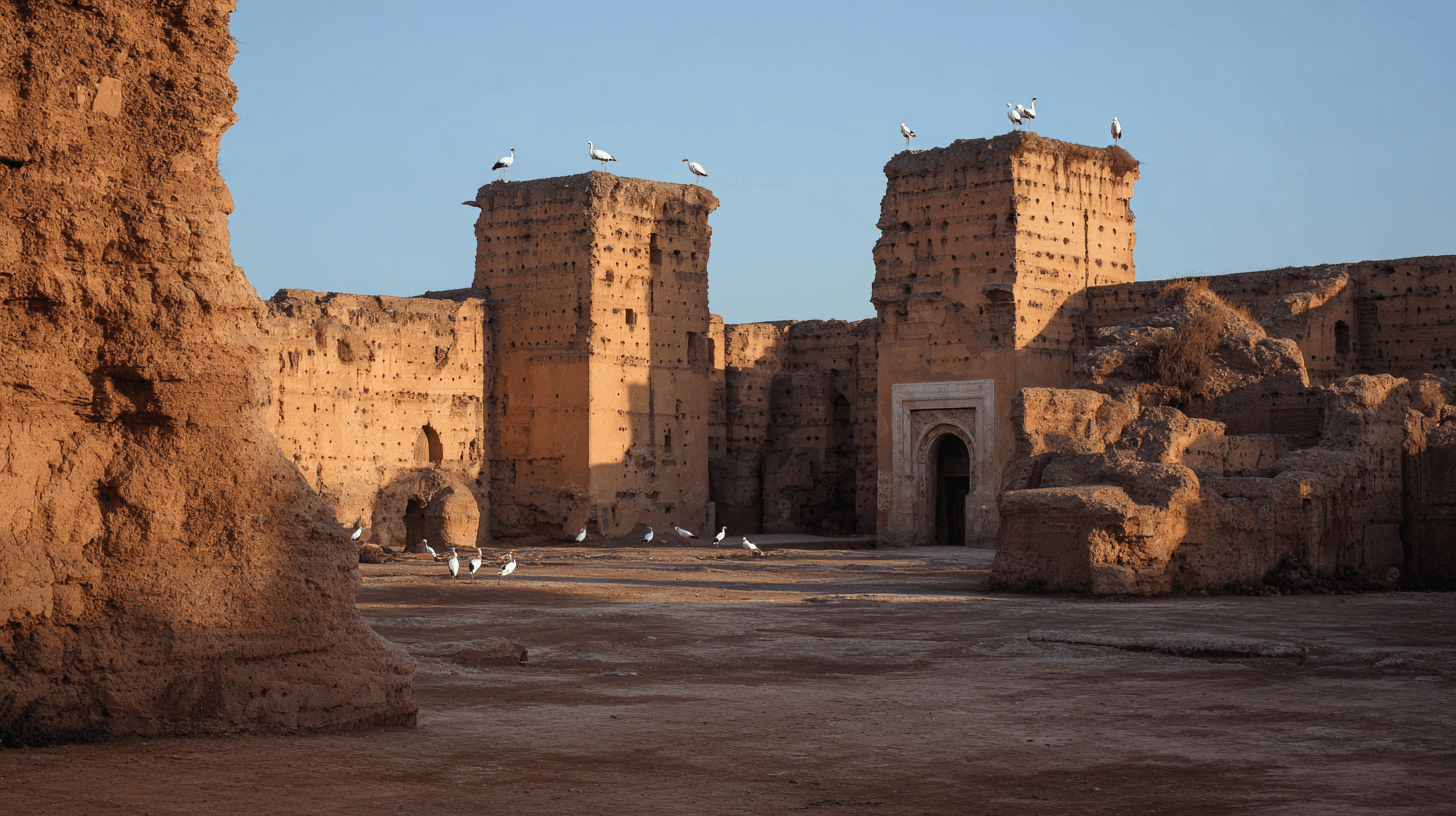
What remains is the skeleton: massive walls of rammed earth, the empty pool (now a sunken garden), and storks nesting where gold once gleamed. The scale is still overwhelming. You can see what it was by what's missing.
Today, El Badi hosts a folklore festival once a year. Musicians play in the courtyard that once bankrupted Portugal. The storks don't seem to mind.
The Facts
- •Construction began 1578, completed approximately 1603
- •The central courtyard measures 135 x 110 meters
- •Materials included Carrara marble, Irish oak, gold leaf, and onyx
- •Sultan Moulay Ismail stripped the palace 1672-1682
- •Materials were used to build his palace complex in Meknes
- •The courtyard now hosts the annual Marrakech Popular Arts Festival
Sources
- Deverdun, Gaston. 'Marrakech des Origines à 1912.'
- Métalsi, Mohamed. 'Palais et Grandes Demeures du Maroc.'
- García-Arenal, Mercedes. 'Ahmad al-Mansur.' OneWorld