The Bureaucracy of Blood
Where sultans signed death warrants between tea ceremonies
The doors are always closed.
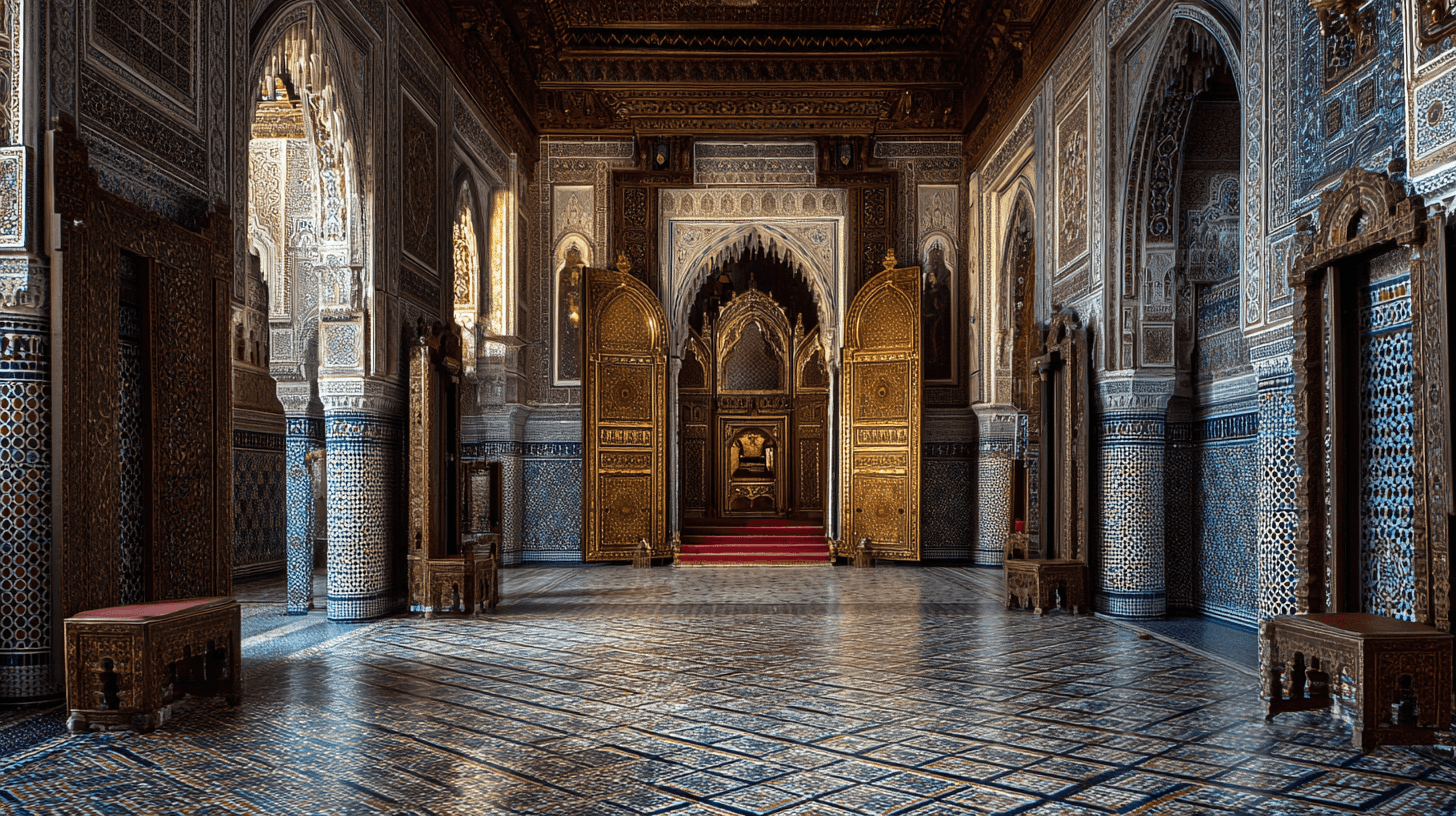
The Dar el Makhzen in Fes — the Royal Palace — covers 80 hectares in the heart of the old city. Behind those famous golden doors lie gardens, mosques, a madrasa, kitchens that once fed thousands, and the administrative heart of a 1,200-year-old monarchy. You cannot enter. No tourist can. The palace is still a working royal residence.
But the stories seep out.
This was where the Moroccan state happened. Every morning, for centuries, the sultan would hold audience in the mechouar — the great courtyard. Petitioners lined up: tribal leaders seeking favor, merchants disputing contracts, families begging clemency for condemned relatives. The sultan listened, consulted his viziers, and pronounced judgment. Some walked out with fortunes. Some didn't walk out at all.
The bureaucracy was elaborate and lethal. A network of spies reported on every corner of the empire. Tax collectors were held personally responsible for their quotas — failure meant prison or worse. Provincial governors served at the sultan's pleasure; a single letter could end a career or a life. The phrase "Makhzen" itself became synonymous with the Moroccan deep state — a system of control that predates and outlasts any individual ruler.
Between decisions, there was tea. Elaborate ceremonies with mint tea and pastries, performances by musicians, poetry recitations — the rituals of civilization layered over the machinery of power. A foreign ambassador might spend hours in pleasant conversation, never knowing that the man pouring his tea had signed three execution orders that morning.
The Alaouite dynasty has ruled Morocco since 1631, making it one of the oldest continuous monarchies on earth. The Dar el Makhzen in Fes was their seat for centuries before Rabat became the modern capital. The current king still visits. The golden doors still close behind him.
You can only see the exterior — those massive brass doors, the zellige tilework, the guards in ceremonial dress. What happens inside remains, as it has for a thousand years, a matter for the Makhzen alone.
The Facts
- •The Dar el Makhzen covers approximately 80 hectares
- •The Alaouite dynasty has ruled Morocco since 1631
- •'Makhzen' refers to both the palace and the Moroccan state apparatus
- •The palace contains mosques, gardens, a madrasa, and administrative buildings
- •It remains a working royal residence, closed to the public
- •The golden doors are among the most photographed in Morocco
Sources
- Waterbury, John. 'The Commander of the Faithful.' Columbia University Press
- Pennell, C.R. 'Morocco Since 1830.' NYU Press
- Le Tourneau, Roger. 'Fes in the Age of the Marinids.' University of Oklahoma Press