The Babouche Makers
A slipper that takes three craftsmen
Three men sit in three shops on the same alley. The first cuts leather. The second sews. The third finishes. A single slipper passes through six hands before it's done.
The babouche — the backless Moroccan slipper — looks simple. It is not. The crafting requires specialization so refined that no single artisan makes a complete shoe. The labor has divided itself across centuries into roles that function like an assembly line, if assembly lines had existed in medieval Fes.
The cutter is first. From tanned leather (goat for the upper, cow for the sole), he cuts the shapes using patterns that exist in his mind, not on paper. The blade follows curves memorized through years of watching, then years of doing. A good cutter can work through a hundred uppers in a day. His cuts must be exact because there is no margin for the sewer to correct.
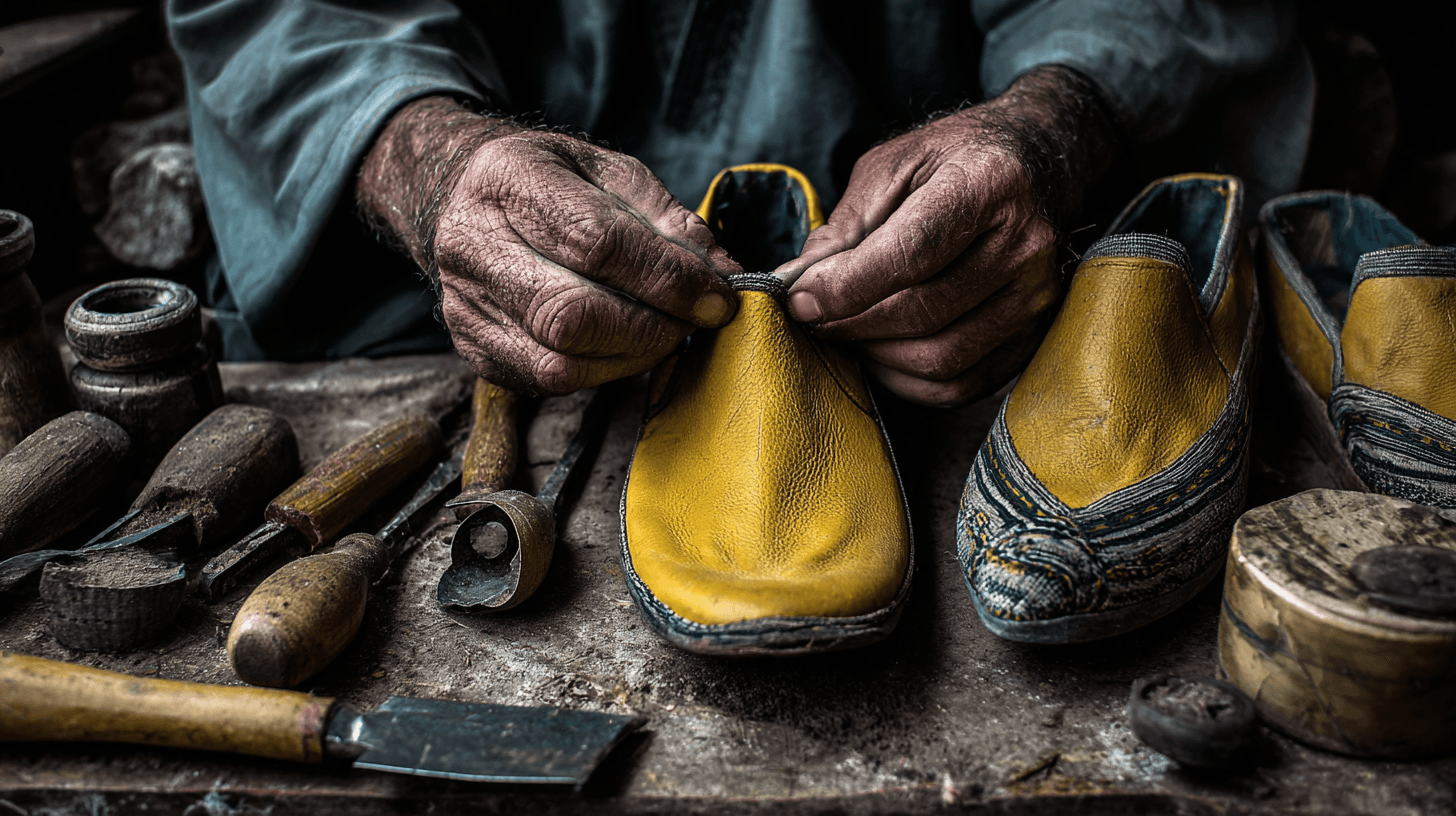
The sewer receives the pieces. His work is harder to see, happening in cramped workshops where light comes through small windows and men sit on low stools surrounded by leather and thread. The stitching is tight, even, and utterly consistent — a machine could not do it better, only faster. His fingers bear calluses so thick they've become protective equipment.
The finisher shapes and polishes. He slides the sewn babouche onto a wooden last, dampens the leather, works it into its final form. Then comes the polishing — layer after layer of wax, each buffed to a shine, until the leather glows like colored glass. A well-finished babouche should be soft enough to fold in half, supple enough to last decades, beautiful enough to catch the eye across a souk.
The color defines the wearer. Yellow for men. White for formal occasions. Embroidered for brides. Plain for scholars. The medina's streets are a census of babouches, each pair telling those who can read them about the wearer's gender, status, and intentions.
The factories have come, of course. Plastic soles, machine stitching, chemical dyes. They sell more shoes. But in the alleys of Fes and Marrakech, the three men still sit in their three shops. Cut. Sew. Finish. The same division of labor that made their great-great-grandfathers' shoes makes theirs. The babouche arrives at your feet having passed through hands that inherit knowledge they will never need to write down.
The Facts
- •Three-artisan production: cutter, sewer, finisher
- •Traditional materials: goat leather (upper), cow leather (sole)
- •Yellow historically indicates male wearer
- •Full production takes 1-3 days depending on complexity
- •Major production centers: Fes, Marrakech
- •Craft specialization dates to at least 13th century
- •Quality measured by flexibility — should fold in half
- •Embroidered styles for weddings can take weeks
Sources
- Jolis, Albert. 'The Crafts of Morocco.' Thames & Hudson
- Triki, Hamid. 'Médinah: Traditional Living in Morocco.' Assouline
- UNESCO documentation on Moroccan leather crafts