The First Skull
How a Moroccan mine rewrote human origins
The skull lay in a barite mine one hundred kilometers west of Marrakesh, waiting since the Pleistocene.
In 1961, miners at Jebel Irhoud uncovered bones they assumed were Neanderthal. The dating said forty thousand years. The classification seemed to fit. For decades, the find gathered dust in scientific literature.
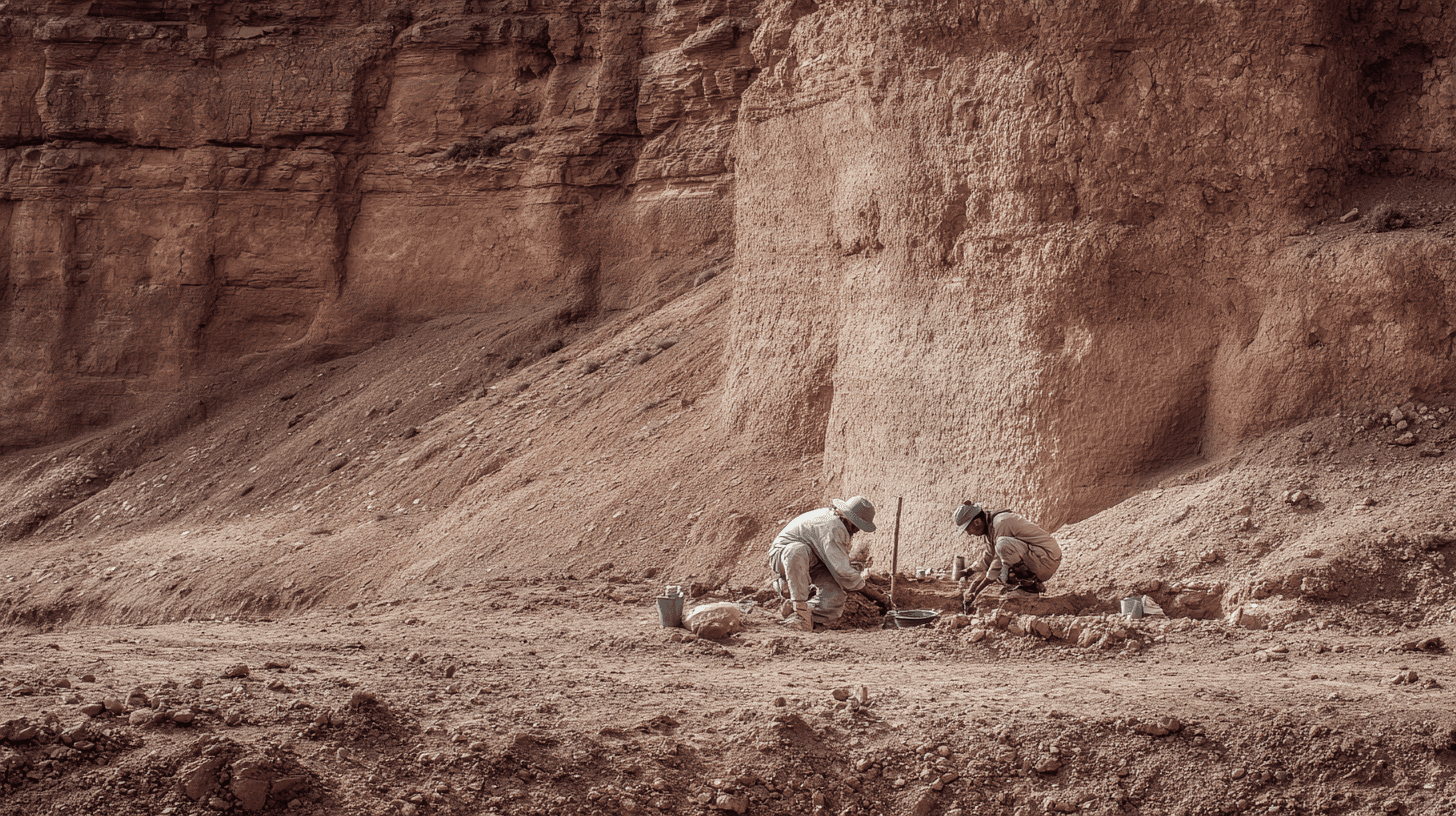
Then Jean-Jacques Hublin of the Max Planck Institute returned with Abdelouahed Ben-Ncer of Morocco's National Institute of Archaeology. Between 2004 and 2017, they excavated twenty-two additional fossils from at least five individuals. The thermoluminescence dating gave a number that rewrote human history: 315,000 years.
This made Jebel Irhoud the oldest securely dated Homo sapiens site on Earth—more than 100,000 years older than Ethiopia's Omo Kibish.
The skulls revealed something else. The faces were modern—thin brow ridges, flattened cheekbones. But the braincases were elongated, archaic, still evolving. The implication: human origins were not a single East African event but a pan-African process.
Sources
- Hublin, J.-J., et al., 'New fossils from Jebel Irhoud, Morocco and the pan-African origin of Homo sapiens,' Nature 546 (2017): 289-292 Richter, D., et al., 'The age of the hominin fossils from Jebel Irhoud, Morocco, and the origins of the Middle Stone Age,' Nature 546 (2017): 293-296 Max Planck Institute for Evolutionary Anthropology, press release, June 2017 INSAP (Institut National des Sciences de l'Archeologie et du Patrimoine), Rabat