The Flamingo Lagoon
Where the Sahara meets the sea
The lagoon appears like a mirage — a long arm of the Atlantic reaching into the Sahara.
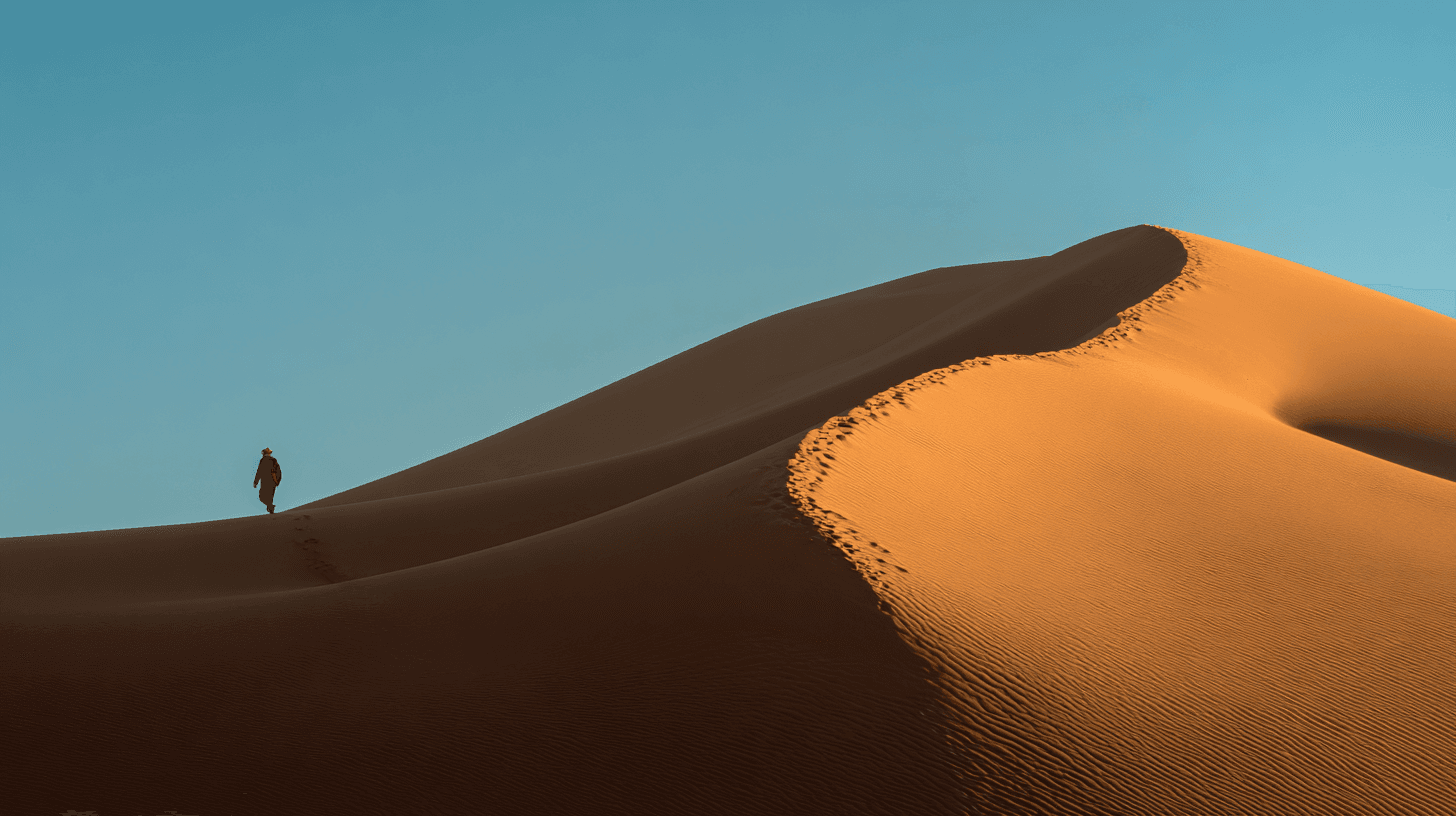
Khenifiss is the largest lagoon on the Moroccan coast, a 20-kilometer sliver of water between Tan-Tan and Tarfaya where the desert touches the sea. The landscape seems impossible: golden dunes on one side, salt flats shimmering white, and water filled with pink.
The flamingos arrive by the thousands.
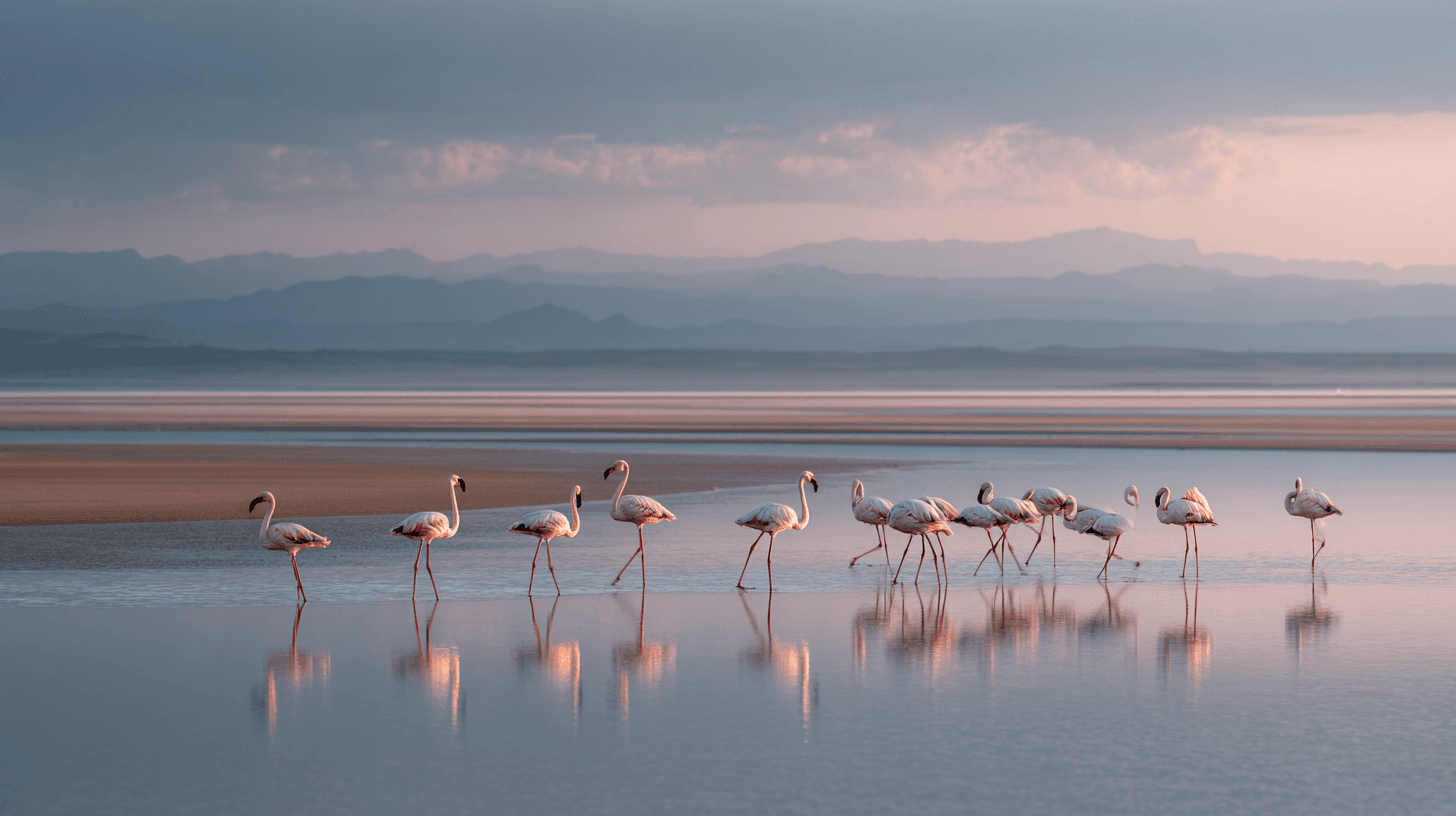
Every winter, roughly 20,000 birds descend on Khenifiss — flamingos, spoonbills, marbled ducks, Audouin's gulls. They come from across the Western Palearctic, following ancient flyways from Scandinavia and Britain, stopping here to feed on the rich mudflats before continuing south or settling in for the season. The bay ranks as the world's second most important flamingo site.
The pink is chemistry. Flamingos are born gray. Their color comes from carotenoid pigments in the algae and crustaceans they filter from the water, the same compounds that make carrots orange and tomatoes red. The richer the feeding, the pinker the bird. At Khenifiss, where nutrients pool in the shallow lagoon, the flamingos turn the color of dawn.
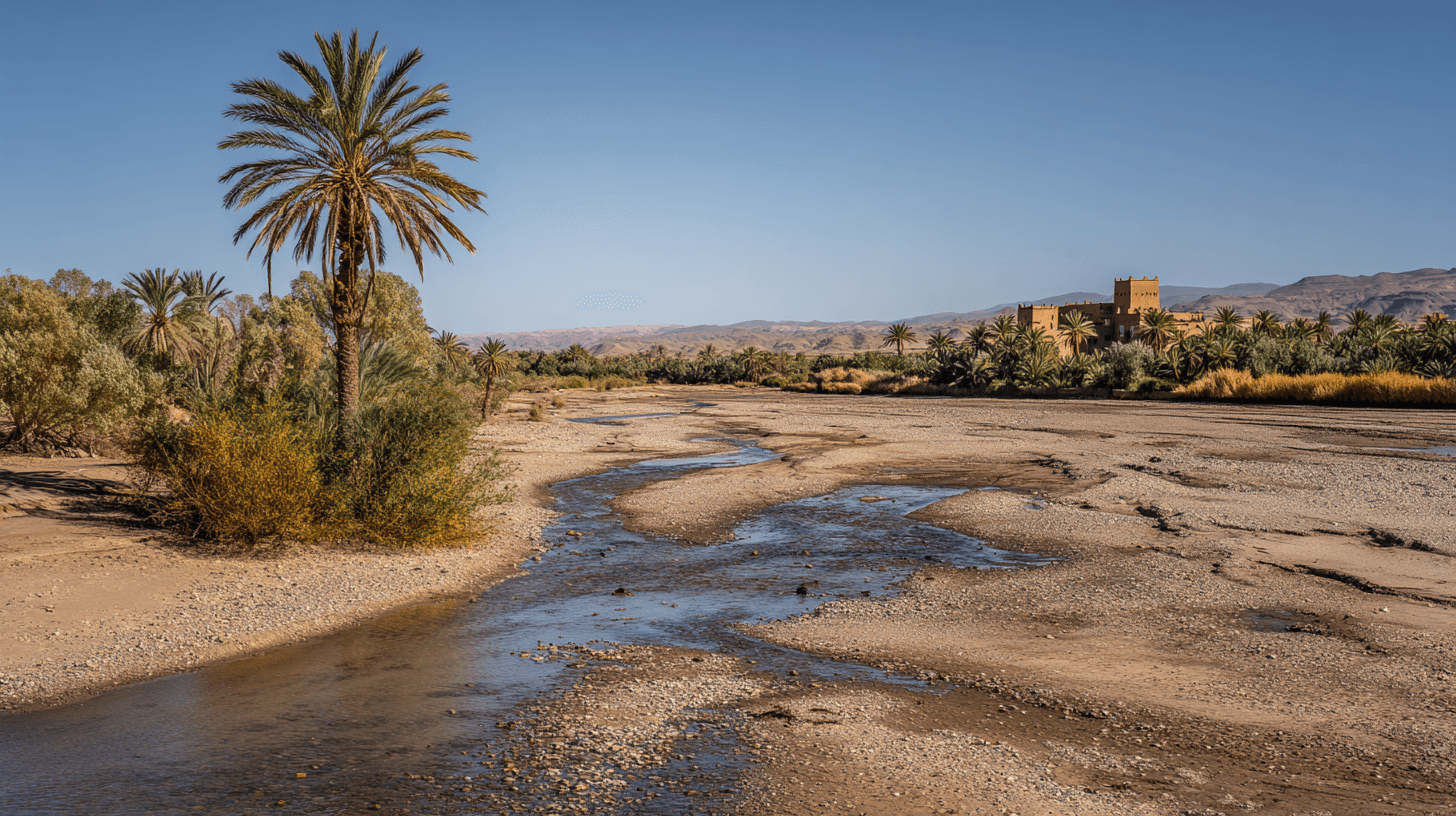
The national park was established in 2006, but the lagoon has been protected since 1962. It's a Ramsar wetland of international importance. It sits on UNESCO's World Heritage tentative list. The combination of coastal, wetland, and desert ecosystems in one place is almost unique — sabkhas (salt flats), ergs (dune fields), and open Atlantic, all within walking distance.
Beyond the birds, the inland sections hold the ghosts of the Sahara that was. Red foxes, porcupines, and the rare Cuvier's gazelle roam the limestone plateaus. The park rangers occasionally spot the tracks of African wildcats. The desert here is not dead — it's quiet.
Getting there requires commitment. The N1 highway runs through the park, connecting Laâyoune to the north, but the lagoon itself is reached by sandy tracks. There's a fishing village at Foum Agouitir with a civil guard post. Boat tours exist in theory, but boatmen and vessels are scarce. This is not a place that wants visitors; it tolerates them.
The light at Khenifiss has a particular quality — the reflection off water and salt and sand creates something luminous, almost holy. Photographers speak of it the way painters speak of Morocco's interior. At sunrise, when the flamingos lift off in formation, wings catching the first light, the lagoon becomes what it has always been: a place where impossible things meet.
The Facts
- •Khenifiss National Park — 185,000 hectares, established 2006
- •Largest lagoon on Moroccan coast — 20km long
- •World's second most important flamingo site
- •~20,000 waterfowl winter here annually
- •Ramsar wetland of international importance since 1980
- •On UNESCO World Heritage tentative list since 1998
- •Home to globally significant populations of marbled teal, ruddy shelduck, and Audouin's gull
- •Free entry, accessible from N1 highway between Tan-Tan and Tarfaya
Sources
- Wikipedia, 'Khenifiss National Park' — overview|Wild Safari Guide, 'Khenifiss National Park' — wildlife|Morocco World News, 'Khenifiss National Park: Morocco's Best-Kept Secret Getaway' (2024)|BirdLife International, Important Bird Area factsheet