The Hidden Kingdom
The secret life of the Sahara
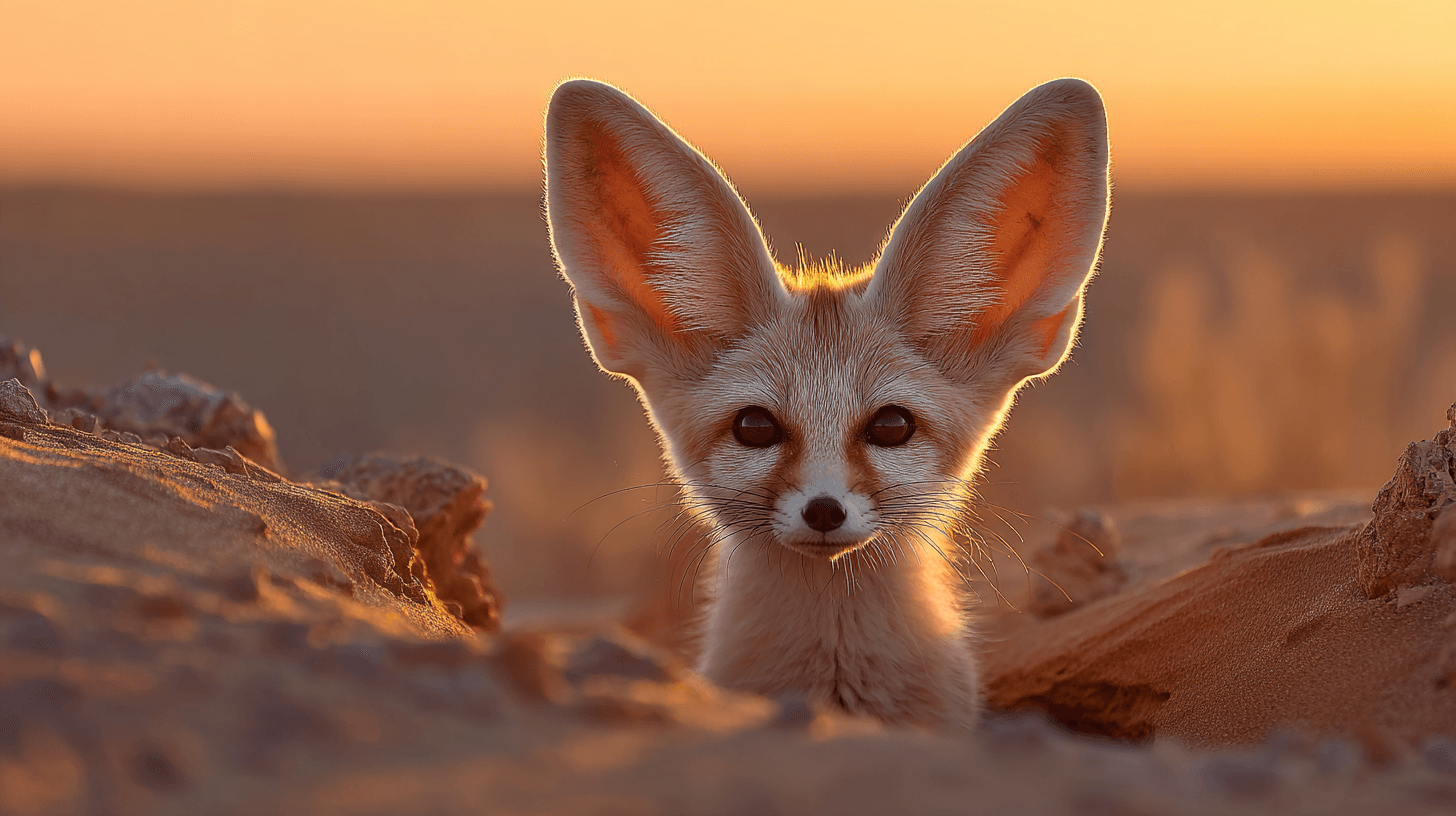
The fennec fox has ears the size of its face.
This is not an accident. In the Sahara, where daytime temperatures can exceed 50°C, the fennec's enormous ears act as radiators — blood vessels close to the surface release heat into the desert air. The ears also function as satellite dishes, detecting prey moving beneath the sand. The fennec is nocturnal, emerging after sunset to hunt beetles, lizards, and the occasional jerboa. During the day, it retreats to burrows that stay cool even when the surface bakes.
In the dunes of Erg Chebbi and Erg Chigaga, children sometimes keep fennecs as pets. It's how most tourists see them — a tiny fox with impossible ears, peering from a basket at a desert camp. But in the wild, fennecs are ghosts. You find their tracks in the morning sand, evidence of a whole civilization that operates while you sleep.
The Sahara's wildlife is a masterwork of adaptation.
The Dorcas gazelle extracts all the moisture it needs from plants, rarely drinking water. It can withstand extreme heat and its tan coat reflects sunlight. The jerboa — a mouse that moves like a miniature kangaroo — survives on seeds and never drinks at all. The desert hedgehog, among the smallest of its kind, can go weeks without food by entering a state of torpor.
Then there are the returns.
The addax — a spiral-horned antelope with a white coat that reflects heat — was hunted nearly to extinction across the Sahara. In Morocco, it had been gone for decades. Recently, addax have been reintroduced to the protected areas around Erg Chigaga and Iriqui National Park. At night, travelers occasionally spot them in headlights — pale ghosts grazing at the edge of the dunes.
The Berber skink, called the "sand fish," doesn't walk across the desert — it swims. Its wedge-shaped snout and smooth scales let it dive beneath the surface and move through sand the way a fish moves through water. The Saharan striped polecat, rarer still, hunts at night in the rocky outwash beyond the ergs.
And overhead, where most visitors never look: Egyptian vultures soaring on thermals, brown-necked ravens calling in the morning, the endangered houbara bustard — a bird so prized by Gulf hunters that its survival remains precarious despite protection.
The desert looks empty. This is its greatest trick. The life is there — in burrows and under rocks, in the cool hours before dawn and after dusk, in the tracks that morning walks reveal and afternoon winds erase.
The Amazigh call the fennec "qrchan." The village of M'hamid el Ghizlane means "the plain of the gazelles." The names remember what the landscape conceals: that this supposedly dead place is teeming with life, waiting for night to fall.
The Facts
- •Fennec fox — world's smallest fox, enormous ears for heat radiation and prey detection
- •Dorcas gazelle — survives without drinking, extracts moisture from plants
- •Jerboa — desert rodent that never drinks water, moves like a kangaroo
- •Addax — critically endangered antelope, recently reintroduced to Iriqui National Park
- •Berber skink ('sand fish') — 'swims' beneath the sand surface
- •Saharan striped polecat — rare nocturnal predator, called 'tadghagha' locally
- •M'hamid el Ghizlane — village name means 'the plain of the gazelles'
- •Sand cat, African wildcat, and golden wolf also present in Moroccan Sahara
Sources
- A-Z Animals, 'Wildlife in Morocco' — species overview|Wild Morocco, 'Desert wildlife' — Sahara fauna|Adrar Travel, 'Animals of Morocco Sahara Desert'|Journey Beyond Travel, 'Erg Chigaga: Into The Wild Sahara'|IFAW, 'Animals of the Sahara Desert: Adaptations & Survival'