The Mellah
Two thousand years of Jewish Morocco
The word means "salt" in Arabic. The first Jewish quarter in Morocco was built on salty, marshy ground near the royal palace in Fez — close enough for the sultan's protection, far enough to be separate.
That was 1438. Jews had already been in Morocco for two thousand years.
The evidence is carved in stone at Volubilis, the Roman city in the hills above Meknès. Olive oil lamps with menorahs. Tombstones with Hebrew inscriptions. When the Romans arrived, Jews were already there — traders and farmers who had crossed from Carthage or sailed from Judea after the Temple fell. They were in Morocco before the Arabs, before Islam, before the dynasties that would shape the country's history.
By 1948, there were 275,000 Jews in Morocco — the largest Jewish community in any Muslim country on Earth. Casablanca alone had 80,000. Every major city had its mellah: Fez, Marrakech, Essaouira, Meknès, Rabat. The quarters were cramped and crowded, but they were also autonomous — Jewish courts, kosher butchers, synagogues, cemeteries. The alliance with the throne was real. When other powers threatened the Jews, the sultan often intervened.
Then came 1948.
The founding of Israel changed everything. Between 1948 and 1973, nearly all of Morocco's Jews departed — to Israel, to France, to Canada, to the United States. Some left for Zionist conviction. Some left after riots in Oujda and Jerada killed 44 Jews in 1948. Some left because their neighbors had left, and the community was dissolving around them.
What remains is remarkable for its presence, not its size.
Today, roughly 2,500 Jews live in Morocco — the largest population in any Arab country. Most are in Casablanca, where Neve Shalom is the last Jewish day school in the Arab world. The Museum of Moroccan Judaism in Casablanca — the only Jewish museum in any Arab country — holds the memory: Torah scrolls, wedding dresses, the silver filigree work that Jewish craftsmen made famous.
But the most extraordinary remnants are the pilgrimage sites.
Every year, thousands of Moroccan Jews return for hiloulot — celebrations at the tombs of revered rabbis. Rabbi Haim ben Diwan at Tagadirt n'Bour, south of Marrakech. Rabbi Amram Ben Diwane at Ouezzane. Rabbi Chaim Pinto at Essaouira. Some sites are shared — Sidi Moussa in the Drâa Valley draws both Jews and Muslims, each venerating the same holy man under different names.
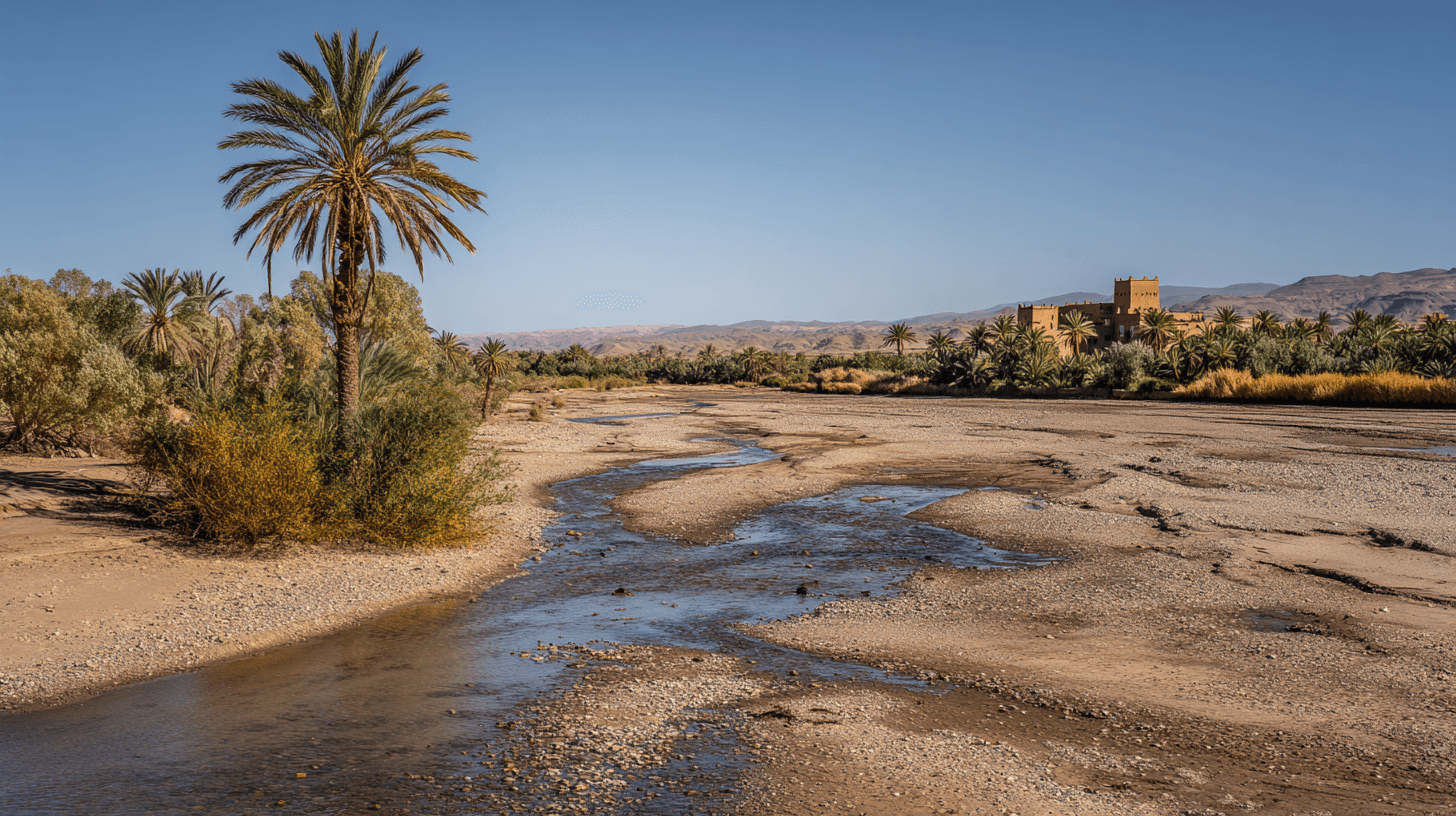
Kamal Hachkar grew up in Tinghir, at the edge of the Sahara. He didn't know his town once had a thriving Jewish community until he was an adult. His 2013 documentary "Tinghir-Jerusalem: Echoes from the Mellah" follows him to Israel, where he finds Moroccan Jews who still speak Berber, still sing the songs of Tinghir, still consider themselves Moroccan fifty years after leaving.
"Religion separated us," says Daoud, an elderly craftsman in Tinghir. "But kindness kept us together."
Mohammed V, the sultan who became king, refused to implement Vichy anti-Jewish laws during World War II. "There are no Jews in Morocco," he reportedly told the French authorities. "There are only Moroccan subjects." His grandson, Mohammed VI, has restored Jewish cemeteries across the country — more than 200 of them — and rededicated synagogues that had stood empty for decades.
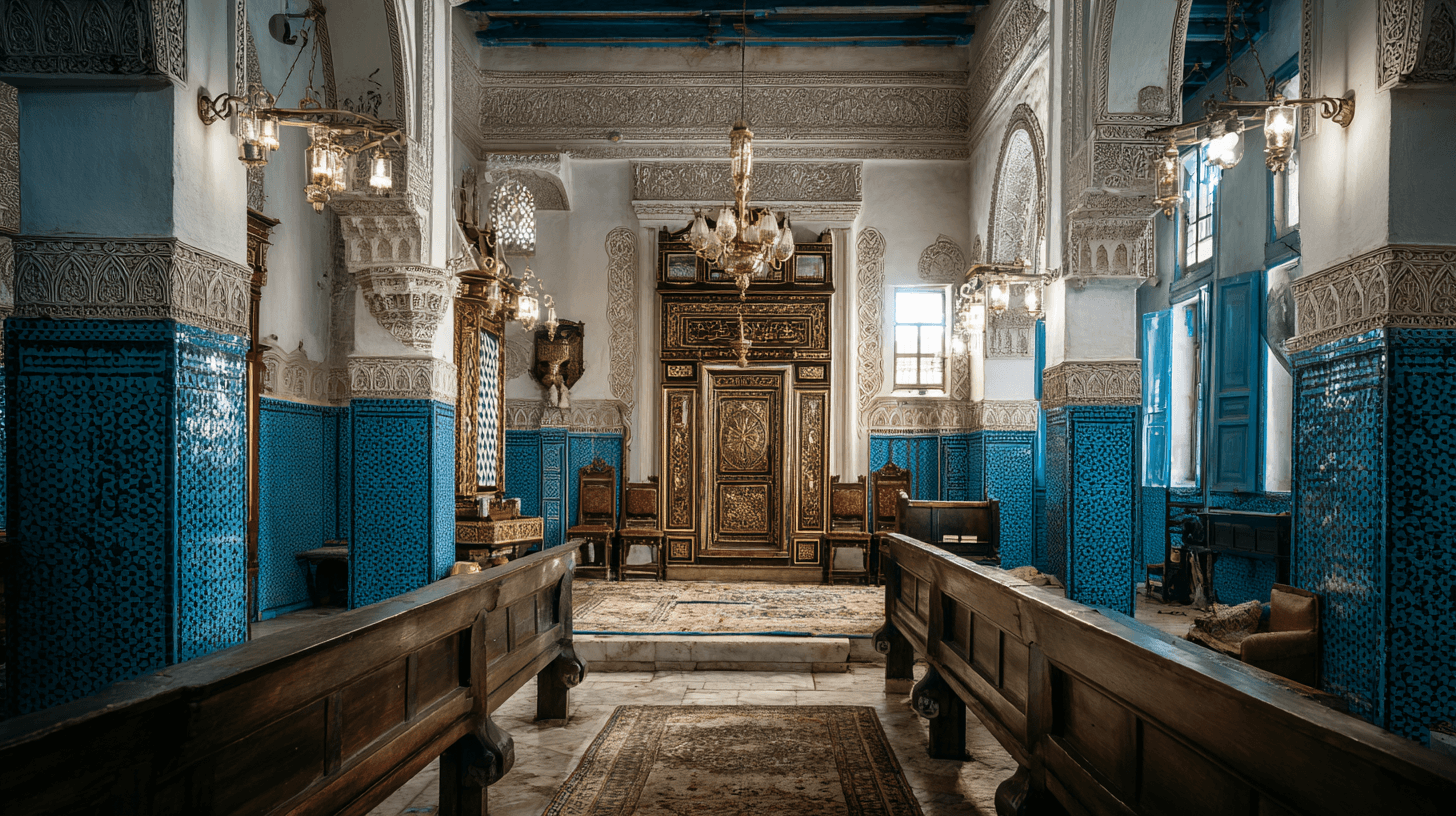
The mellahs are quiet now. In Marrakech, the old Jewish quarter is a neighborhood of leather workshops and carpet sellers. In Fez, the Ibn Danan Synagogue — UNESCO-restored, magnificently tiled — receives tourists, not worshippers. In Essaouira, plaques mark the locations where synagogues once stood.
But the memory persists. In the museum, in the cemeteries, in the hiloulot, in the songs that old men in Tel Aviv still sing in Berber — the two thousand years are not forgotten.
The Facts
- •2,000+ years of Jewish presence in Morocco — archaeological evidence at Volubilis (2nd century BCE)
- •1438: First mellah established in Fez, near royal palace for protection
- •1948: 275,000 Jews in Morocco — largest Jewish community in Muslim world
- •Today: ~2,500 Jews remain, mostly in Casablanca
- •Museum of Moroccan Judaism in Casablanca — only Jewish museum in Arab world
- •Tinghir-Jerusalem documentary (2013) by Kamal Hachkar — won Best New Director at Tangier Film Festival
- •200+ Jewish cemeteries restored under King Mohammed VI
- •Mohammed V refused Vichy anti-Jewish laws during WWII
- •Annual hiloulot pilgrimages to rabbi tombs draw thousands from Israel and diaspora
Sources
- Wikipedia, 'History of the Jews in Morocco' — historical overview|Tinghir-Jerusalem documentary (2013) by Kamal Hachkar|Times of Israel, 'Film recalls poignant Jewish past in Morocco Berber town' (April 2014)|Morocco World News, 'Searching for Collective Identity in Kamal Hachkar's Documentary Films' (2025)|Jewish Virtual Library, 'Morocco Virtual Jewish History Tour'