The Roman Bath
How thermae became hammam
The layout is Roman. The ritual is Islamic. The institution is older than both.
Roman thermae spread across North Africa with the legions—Volubilis had them. The sequence was standard: apodyterium, tepidarium, caldarium, frigidarium.
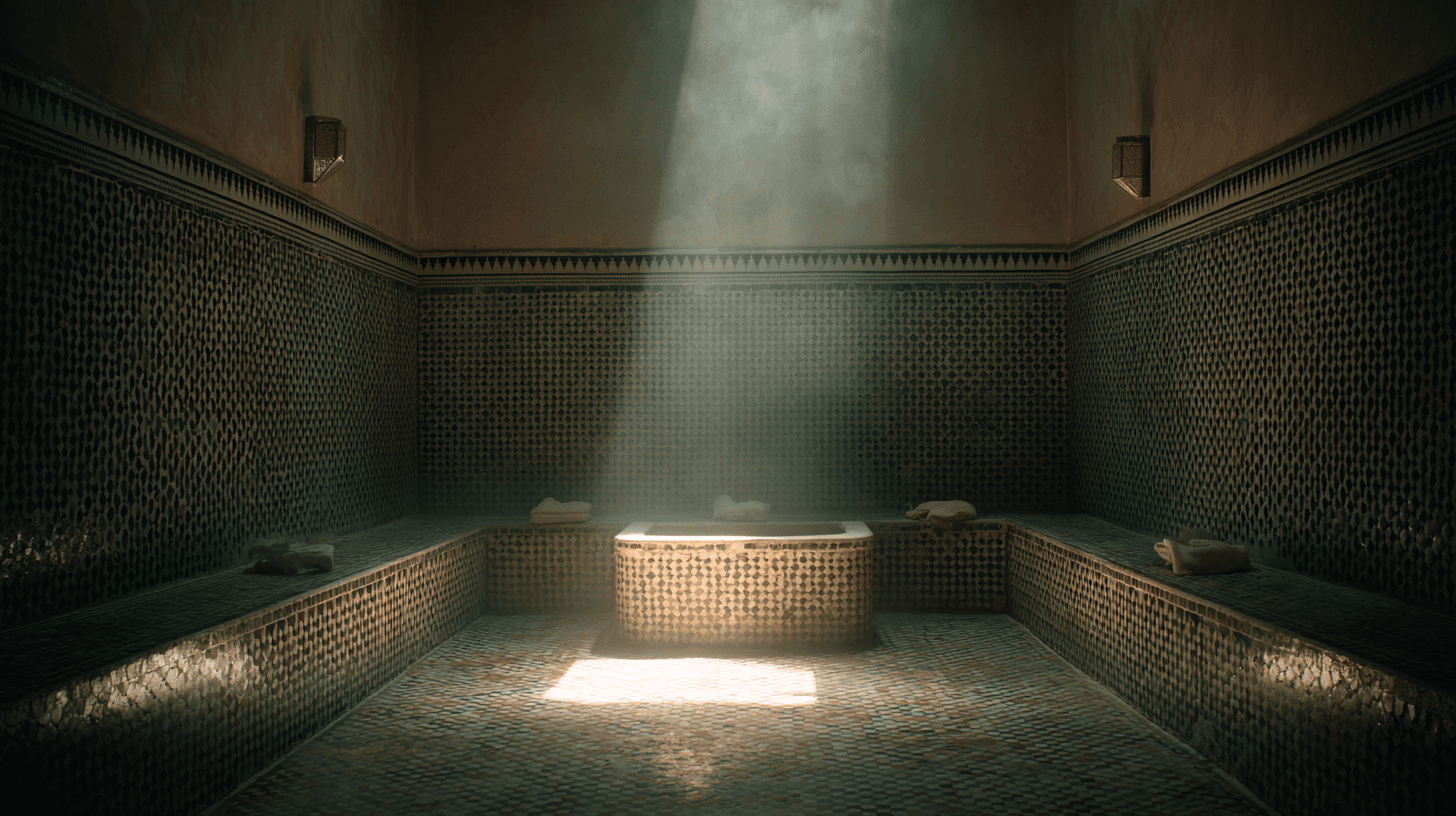
When Islam arrived, the infrastructure remained, but the purpose shifted. Ritual purity matters—ghusl cannot be skipped. The cold plunge pool disappeared; standing water was considered unhygienic. Running water replaced it.
The Moroccan hammam follows the old sequence. The scrubbing happens in the hottest chamber: black beldi soap applied and scraped off with a kessa glove.
Public hammams operate on gender-segregated schedules. The social function persists: gossip, marriage negotiations. A bride visits the hammam before her wedding.
Sources
- Metropolitan Museum of Art, Heilbrunn Timeline of Art History, 'The Art of the Bath in the Islamic World' Sibley, Magda, and Fodil Fadli, 'The Historic Hammams of Damascus and Fez,' Architectural Heritage 23.1 (2012) Encyclopaedia Britannica, 'Hammam' Morocco World News, various articles on traditional hammam practices