The Saint's Garden
How Sufi lodges shaped Morocco
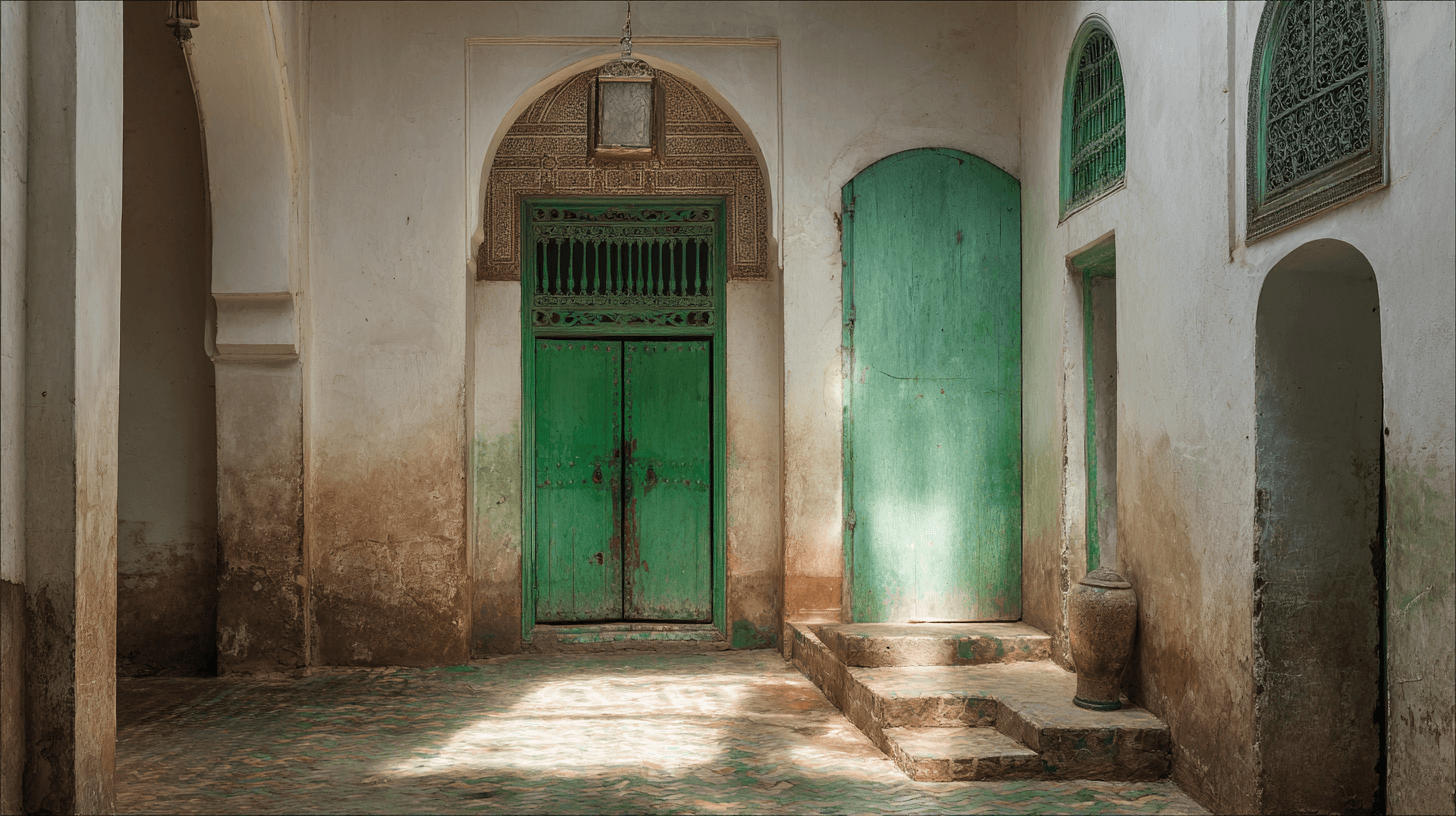
The zawiya sits at the corner of the medina where two streets meet, unmarked except for a green-painted door.
In Arabic, zawiya means 'corner.' In Morocco, it became something else: a monastery, a school, a political power center, and a saint's tomb all compressed into one walled compound.
Sufism arrived with Islam itself, but it flowered after 1492. When the Reconquista expelled Muslims from Iberia, Sufi orders migrated south. The Tijaniyya, founded in Fez in 1782, today claims over 400 million adherents worldwide.
The zawiyas were not just spiritual. They were banks—storing grain for famine years. They were hotels. Most dangerously, they were political. The Dila Zawiya controlled central Morocco in the seventeenth century until Moulay Rachid burned it in 1668.
The sacred geography remains. Moulay Idriss, great-grandson of the Prophet, founded the Idrisid dynasty in 789; his tomb near Volubilis is Morocco's most sacred pilgrimage.
Sources
- Cornell, Vincent J., Realm of the Saint: Power and Authority in Moroccan Sufism (University of Texas Press, 1998) Kugle, Scott, Sufis and Saints' Bodies: Mysticism, Corporeality, and Sacred Power in Islam (University of North Carolina Press, 2007) Eickelman, Dale F., Moroccan Islam: Tradition and Society in a Pilgrimage Center (University of Texas Press, 1976) Fez Festival of World Sacred Music, official archives