The Sugar King's Grave
Ahmad al-Mansur drowned in gold and built his death chamber in Italian marble
The gold came from everywhere.
Ahmad al-Mansur — "The Victorious" — crushed the Portuguese at the Battle of Ksar el-Kebir in 1578. The Portuguese king died on the battlefield. So did his army. Al-Mansur ransomed the survivors for fortunes that would take decades to pay.
Then he conquered the Songhai Empire and took their gold mines.
Then he taxed the sugar trade — Moroccan sugar was the best in the world, and Europe was addicted.
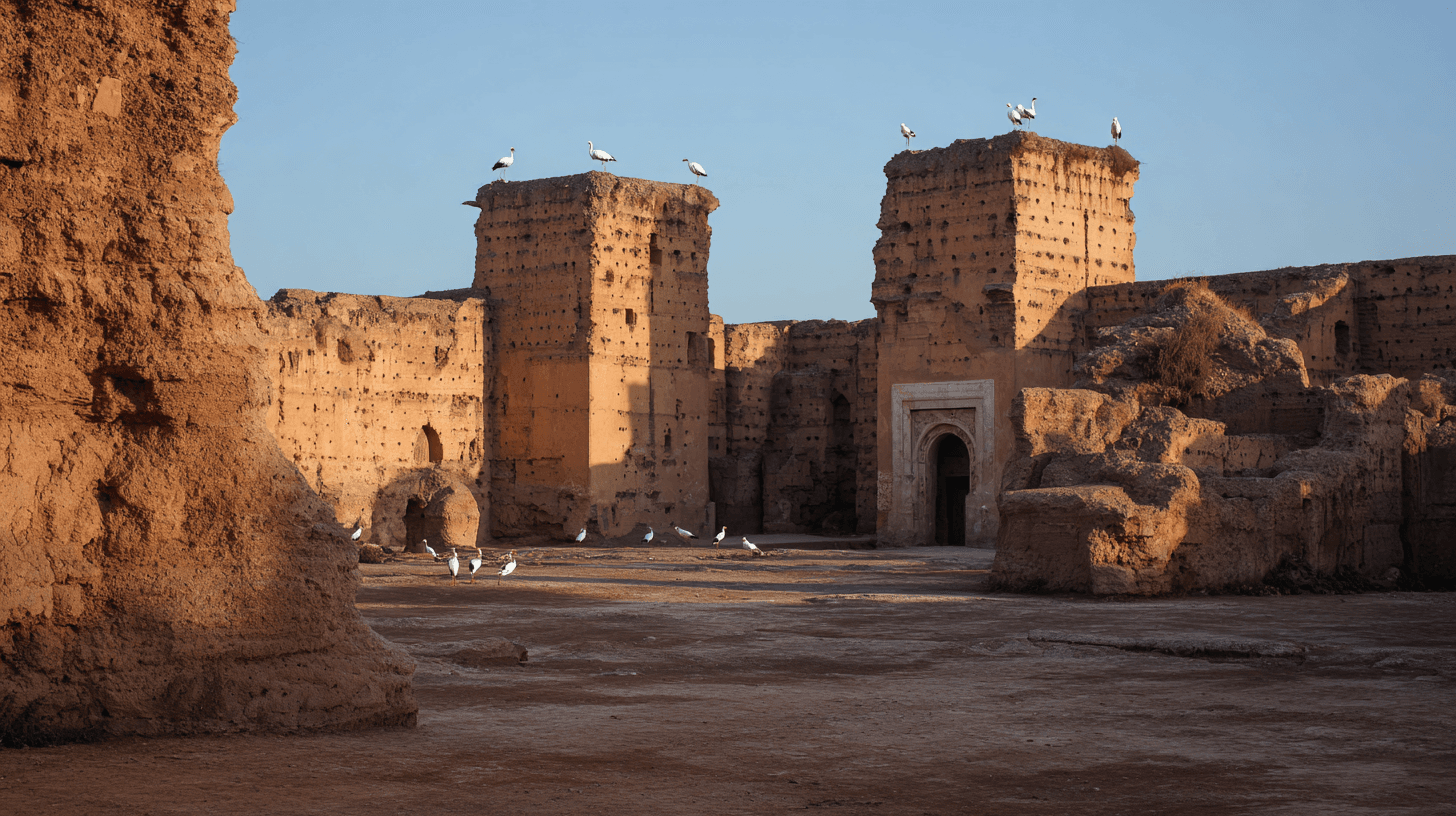
By 1590, al-Mansur was drowning in wealth. He built the El Badi Palace with gold, onyx, and Irish oak. His court dazzled ambassadors from England and the Ottoman Empire. He corresponded with Queen Elizabeth I about a joint invasion of Spain. The English called him "The King of Barbary." His own people called him "The Golden One."
When he died of plague in 1603, he needed a tomb to match his legend.
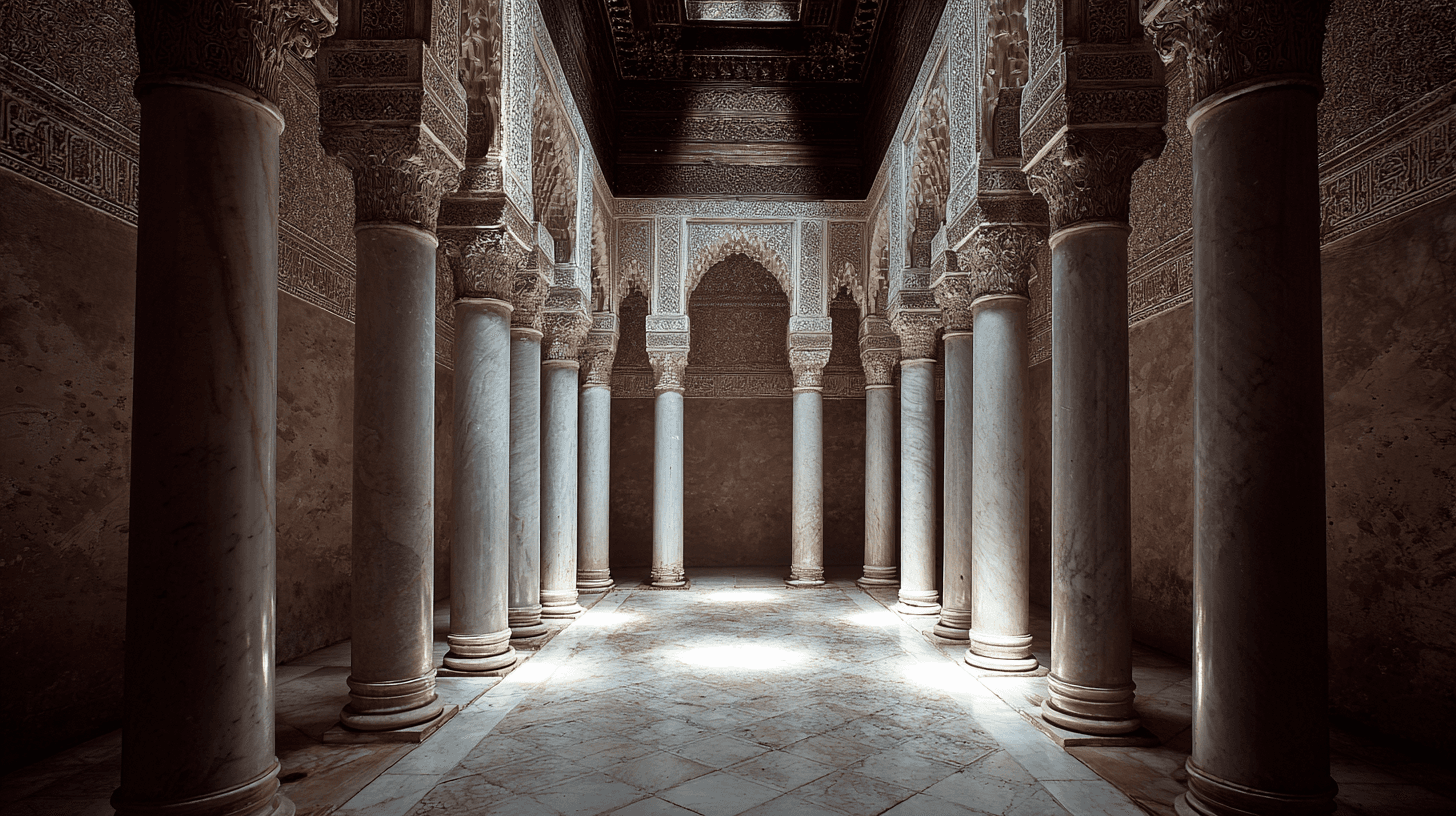
The Saadian Tombs are his answer. The Hall of Twelve Columns — his burial chamber — is made of Italian Carrara marble, shipped across the Mediterranean for a Muslim sultan. The ceiling is carved cedar covered in gold leaf. The muqarnas (honeycomb vaulting) drips with painted stucco. Sixty-six members of the Saadian dynasty are buried here, but the architecture bows to one man.
When the Alaouite dynasty seized power in the 1600s, they didn't destroy the tombs. They did something stranger: they sealed them. Built walls around the complex. Let the gardens grow wild. For 300 years, the tombs were invisible — too magnificent to demolish, too threatening to acknowledge.
French surveyors found them in 1917, crumbling but intact. Now tourists walk where only the dead were supposed to go.
Al-Mansur lies under a slab of marble in the center of the hall. Around him, the gold he loved still catches the light.
The Facts
- •The Battle of Three Kings (1578) killed three monarchs in one day
- •Al-Mansur ransomed Portuguese prisoners for estimated 400,000 gold ducats
- •His invasion of Songhai (1591) captured Timbuktu's gold trade
- •The Saadian Tombs contain 66 members of the dynasty
- •The tombs were sealed for approximately 300 years by the Alaouites
- •French aerial photography rediscovered them in 1917
Sources
- El-Oufir, Mohammed. 'The Saadian Dynasty.' Dar Al-Maarifa
- Deverdun, Gaston. 'Marrakech des Origines à 1912.'
- García-Arenal, Mercedes. 'Ahmad al-Mansur: The Beginnings of Modern Morocco.' OneWorld