The Trans-Saharan Trade
Gold, salt, slaves, manuscripts — 1,500 years of desert commerce that built empires
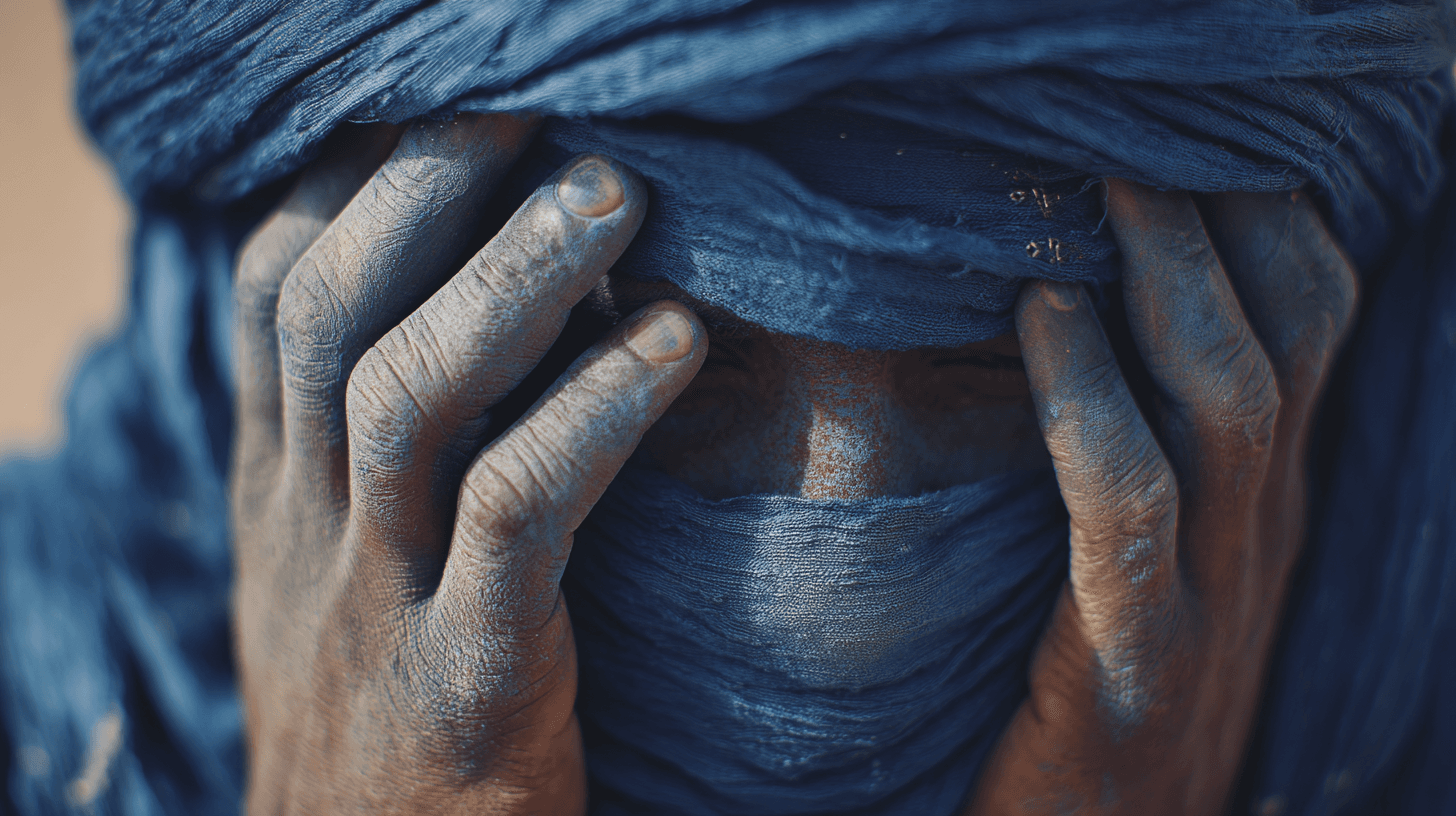
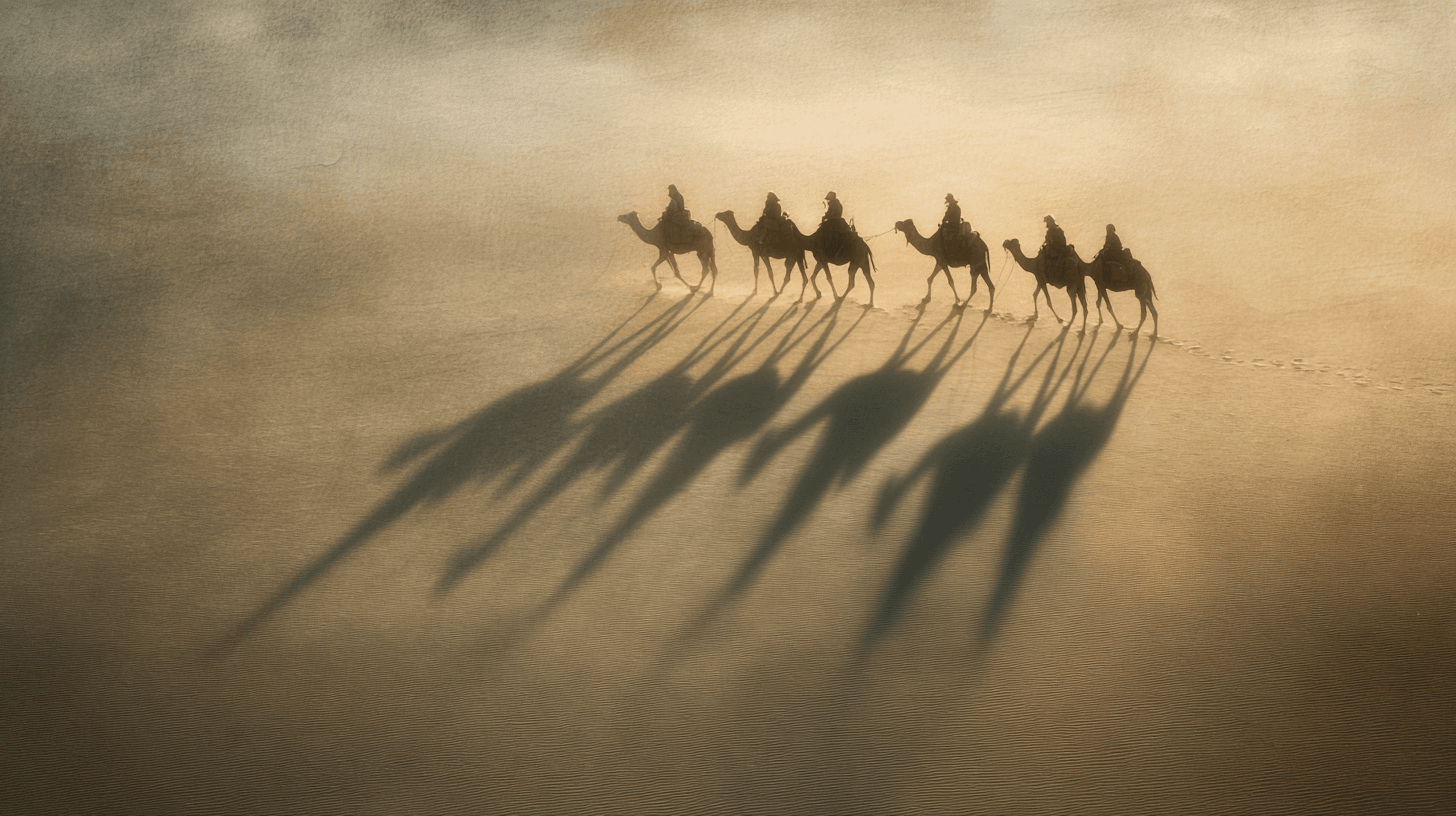
The trade predates Islam. By the 4th century, Berber and Tuareg caravans were crossing the Sahara on routes that connected the gold fields of West Africa to the Mediterranean ports of North Africa. The introduction of the camel — probably from Arabia via Egypt in the first centuries CE — made sustained desert crossing possible. Before the camel, trade crossed the Sahara in stages. After the camel, it crossed in single expeditions.
Gold moved north. The Bambuk and Bure goldfields in modern Senegal and Guinea produced the gold that fuelled Mediterranean economies. The Almoravid dynasty was built on Saharan trade. The Saadians conquered Timbuktu in 1591 partly to control the gold supply directly. Moroccan coins — dinars — were minted from West African gold.
Salt moved south. The Saharan salt mines — Taghaza, Taoudenni, Idjil — produced blocks of salt that were transported south by camel to salt-poor West Africa. Salt was so valuable in the sub-Saharan economy that it was traded weight for weight with gold. The phrase is literal, not metaphorical — block of salt for portion of gold, balanced on the scale.
Enslaved people moved in both directions. The trans-Saharan slave trade transported millions of people over its 1,500-year history — sub-Saharan Africans north to Morocco and the Mediterranean, and to a lesser extent North Africans south. The Gnawa musical tradition in Morocco is the direct cultural descendant of this forced migration.
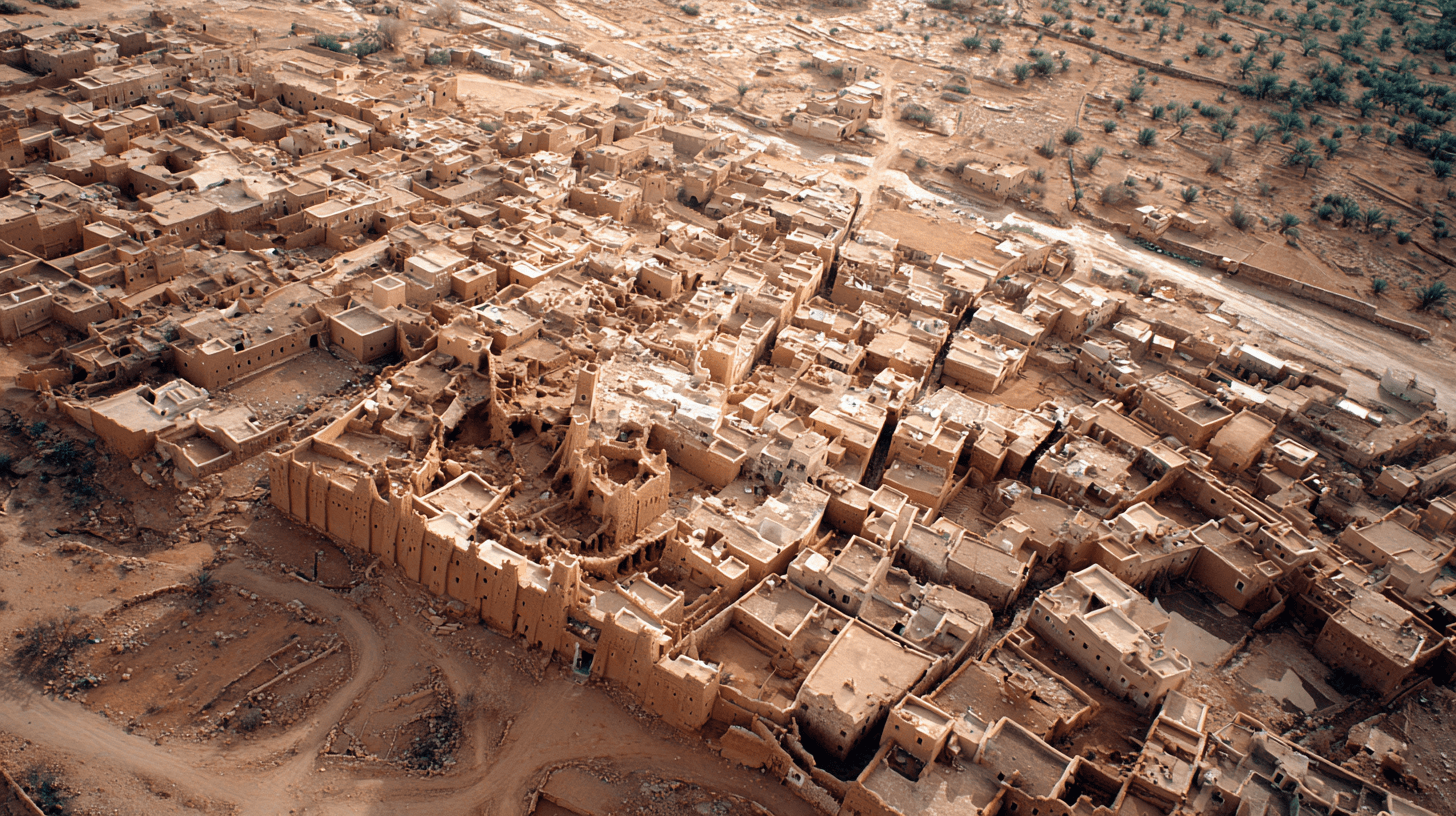
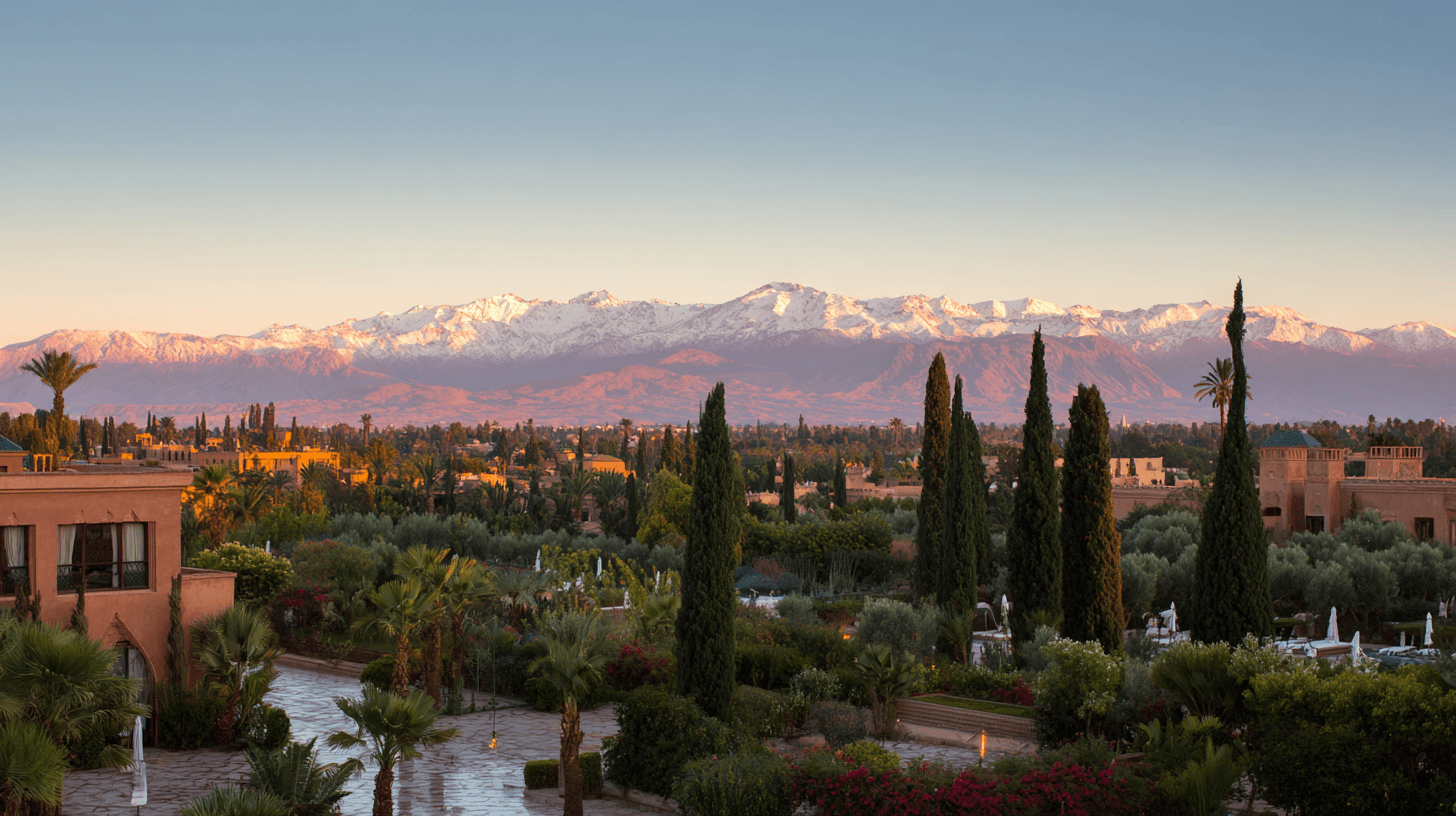
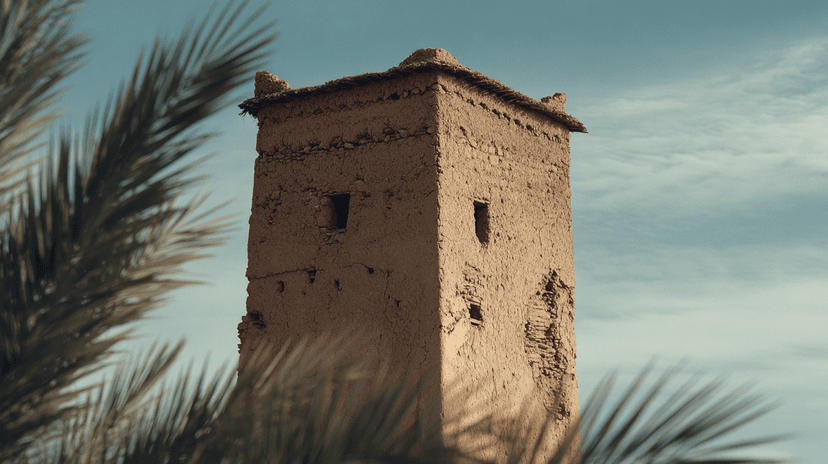
The routes converged on Morocco. Sijilmasa — now ruins near Rissani in the Tafilalet — was the great northern terminus. From Sijilmasa, goods moved to Fes, Marrakech, and the Mediterranean ports. The oasis towns of the Draa Valley — Zagora, Tamegroute, Ouarzazate — were staging posts along the route.
The trade declined with the Portuguese maritime expansion in the 15th and 16th centuries. Sea routes around Africa undercut the desert crossing. By the 19th century, the caravans had dwindled to a fraction of their former scale. The routes survive as cultural memory, pilgrimage paths, and the Gnawa music that carries the sound of the crossing.
Explore the full interactive module — with caravan routes mapped, commodity flows, and the economic data of trans-Saharan trade — at Dancing with Lions: https://www.dancingwiththelions.com/data/trans-saharan-trade
Interactive Module
Data and visualisation by Dancing with Lions