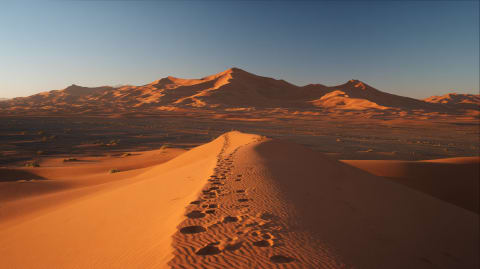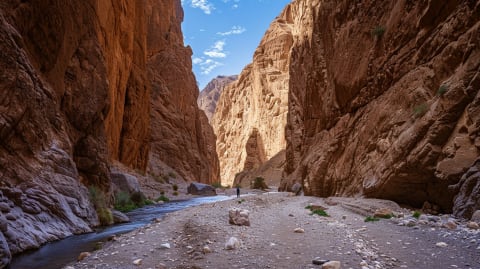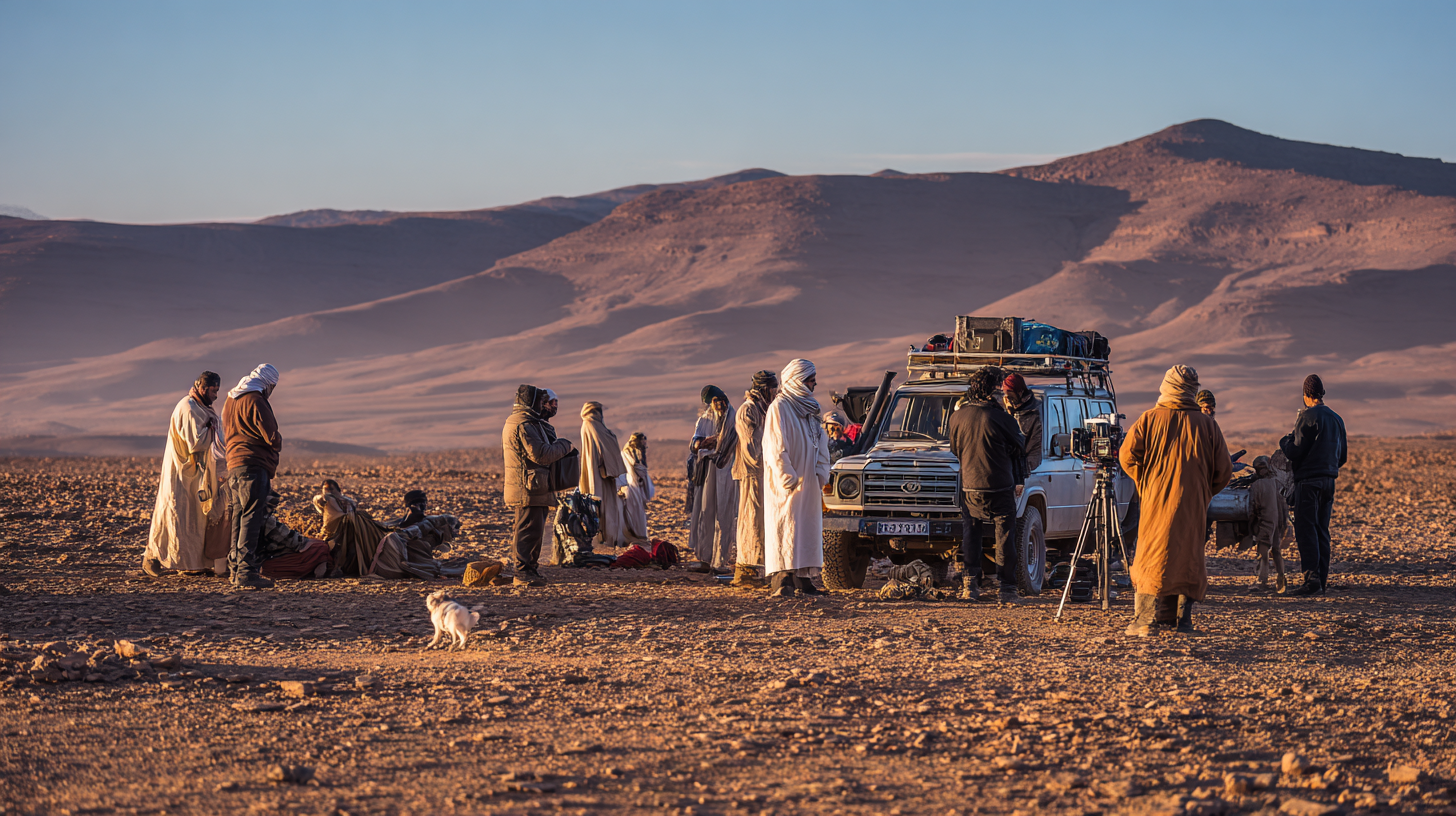
Morocco has doubled for ancient Rome, biblical Jerusalem, Tibet, and Mars. It has played Iraq, Afghanistan, Egypt, and itself. The landscape is a character actor — endlessly versatile, never quite the star.
The first film shot in Morocco was made in 1897, just two years after the Lumière brothers invented cinema. They sent a crew to capture "The Moroccan Goatherd" — essentially a travel documentary for French audiences curious about the world beyond their borders. The goatherd probably had no idea he was launching an industry.
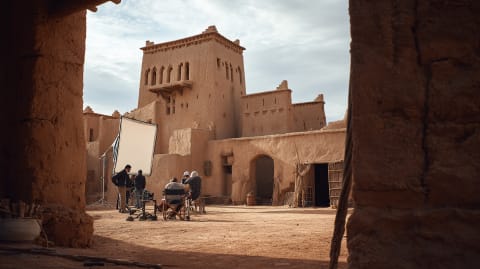
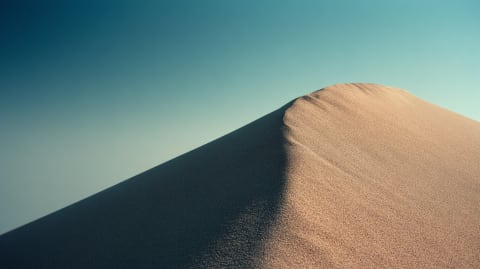
By the 1950s, Hollywood had discovered Ouarzazate — the town at the edge of the Sahara that would become known as the "Hollywood of Africa." Orson Welles shot part of Othello there in 1951, driven by budget constraints to find a location that could pass for Venice and Cyprus. David Lean followed with Lawrence of Arabia in 1962, using the dunes and kasbahs to recreate the Arabian Peninsula. The crew spent four months scouting locations. They found them all within a few hours of Ouarzazate.
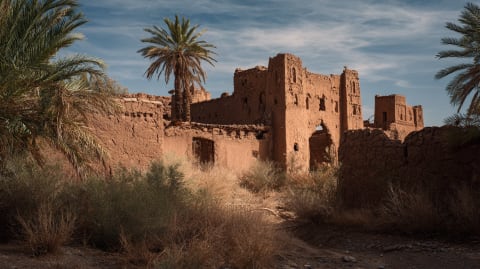
The list since then reads like a film studies syllabus. Gladiator used Aït Benhaddou — the ancient ksar that has appeared in more films than most actors — as a stand-in for Zucchabar. The Mummy filmed its Egyptian tombs in Erfoud. Babel set its Moroccan sequences in Ouarzazate and the surrounding villages. Game of Thrones transformed Aït Benhaddou into Yunkai, the Yellow City of Slaver's Bay. Ridley Scott returned for Gladiator 2, bringing a $200 million budget that reportedly injected $30 million into the local economy.
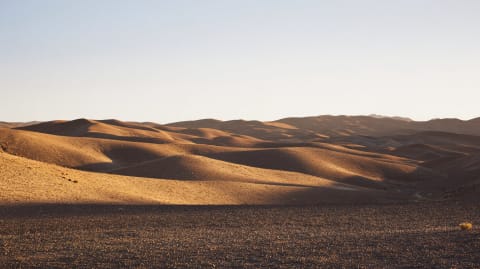
The Agafay, closer to Marrakech, has its own filmography. Mission: Impossible — Rogue Nation brought Tom Cruise to the stone desert in 2015, using the plateau and the Plateau du Kik in the Atlas foothills as locations. The hammada's otherworldly terrain can pass for alien planets, Middle Eastern war zones, or simply itself — a landscape so strange it needs no special effects.
Why Morocco? The answer is practical. The country offers diverse terrain within short distances — desert, mountains, coast, medieval cities — plus 300 days of sunshine, low production costs, and a government that offers up to 30% cash rebates on filming expenses over $1 million. Atlas Studios in Ouarzazate covers 31,000 square meters, with standing sets that have represented ancient Egypt, Jerusalem, and a Tibetan monastery. The infrastructure exists because the industry built it.
But the deeper answer is that Morocco looks like history. The kasbahs haven't been torn down for shopping malls. The medinas haven't been modernized into anonymity. The desert hasn't been developed. When filmmakers need a place that looks like the past — any past — Morocco delivers without construction crews.
The irony is that Morocco rarely plays itself. It plays everywhere else, its landscapes standing in for countries the audience will never visit, its extras dressed in costumes from other centuries. The films bring money and jobs — more than 50,000 Moroccans work in the industry — but they also create a strange dislocation. Visitors arrive expecting to find what they saw on screen, only to discover that the screen was lying the whole time.
The road to Ouarzazate is part of every southern itinerary we build. The Atlas Studios are a stop we recommend but never push.
Tell us about your trip →The Facts
- —First Moroccan film: "The Moroccan Goatherd" (1897) by Lumière brothers
- —Orson Welles shot Othello in Morocco (1951)
- —Lawrence of Arabia filmed in Morocco (1962) — won 7 Academy Awards
- —Aït Benhaddou has appeared in 20+ films including Gladiator and Game of Thrones
- —Atlas Studios in Ouarzazate covers 31,000 m² — among world's largest
- —Morocco offers up to 30% cash rebate on filming expenses over $1 million
- —Gladiator 2 (2024) — $200 million budget, ~$30 million local economic impact
- —Mission: Impossible — Rogue Nation (2015) filmed in Agafay and Atlas foothills
- —50,000+ Moroccans employed in film industry
Sources
- Atlas Studios, Ouarzazate. Production history
- Carter, Sandra. "Moroccan Cinema." In Companion to African Cinema. Wiley-Blackwell
- Centre Cinématographique Marocain. Annual production statistics
Further Reading
Practical questions