The Argan Goats
What the famous photos don't tell you
The photos are everywhere: a tree full of goats, standing in the twisted branches like bizarre Christmas ornaments, somewhere on the road between Marrakech and Essaouira. The images have made argan trees famous. They've also created a tourist trap.
Let's start with the truth. Yes, Moroccan goats do climb argan trees. They're attracted to the fruit, which ripens between May and September, and they've developed remarkable climbing skills to reach it. This is natural behavior—goats are agile climbers in many environments, and the argan tree's low, gnarled branches make climbing possible.
Now the complication. Starting in the early 2000s, Moroccan farmers noticed that tourists would stop and pay to photograph goats in trees. Some began placing goats in trees deliberately—carrying them up, tying their feet to branches, and rotating exhausted animals out when they grew tired. The roadside attractions between Marrakech and Essaouira now feature 'goat trees' that are essentially staged photo opportunities.
Animal welfare organizations have documented the conditions. Goats stand in trees for hours, often in heat, unable to access shade or move normally. Baby goats are tied to trunks for tourists to pose with. A 2019 investigation by photographer Aaron Gekoski called it 'an exploitative scam.'
The real argan industry has nothing to do with goats in trees. It's about women.
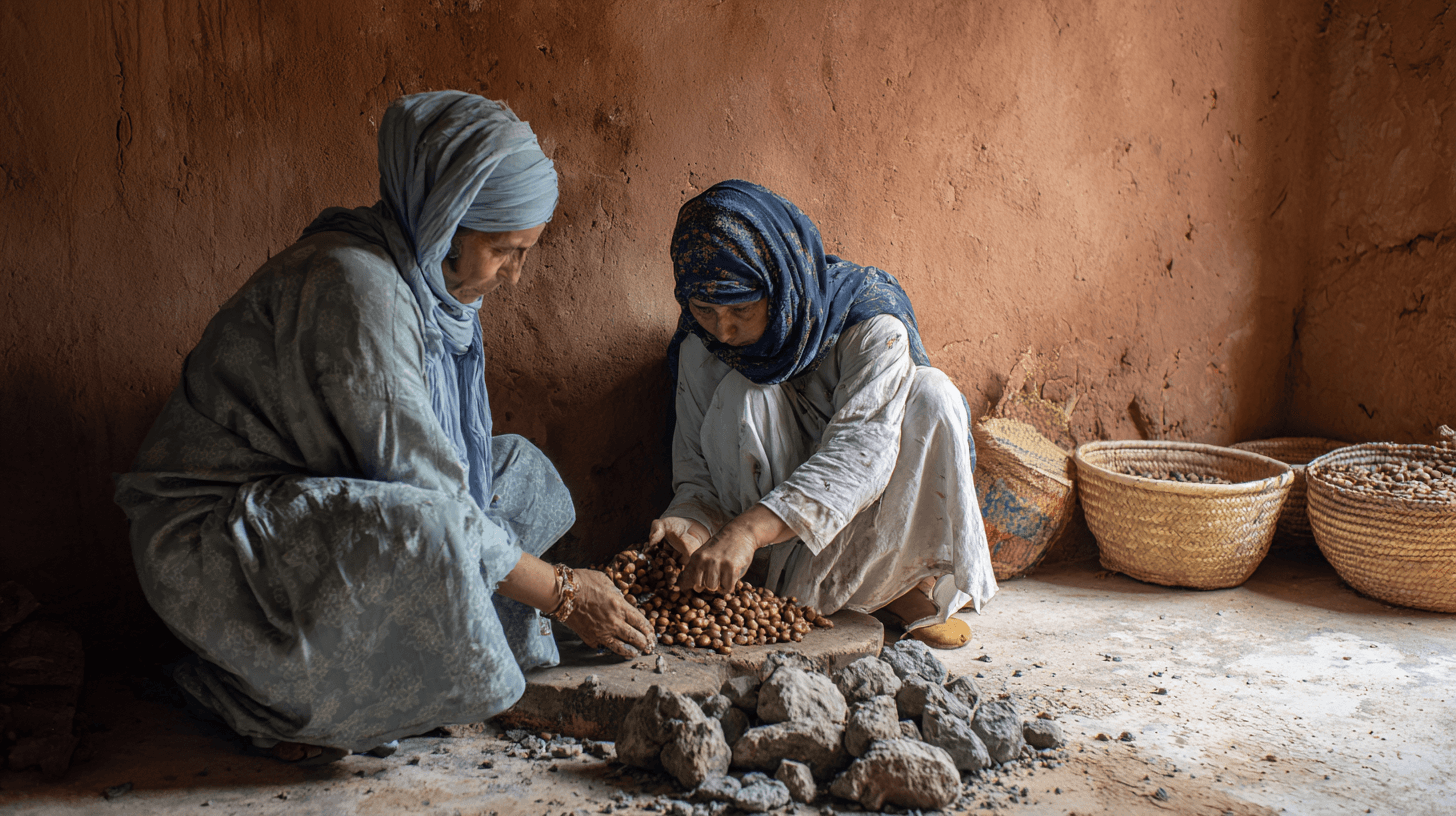
Argan oil—the 'liquid gold' that's worth $200 per liter internationally—is produced almost entirely by women's cooperatives. The process is extraordinarily labor-intensive. First, the argan nut must be collected (traditionally, this meant gathering nuts that goats had eaten and excreted, but increasingly it means picking directly from trees). Then the hard outer shell must be cracked by hand, stone against stone. Then the kernel must be ground into paste. Then the paste must be pressed.
It takes about 30 hours of work to produce one liter of argan oil.
The cooperatives—there are dozens in the Arganeraie region—hire mostly widows and women without other income. They provide salaries, childcare, and health insurance. They've become a model for women's empowerment in rural Morocco.
The argan tree itself is protected. The Arganeraie biosphere reserve was designated by UNESCO in 1998. The trees live up to 200 years and send roots 30 meters deep, preventing desertification. Their survival is tied to the cooperatives' success: if argan oil remains valuable, the trees will be protected.
So if you're driving between Marrakech and Essaouira and you see a tree full of goats by the roadside, keep driving. Instead, stop at a women's cooperative. Watch the labor. Buy directly from the source. That's the story worth seeing.
The Facts
- •Goats naturally climb trees May-September when fruit ripens
- •Roadside attractions staged since early 2000s
- •30 hours labor per liter of argan oil
- •$200/liter international price
- •Arganeraie UNESCO biosphere reserve 1998
- •Trees live 200+ years, roots 30m deep
- •Cooperatives hire mostly widows
- •2019 investigation called it 'exploitative scam'
Sources
- National Geographic, 'The real story behind Morocco's tree-climbing goats' (2025)
- UNESCO Biosphere Reserve documentation
- Charrouf & Guillaume, 'Argan oil' (2010)