The Berber Pharaoh
Berber New Year celebrates a Libyan who conquered Egypt in 950 BCE. Morocco partied last week.
The Berber calendar says it's the year 2975.
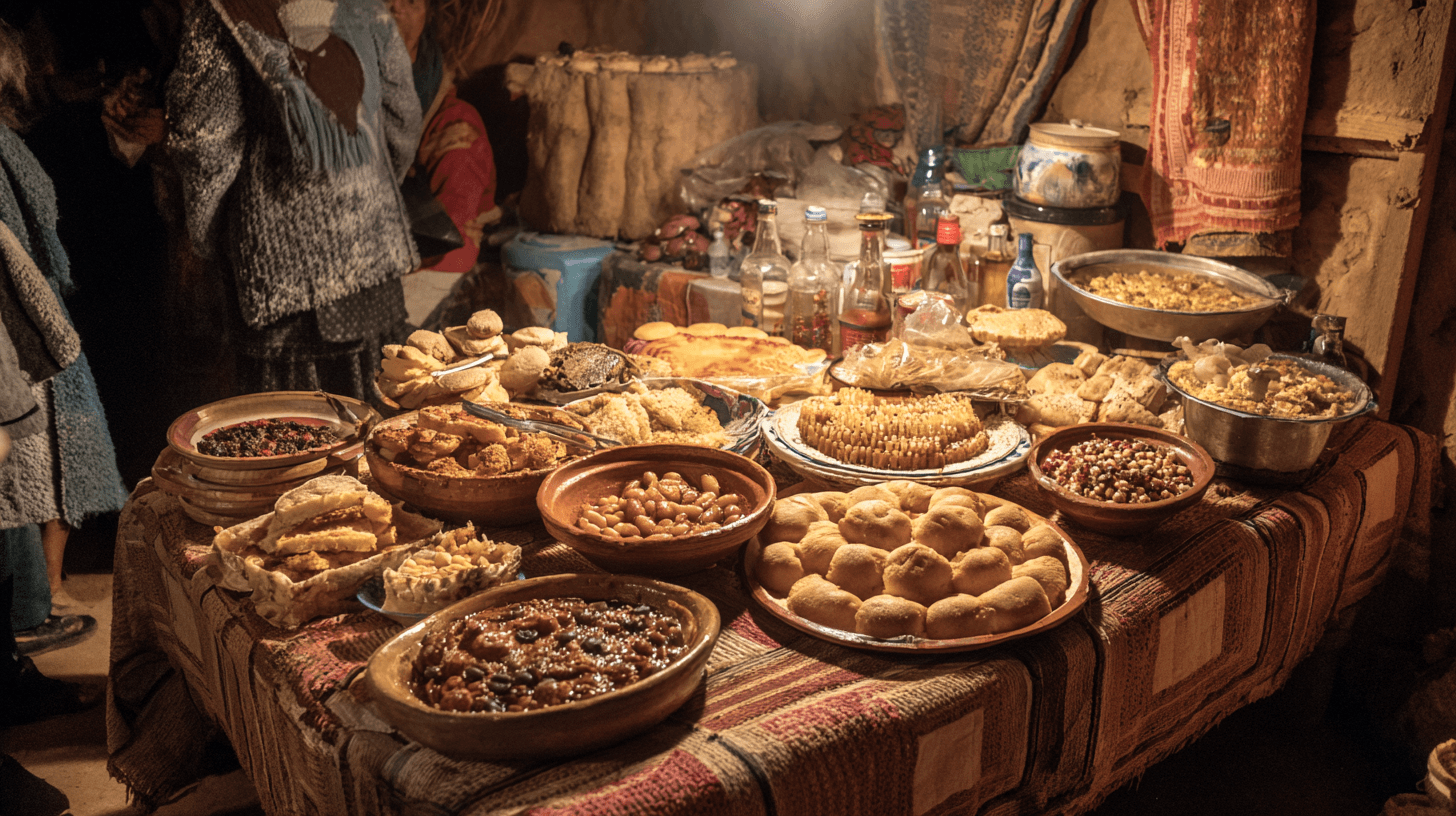
Every January 12th through 14th, Amazigh communities across North Africa — Morocco, Algeria, Tunisia, Libya, and the diaspora — celebrate Yennayer, the Berber New Year. Families gather for couscous with seven vegetables. Children receive gifts. Special foods mark the transition: dried fruits, nuts, the first foods of the agricultural year.
But the calendar they're celebrating has a specific start date: 950 BCE. And a specific reason.
That was the year Sheshonq I became Pharaoh of Egypt.
Sheshonq wasn't Egyptian. He was Libyan — from the Meshwesh tribe, Berbers who had migrated into the Nile Delta and risen through the Egyptian military. By the 10th century BCE, the Meshwesh controlled much of Lower Egypt. When the last pharaoh of the 21st Dynasty died without an heir, Sheshonq simply took over.
He's Sheshonq I to Egyptologists. To the Berbers, he's the proof that North Africans didn't just survive history — they made it. A "barbarian" from the western desert founded Egypt's 22nd Dynasty, ruled for 21 years, and launched military campaigns into Palestine (he's probably the "Shishak" mentioned in the Hebrew Bible who sacked Jerusalem).
The Berber calendar counts from his accession. Year One is 950 BCE. When Berbers celebrate Yennayer in January 2025, they're marking the year 2975 — nearly three millennia since one of their own sat on the throne of the pharaohs.
Morocco made Yennayer a national holiday in 2018. Schools close. Government offices shut. It's an acknowledgment of what the Amazigh have always known: their history didn't begin with Arab conquest or French colonization. It began when Sheshonq proved that a Berber could rule the oldest civilization on earth.
The couscous on Yennayer tables isn't just food. It's a 3,000-year-old victory lap.
The Facts
- •Yennayer falls on January 12-14 in the Gregorian calendar
- •The Berber year 2975 corresponds to 2025 CE
- •Sheshonq I ruled Egypt c. 943-922 BCE
- •He founded the 22nd Dynasty
- •Morocco recognized Yennayer as a national holiday in 2018
- •Algeria made it official in 2018 as well
- •The biblical 'Shishak' is believed to be Sheshonq I
Sources
- Kitchen, Kenneth. 'The Third Intermediate Period in Egypt.' Aris & Phillips
- IRCAM documentation on Yennayer
- Hachid, Malika. 'Les Premiers Berbères.' Edisud
- 1 Kings 14:25-26 (Shishak reference)