The Geometry of Silence
Acoustic architecture in the High Atlas
In the Ait Bouguemez Valley, silence has mass. The stone houses absorb sound the way the kasbahs absorb heat. Step inside, and the acoustic environment changes as dramatically as the temperature. You hear the wind through walnut leaves. You hear water in the irrigation channels. You hear what cities have made you forget: the texture of quiet.
This is not absence of sound. It is presence of a different kind.
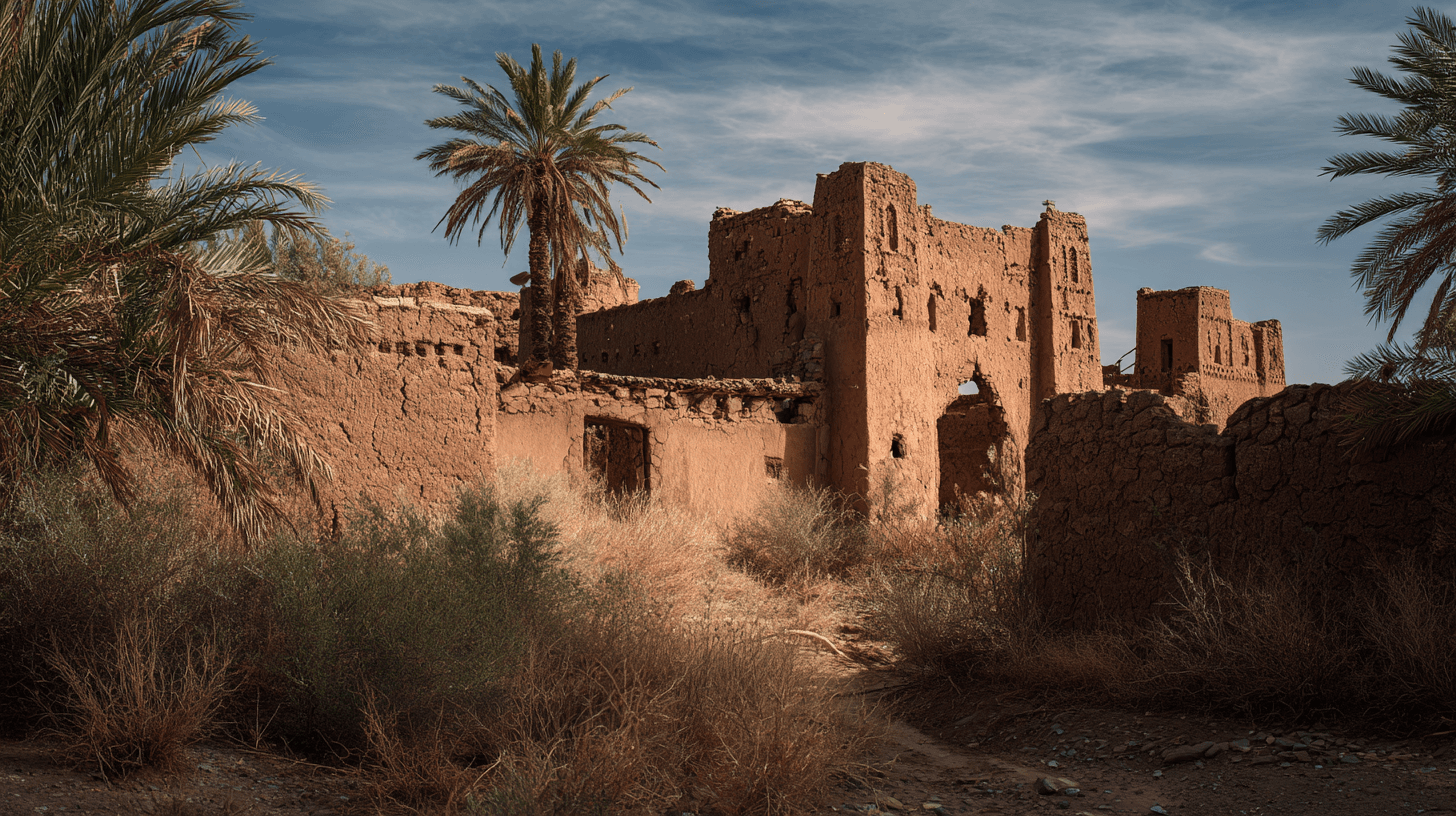
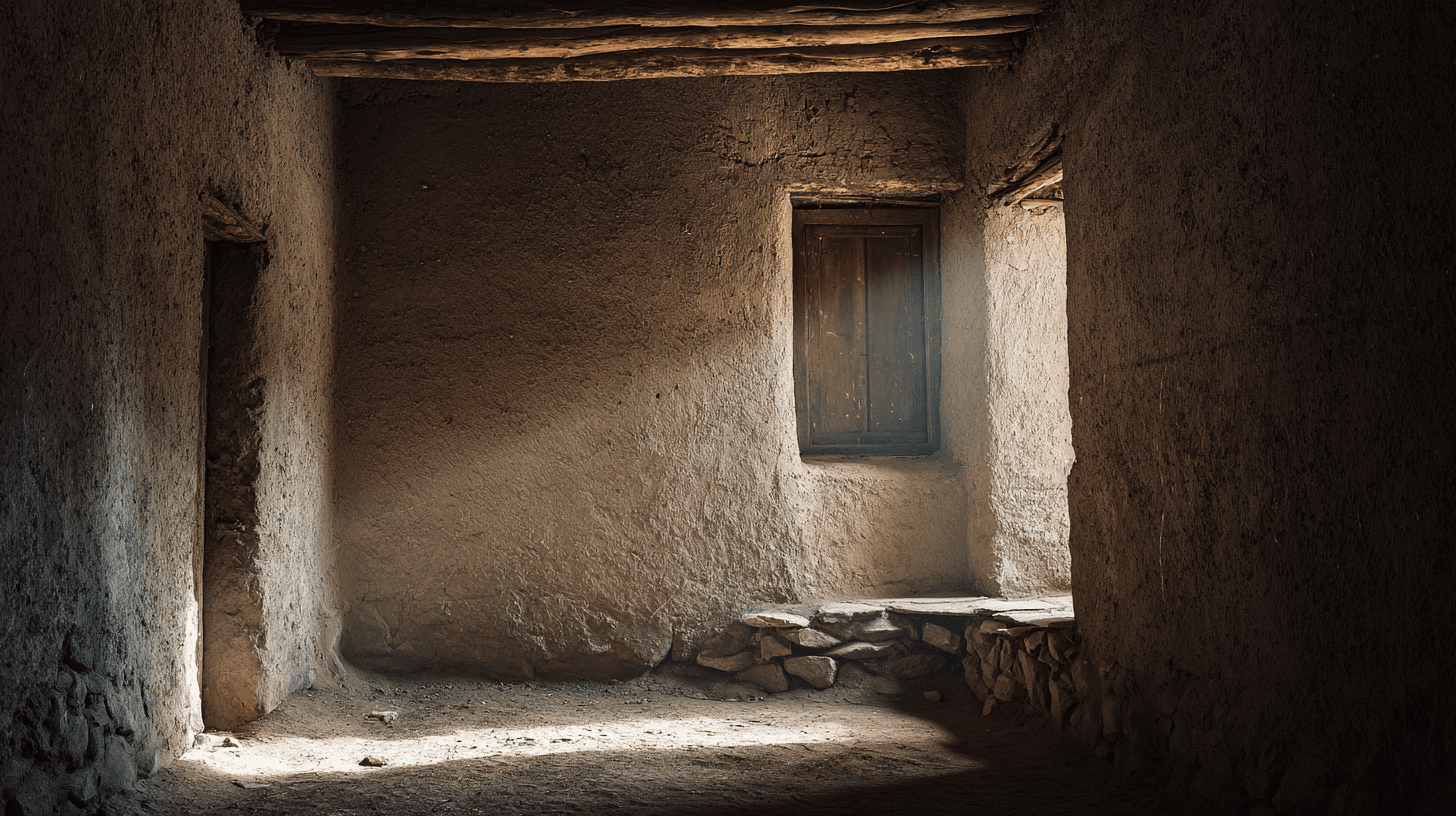
The architecture of the High Atlas is acoustic architecture, though no one calls it that. The thick stone walls, the small windows, the heavy wooden doors — all were built for thermal regulation and security, but they create an acoustic environment as a byproduct. Sound behaves differently inside mass. It doesn't bounce; it's absorbed. It doesn't echo; it dies.
The result is a silence that feels material. In a city, silence is merely the pause between noises. Here, silence is the medium in which occasional sounds appear. A donkey brays, and you hear it not as interruption but as event — a single note against a ground of quiet. A child laughs in a distant courtyard, and the sound travels with startling clarity because nothing competes with it.
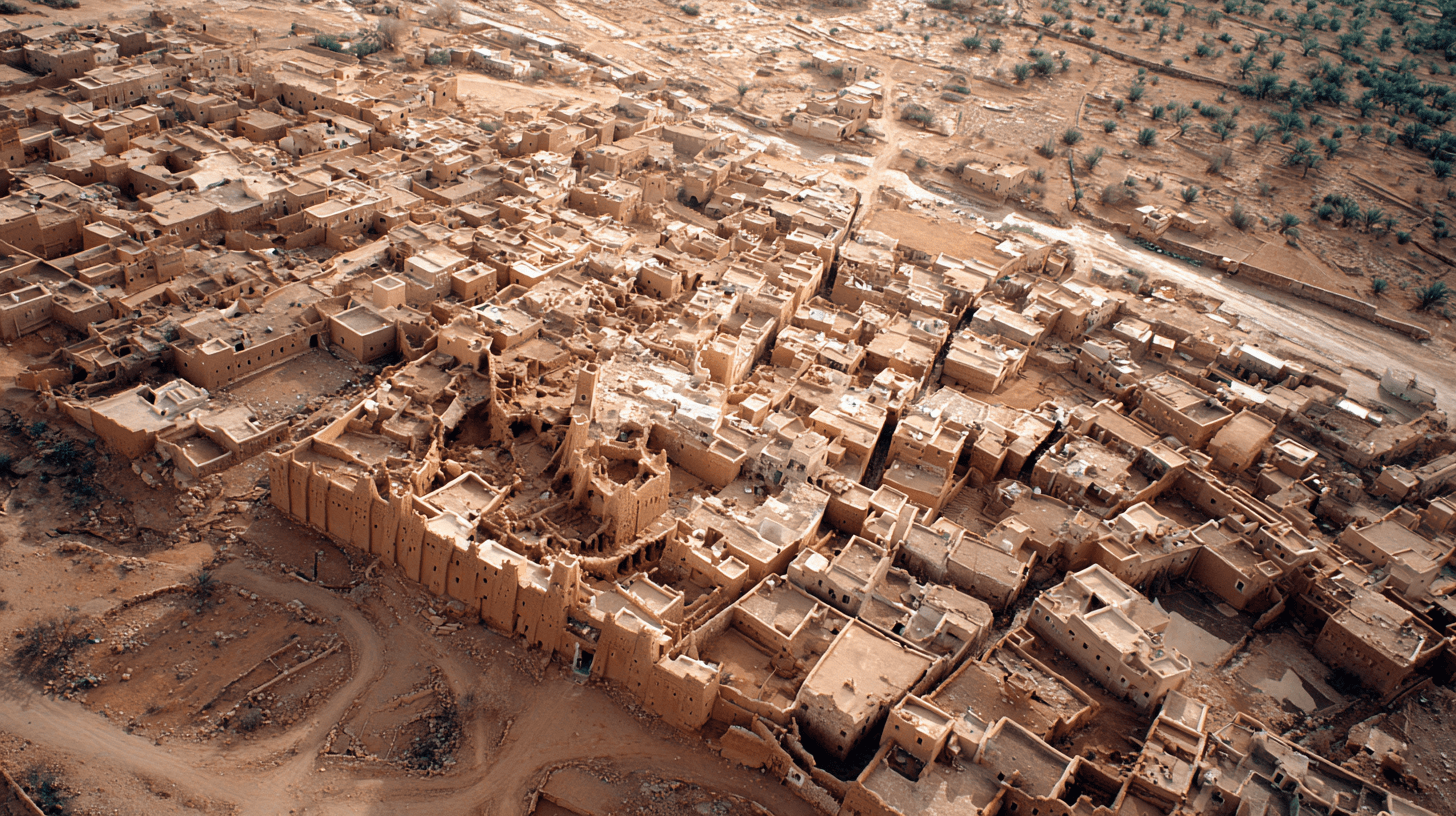
The geometry of the villages enhances this effect. Houses cluster tight against hillsides, sharing walls, creating a collective mass that functions as one enormous sound barrier. The narrow lanes between buildings act as acoustic channels, directing sound upward and out rather than forward and through. Stand at the center of the village, and you're in a well of silence with the chaos of the world somewhere above.
The valley itself is an amphitheater. The mountains rise on three sides, reflecting sound back toward the center, but at such distance that the reflection arrives as texture rather than echo. When the muezzin calls from the minaret, his voice bounces off the peaks and returns, layered, as if the mountains were answering.
This is what we've lost in the modern built environment. Concrete and glass reflect sound rather than absorbing it. Mechanical systems produce constant background noise — the hum of HVAC, the whine of electronics, the rumble of traffic. We've created a world where silence is impossible, then wonder why we can't think clearly, can't sleep deeply, can't hear ourselves.
The Berber villages of the Atlas offer the opposite. Not silence as deprivation, but silence as luxury. Not quiet as the absence of stimulation, but quiet as the presence of space — space for thought, for observation, for the small sounds that carry meaning.
Listen to the irrigation system. The khettaras and seguias that bring water to the terraced fields produce a constant, gentle sound — not the roar of a river but the whisper of directed flow. This is the soundtrack of cultivation, of life sustained in difficult terrain. It's a sound that has accompanied human settlement in these valleys for a thousand years.
Listen to the wind through the walnut groves. The leaves are large, the branches dense. When the wind moves through, it produces a sound unlike any other tree — a soft roar, almost like distant applause, rising and falling with the gusts. The Berbers plant walnuts for nuts and shade, but they've also planted them for sound.
Listen to the evening. As the sun drops behind the peaks, the valley goes through a transition. The daytime sounds — livestock, children, work — fade. The evening sounds — cooking fires, conversation, the call to prayer — rise. And beneath everything, the silence of stone, the quiet of mass, the acoustic geometry of a place built before noise became the default condition of human life.
This is what slow travel offers: the chance to hear again. Not through force of will, not through meditation apps, but through architecture. The High Atlas villages are built to be quiet. All you have to do is arrive, and stop, and listen.
Sources
- Bourdieu, Pierre. 'The Berber House.' Cambridge
- Ait Hamza, Mohamed. 'Rural Architecture of the High Atlas.' Rabat
- Acoustic studies of traditional architecture, IRCAM Morocco