The Blue City
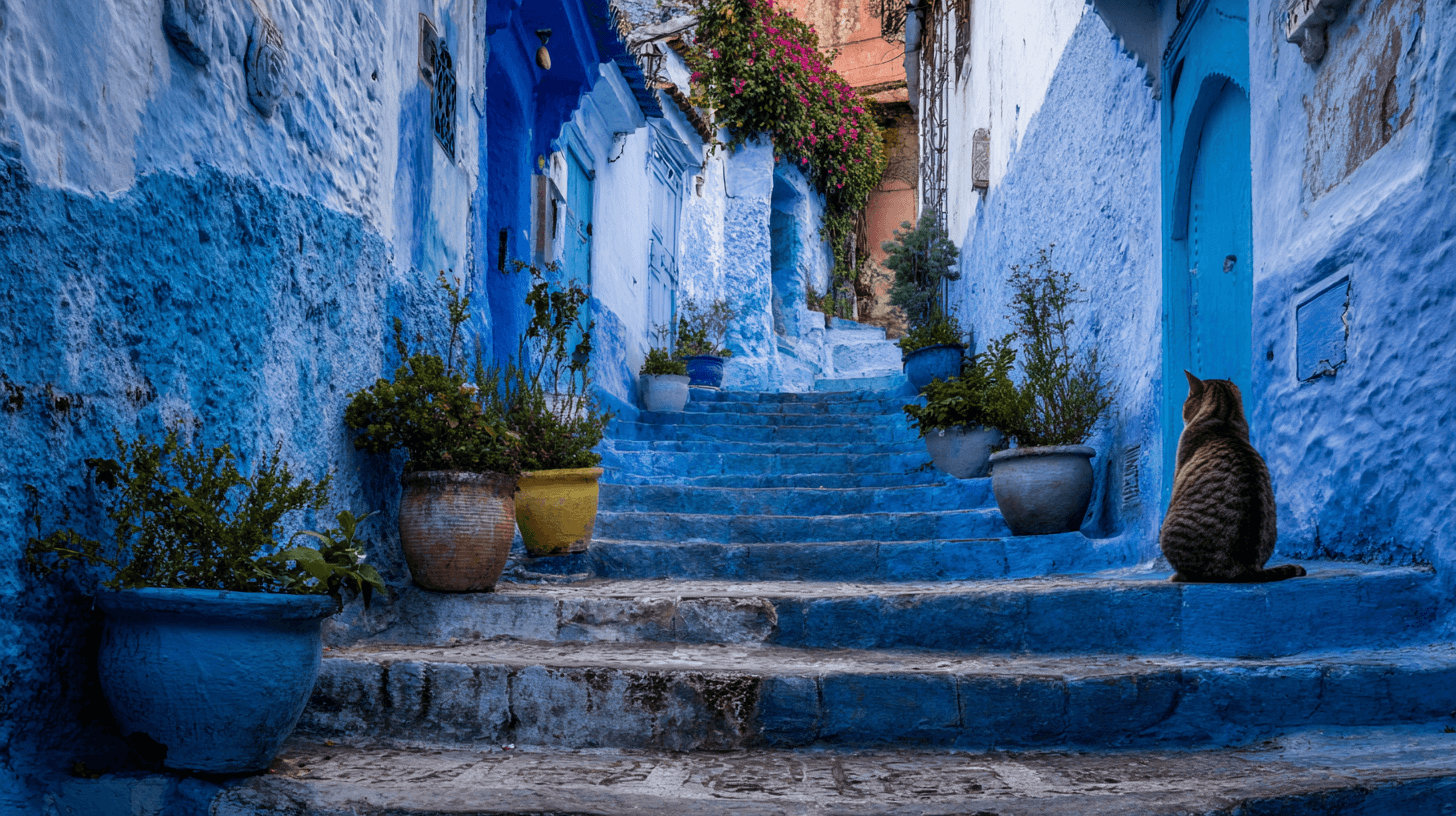
Everyone knows Chefchaouen is blue. Nobody agrees why.
The blue is everywhere. And nobody can agree where it came from.
Ask a local in Chefchaouen why their city is painted blue, and you'll get one of several answers:
The Jewish explanation: Sephardic Jews fleeing the Spanish Inquisition settled here in the 1400s and 1500s. They painted their homes blue because the color represents the sky and heaven — a reminder to live a spiritual life. The tradition stuck after they left.
The mosquito explanation: Blue repels mosquitoes. The city sits in the Rif Mountains where mosquitoes breed in the streams and springs. Painting walls blue keeps the insects away. (Entomologists are skeptical.)
The water explanation: Blue symbolizes the Ras el-Maa waterfall and the springs that made the city possible. The color honors the water that gives life.
The temperature explanation: Blue reflects heat, keeping houses cool in summer. Practical thermodynamics, nothing more.
The tourism explanation: The blue is recent — a branding exercise started in the 1970s or 1980s when someone realized that "the Blue City" was more marketable than "that town in the Rif." The tradition was invented.
Here's what's actually documented: Chefchaouen was founded in 1471 as a fortress against Portuguese invasion. Jews did settle here after 1492. The city was closed to foreigners until 1920 — only three Christians had entered in 400 years. When the Spanish finally arrived, they found a medieval town, but accounts don't mention it being blue.
The oldest photographs, from the 1930s, show some blue but not the saturated monochrome of today. The blueing seems to have intensified over the 20th century, possibly accelerating with tourism.
So which story is true? Probably all of them and none of them. The blue may have started with the Jews, been reinforced by practical concerns, and been amplified by tourism. Traditions are rarely pure. They accumulate.
What matters is the effect: a city that looks like a dream, painted in a color that photographs beautifully and photographs differently every hour as the mountain light shifts. The reason matters less than the result.
The Facts
- •Chefchaouen was founded in 1471 by Moulay Ali ibn Rashid
- •Sephardic Jews arrived after the 1492 Spanish expulsion
- •The city was closed to non-Muslims until 1920
- •Only three Christians entered in the 400 years before Spanish occupation
- •The blue intensified significantly during the 20th century
- •The city sits at 564m elevation in the Rif Mountains
Sources
- Meakin, Budgett. 'The Land of the Moors.' Macmillan
- Slouschz, Nahum. 'Travels in North Africa.' Jewish Publication Society
- Spanish Protectorate photography archives
- Moroccan Tourism documentation