The Friday Couscous
The meal that stops the country
At noon on Friday, Morocco goes quiet.
Shops close. Streets empty. The call to prayer finishes and the men walk home from the mosque. Families gather around a single bowl. The one meal that stops the country.
Couscous is not daily food. It is Friday food — after the prayers, before the afternoon, the meal eaten together when the week pauses to breathe. Other days you eat what's quick, what's available, what fits between work and sleep. Friday you eat what matters.
The bowl sits in the center of the table. No plates. No portions. Everyone eats from the same vessel, from their own section, with their right hand. You pinch the grains, roll them against the bowl, lift them to your mouth without dripping broth on the tablecloth. Children learn by watching. Guests are guided to the meat.
The hierarchy of the table mirrors the hierarchy of the household. The father sits at the head. The mother serves. Guests receive the best pieces — a signal of welcome so old it feels biological. Children wait until adults have started. No one leaves until everyone is finished. The meal is not about food. It is about being present, together, in the same place at the same time.
The women wake before dawn to make it.
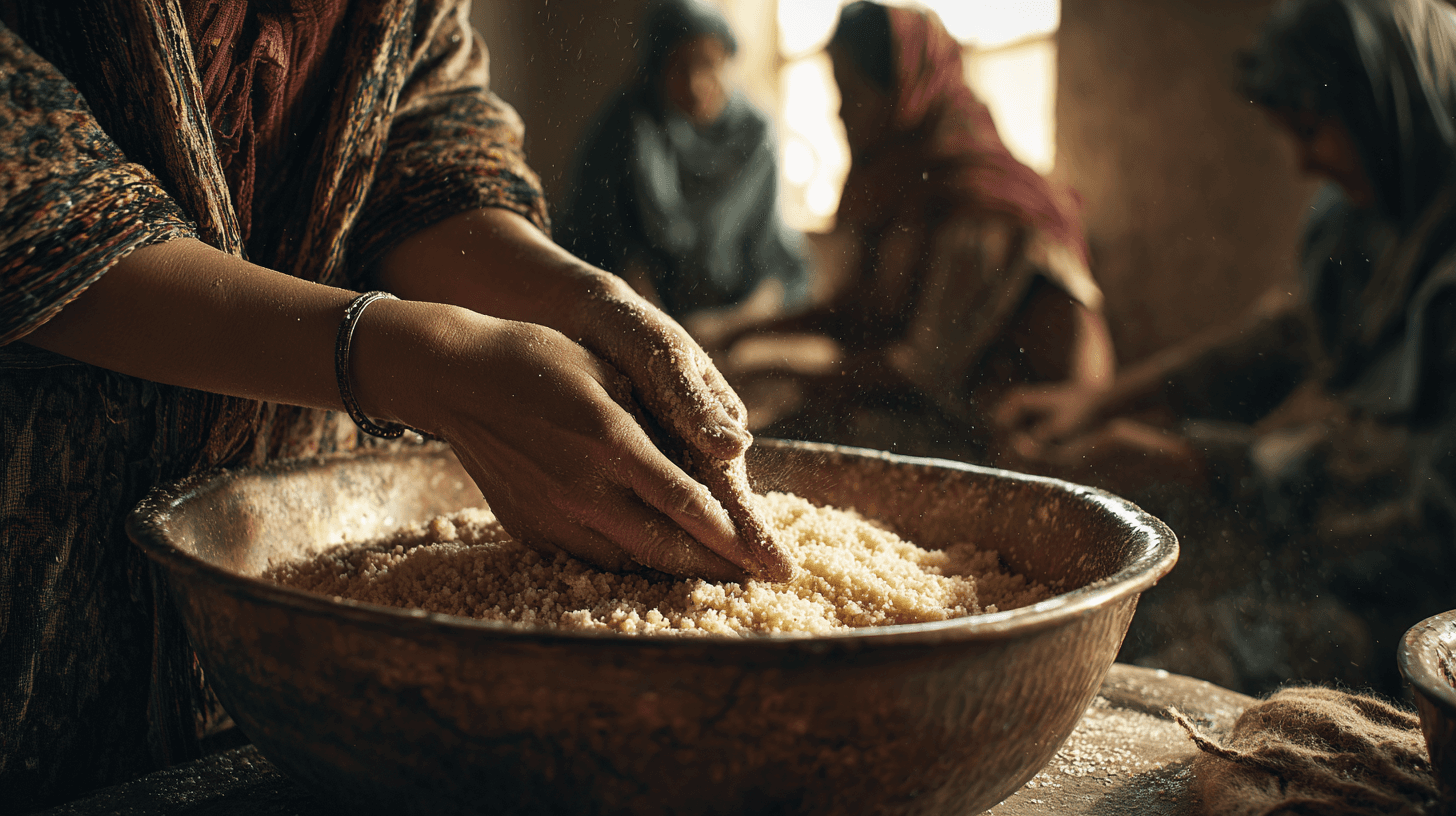
Couscous cannot be rushed. The semolina is rolled by hand in a gsaa — a wide, shallow bowl — moistened with water and oil, worked between the palms until each grain separates. Then it steams. Then it's rolled again. Then it steams again. Three times, sometimes four, the grains fluffed and dried and re-steamed until they are light enough to dissolve on the tongue.
The couscoussier does the work: a tall pot with a steamer basket on top, the broth simmering below, the grains absorbing flavor from the rising vapor. Vegetables go into the broth — seven is traditional, though the seven vary by region, by season, by family. Carrots, turnips, zucchini, chickpeas, cabbage, pumpkin, onions. The tfaya — caramelized onions with raisins and cinnamon — goes on top at the end, sweet against savory, the mark of a proper Friday table.
Every family argues about couscous. The Fassis say their version is refined. The Marrakchis say theirs has depth. The Soussis add argan oil. The Rbatis insist on specific vegetables in specific ratios. The arguments are ancient, unsolvable, and conducted with complete seriousness. There is no neutral couscous. There is only your family's couscous and the inferior versions made by others.
The meal takes hours. Not to eat — to prepare. A woman who serves Friday couscous has been working since the first light. The broth started the night before. The vegetables were cut at dawn. The meat was seasoned, the spices measured, the table set with the good bowls. By the time the family sits down, she has been standing for six hours.
She eats last, after everyone else has been served. This is tradition. This is also exhaustion dressed as courtesy.
The restaurants don't serve it. Or rather: they serve something called couscous, but Moroccans know the difference. Restaurant couscous is Tuesday couscous, weekday couscous, couscous without the hours, without the hands, without the family around the table. It fills the stomach. It doesn't fill the week.
Friday couscous is not a recipe. It is a practice — a thing you do because your mother did it and her mother did it and the Friday table has looked this way since before anyone remembers otherwise. The grains have changed (semolina replaced barley centuries ago), the vegetables have shifted (tomatoes arrived from the Americas), but the form persists: one bowl, one family, one afternoon when Morocco stops.
At noon on Friday, Morocco goes quiet.
Then the steam rises, and everyone comes home.
The Facts
- •Rolled by hand 3-4 times, steamed between each rolling
- •Seven vegetables traditional (varies by region)
- •Eaten from communal bowl with right hand
- •Tfaya (caramelized onions with raisins) marks a proper Friday table
- •Semolina replaced barley centuries ago
Sources
- Hal, Fatema. Les Saveurs et les Gestes: Cuisines et Traditions du Maroc
- Morse, Kitty. Cooking at the Kasbah
- Wolfert, Paula. Couscous and Other Good Food from Morocco