The Gnawa
From Timbuktu to trance
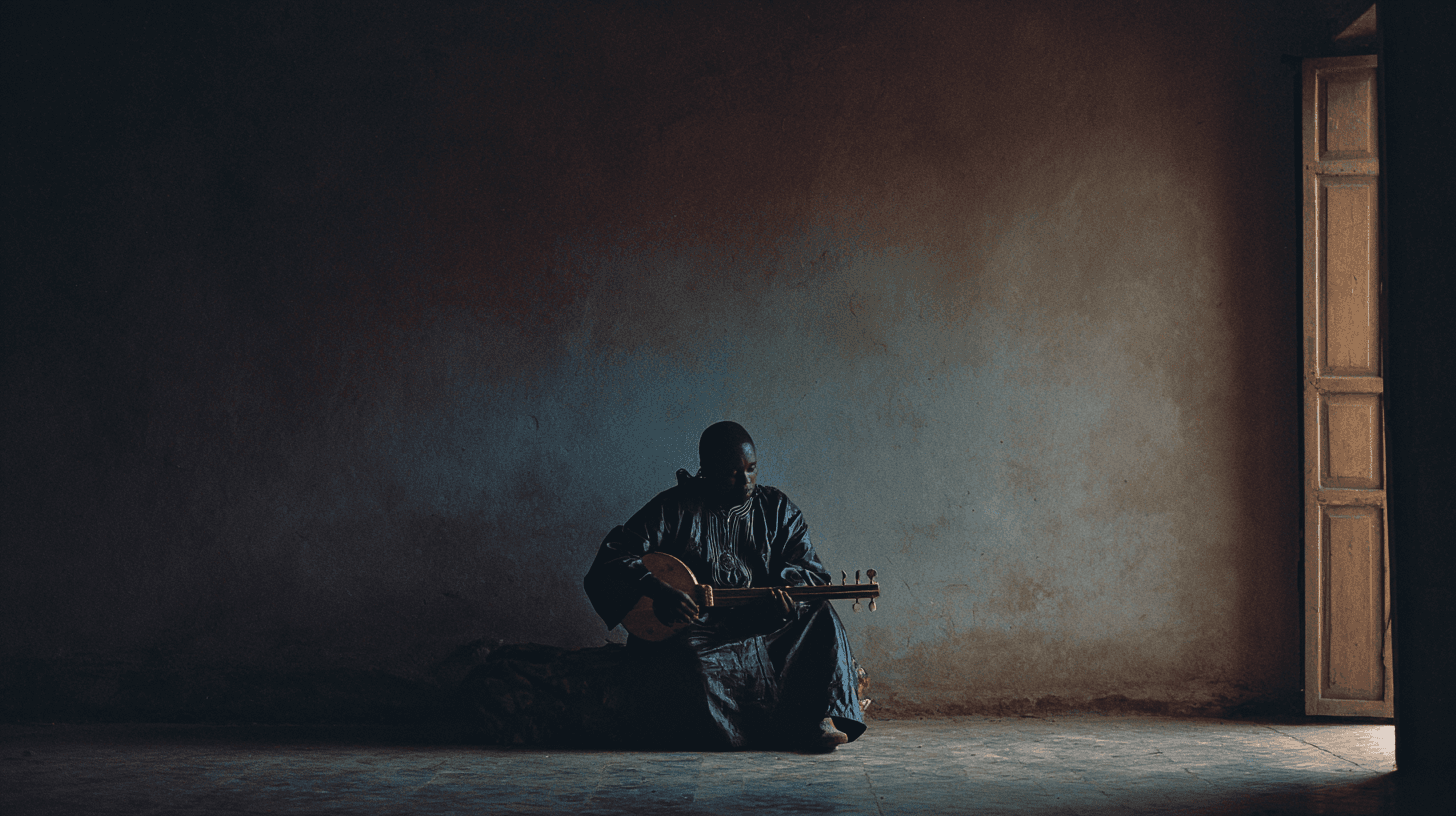
The guembri strikes a note so low you feel it in your spine. The maalem closes his eyes. Somewhere in the room, a woman begins to shake. The healing has begun.
The Gnawa are descendants of slaves. Brought across the Sahara from sub-Saharan Africa — Mali, Guinea, Senegal, places without names on Arab maps — they carried with them spiritual practices that survived the crossing. Over centuries, these practices merged with Moroccan Sufism to create something found nowhere else: a healing tradition that uses music to call spirits.
The theology is complex. The mluk (spirits or saints) number in the hundreds, organized into seven families, each with its own color, its own perfume, its own sacrificial animal, its own rhythms. When someone is possessed or afflicted by a spirit, the healing requires calling that spirit, acknowledging it, giving it what it demands. The music is the call.
A lila (ceremony) runs from sunset to sunrise. The maalem (master) plays the guembri — a three-stringed bass lute covered in camel skin — while krakeb (iron castanets) lay down polyrhythmic patterns that build and build. Each spirit has its own songs. When the right song plays, the afflicted person may enter a trance, dancing until they collapse, the spirit finally satisfied.
This is not performance. The tourists who come to the Gnawa Festival in Essaouira see spectacle — the colors, the movement, the driving rhythms. They do not see the private lilas held in homes, where the work of healing happens, where the maalem's authority is absolute, where something genuine and old moves through the room.
The Gnawa carry a double burden. They preserve African traditions that survived the Middle Passage's eastern equivalent. They hold knowledge that families come to them for, generation after generation. When medicine fails, when psychology has no answer, when something is wrong that has no modern name, people call for the Gnawa.
The maalem closes his eyes. The guembri speaks to things that do not answer to logic. In the morning, someone will be healed, or not, but something will have been witnessed, something ancient and African and sacred, still alive in the music that once survived chains.
The Facts
- •Gnawa originated from sub-Saharan African slaves
- •Traditions merged with Moroccan Sufism over centuries
- •Mluk (spirits) organized into 7 colored families
- •Lila ceremonies run sunset to sunrise
- •Guembri is 3-stringed bass lute with camel skin
- •Krakeb are large iron castanets
- •UNESCO recognized Gnawa as Intangible Cultural Heritage 2019
- •Essaouira Gnawa Festival draws 500,000+ annually
Sources
- Kapchan, Deborah. 'Traveling Spirit Masters.' Wesleyan University Press
- Schuyler, Philip. 'Moroccan Andalusian Music.' World of Music
- Majdouli, Zineb. 'Les Gnawa du Maroc.' L'Harmattan