The Gunpowder Ballet
Fantasia is not a performance—it's cavalry training
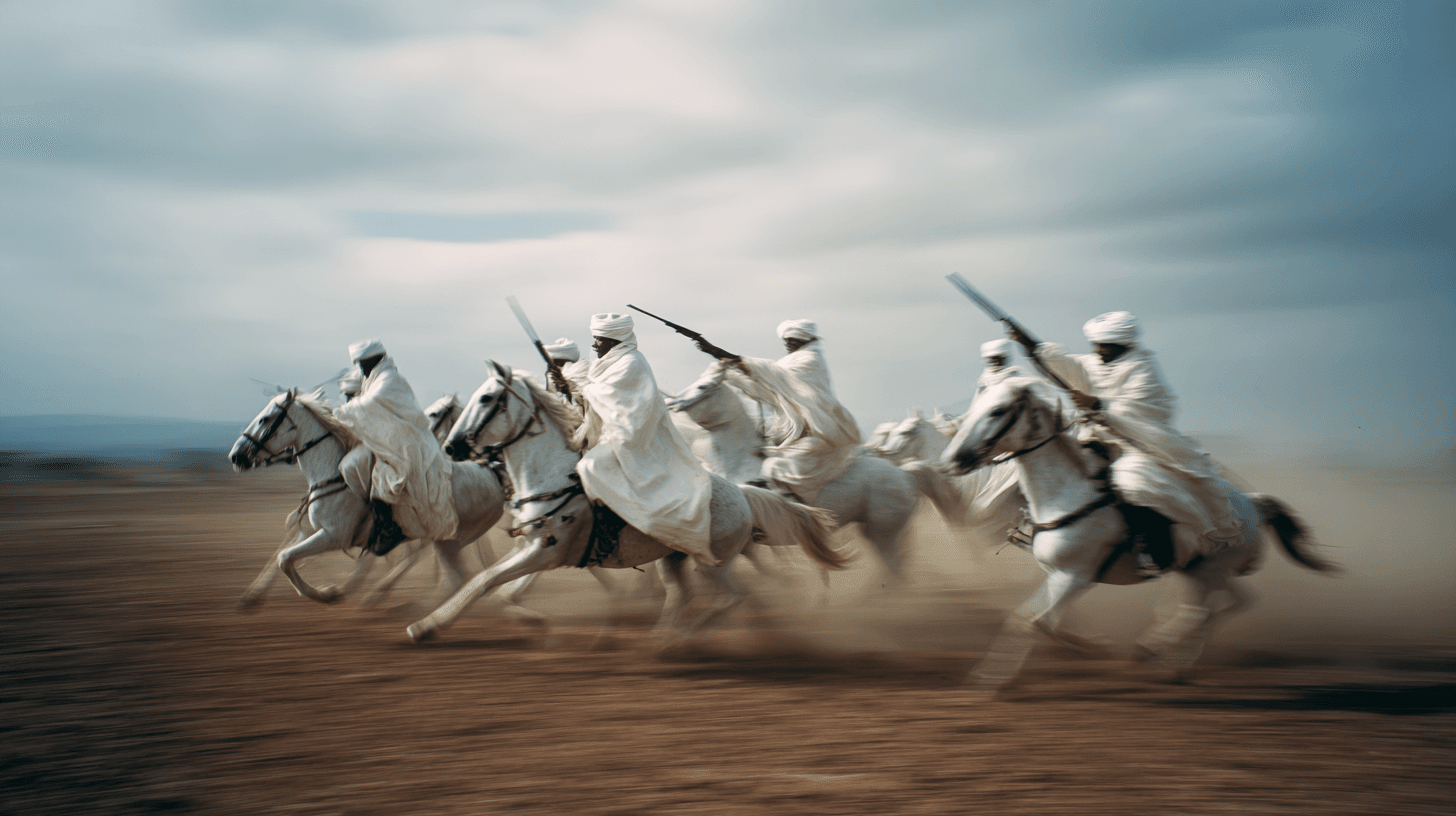
The riders gather at dawn, fifteen to twenty-five of them, mounted on Arabian and Barb stallions. They wear traditional tribal dress: white djellabas, turbans, curved swords. They carry antique muzzle-loading rifles called moukahla—weapons that look like they belong in a museum.
Then they charge.
The horses thunder down a 200-meter track at full gallop. The riders stand in their stirrups, holding the reins with one hand and the rifle with the other. At the precise moment, the leader gives a signal. The rifles fire simultaneously—the goal is for the shots to sound as one.
This is Tbourida, from the Arabic 'baroud,' meaning gunpowder. Europeans called it 'Fantasia' because of the elaborate costumes. But to Moroccans, it's not a fantasy. It's a memory.
The practice dates to at least the 15th century—some sources claim the 8th century, tracing back to Numidian cavalry tactics. Originally, this was military training: how to charge as a unit, how to fire coordinated volleys, how to intimidate an enemy with the thunder of horses and gunpowder. The battles it trained for are gone. The training survives.
Today, Morocco has about 1,000 registered Tbourida troupes. The best compete for the Hassan II National Tbourida Trophy, held every October in El Jadida during the Week of the Horse. Judges score synchronization, speed, costume, and the quality of the coordinated shot. Regional competitions happen throughout the year, from Tissa in the Rif to Meknes in July.
The horse is sacred in Islam. Before each performance, riders perform ablutions and prayers. The bond between horse and rider is absolute—at full gallop, without verbal commands, the horses must feel what the rider intends. Generations of training produce animals that respond to the slightest pressure.
In 2021, UNESCO inscribed Tbourida on the Representative List of Intangible Cultural Heritage of Humanity, recognizing it as a living tradition that transmits 'know-how related to raising horses, saddlery, costumes and weaponry.'
What European artists saw was spectacle. Eugène Delacroix, Théo van Rysselberghe, Ulpiano Checa—they painted the charge, the dust, the flying djellabas. They called it Fantasia because they didn't understand it was practical.
The Moroccans never forgot. When they charge and fire, they're remembering centuries of cavalry warfare. The gunpowder ballet is not a performance. It's an inheritance.
The Facts
- •UNESCO Intangible Heritage 2021
- •~1,000 registered troupes
- •Hassan II Trophy held October in El Jadida
- •15-25 riders per troupe
- •200-meter charge at full gallop
- •Goal: all shots sound as one
- •Practice dates to 15th century (some claim 8th)
- •Painted by Delacroix, Rysselberghe, Checa
Sources
- UNESCO Intangible Cultural Heritage, 'Tbourida' (2021)
- SOREC Morocco
- Festival documentation