The Henna Night
What happens the evening before a Moroccan wedding
The older women gather around the bride. They have secrets to share.
The night before a Moroccan wedding, the women of the family convene for the henna ceremony. The bride sits in the center. The negaffat — the older married women — surround her, talking about marriage, about husbands, about what happens after the guests go home. This is the ritual that transforms a girl into a wife.
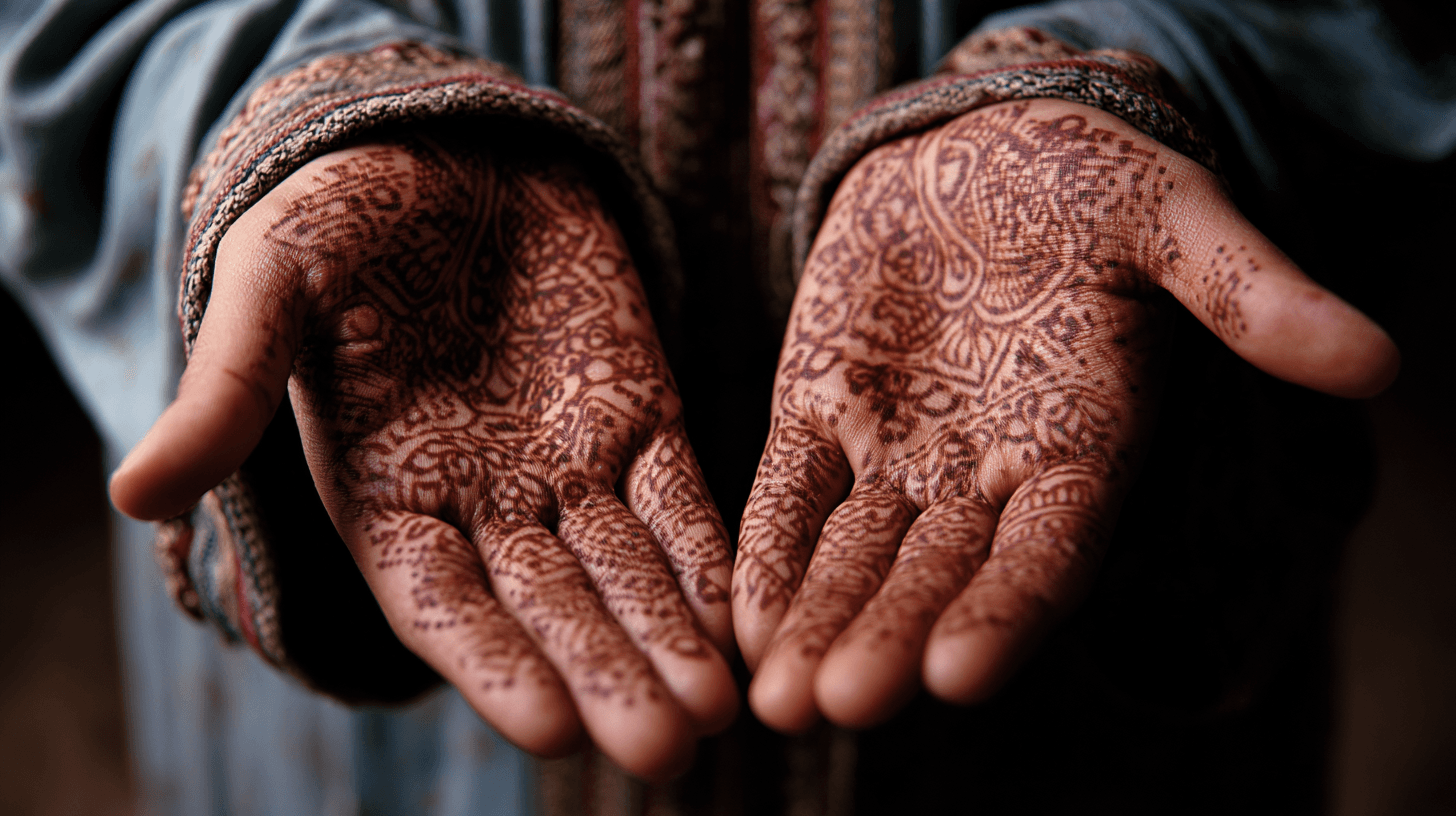
The henna artist works slowly. Hands first, then feet. The paste is thick, greenish-brown, smelling of earth and leaves. The designs take hours. Flowers in the north. Bold geometric blocks in the south. In some families, the groom's name is hidden somewhere in the pattern — a test for the wedding night.
The henna plant grows in the Zagora region, south of Marrakech. The leaves are dried, ground to powder, mixed with water and lemon juice until the paste turns dark green. Greener paste means a deeper stain. The lawsone in the leaves binds to keratin — the same protein in hair and nails. On skin, the color fades in weeks. In hair, it's permanent.
The symbolism runs deeper than decoration. Henna is baraka — good luck, blessing, protection from the evil eye. The hamsa hand. The diamond. The eye itself. These motifs show up in patterns from Tangier to the Sahara. The darker the stain on the bride's skin, the deeper her future husband's love. Or so the tradition says.
Only married women can display henna on the soles of their feet. This is how you know.
The ceremony predates Islam. Berber nomads used henna at every joyful occasion — victories, births, religious celebrations. The cooling properties helped in the desert heat. The stain marked you as someone who had something to celebrate.
Today, henna artists work the souks and the squares. They carry catalogues of designs. The tourists sit for twenty minutes and leave with flowers on their wrists. But in the homes, the night before a wedding, the old ritual continues. The women talk. The bride listens. The paste dries. And by morning, she carries the marks of her passage into the next chapter of her life.
The Facts
- •Henna plant (Lawsonia inermis): native to Mediterranean, thrives in Zagora region | Lawsone dye binds to keratin, stains skin 1-4 weeks | Pre-Islamic Berber tradition, possibly 7,000+ years old | Regional styles: floral (north), geometric (south), Saharawi (desert) | Negaffat: older married women who guide the bride | Darker stain = deeper love (traditional belief)
Sources
- Berber marriage customs; Lawsonia inermis (henna plant) biology; Elizabeth Fernea Warnock, A Street in Marrakech; regional henna style documentation