The Maalem's Guembri
An instrument that calls spirits
The body is carved from a single log. The skin comes from a camel that died a natural death. The strings are gut, twisted by hand. The instrument has rules about who may touch it.
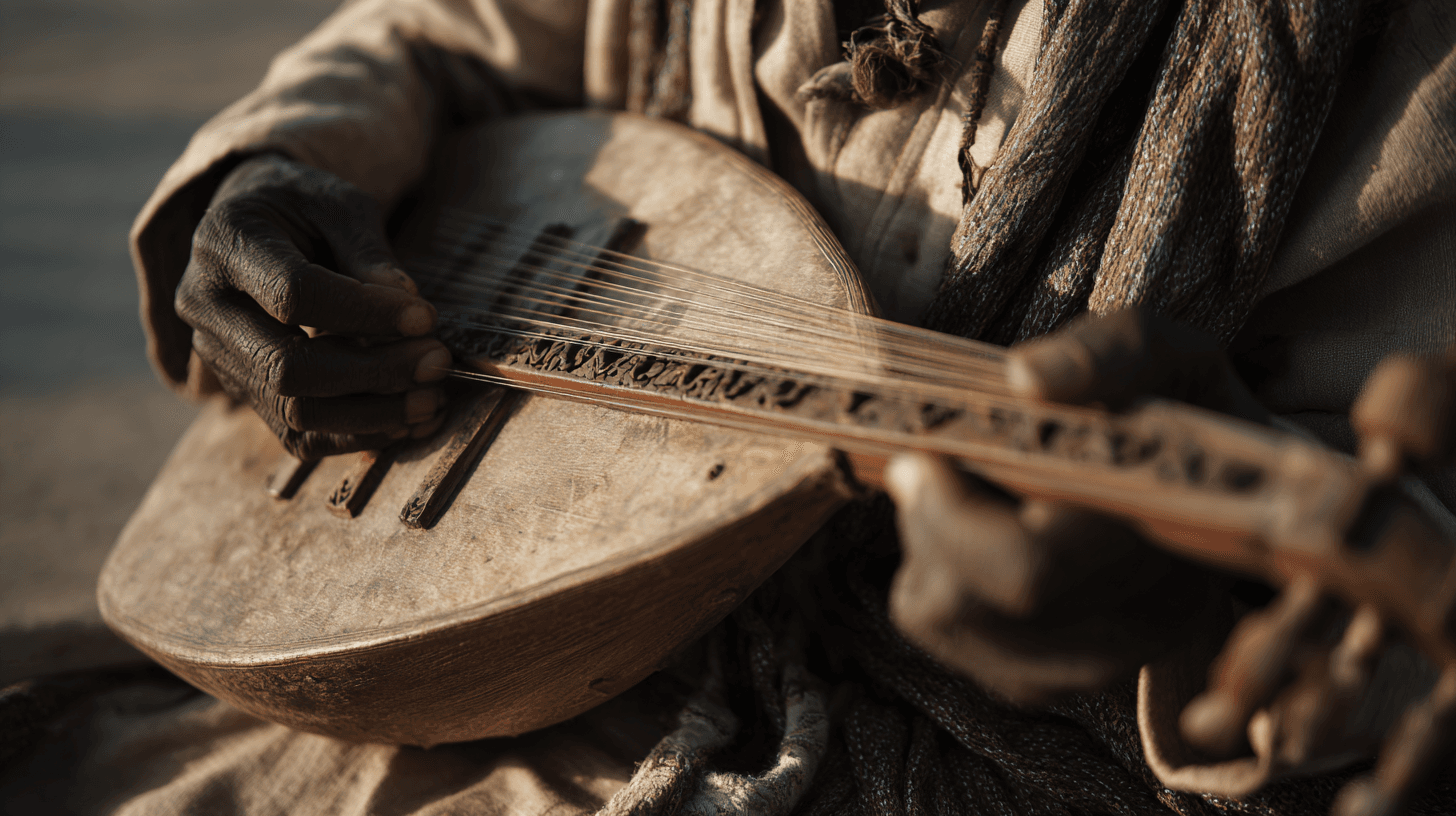
The guembri is not merely a musical instrument. It is a sacred object, a vessel for spiritual power, and its making is governed by protocols that have nothing to do with acoustics.
The body is carved from a single piece of wood — preferably from a tree struck by lightning, though this is increasingly rare. The shape is distinctive: a long neck emerging from a hollowed rectangular body, like a primitive bass with a box for resonance. The carving takes weeks, the wood seasoned over months.
The soundboard is camel skin, specifically from a camel that was not slaughtered but died of natural causes. The violence of slaughter, the Gnawa believe, would enter the instrument and disturb its relationship with the spirits. The skin must be prepared carefully, stretched while wet, and it takes years to reach its optimal sound.
The strings are traditionally camel gut, twisted and stretched and twisted again until they achieve the proper tension. Modern maalems sometimes use nylon, but purists insist the gut has a voice that synthetic materials cannot match — warmer, less precise, more alive.
The instrument cannot be bought like a guitar at a music shop. A guembri should be made for its player, or inherited from a master who has died. A young maalem may wait years for a proper instrument, playing borrowed or inferior guembris until he has earned the right to his own.
When the guembri plays, it is said the spirits listen. The lowest string — the bass that you feel more than hear — is called "the voice of the ancestors." The middle string is "the voice of the living." The highest is "the voice of the spirits." A maalem's skill lies in speaking all three languages simultaneously.
The instrument rests when not in use covered in cloth, facing east. It is never placed on the ground carelessly. It is never played for purely secular purposes. These are not superstitions; they are expressions of relationship. The guembri is not owned. It is kept, tended, respected. In return, it gives voice to things that have no other way to speak.
The Facts
- •Body carved from single piece of wood
- •Preferred wood: tree struck by lightning
- •Soundboard from camel skin (natural death required)
- •Traditional strings: twisted camel gut
- •Three strings represent ancestors/living/spirits
- •Instrument should be made for or inherited by player
- •Must rest covered, facing east
- •Full mastery requires 15-20 years of training
Sources
- Kapchan, Deborah. 'Traveling Spirit Masters.' Wesleyan University Press
- Pâques, Viviana. 'La Religion des Esclaves.' Bergamo
- Gnawa music archives, Dar Gnawa, Essaouira