The Mapmaker
Al-Idrisi and the most accurate map of the medieval world
In 1138, a geographer from Ceuta arrived at the court of Roger II, the Norman King of Sicily. His name was Muhammad al-Idrisi. He was a descendant of the Prophet Muhammad through the Idrisid dynasty of Morocco, and he was about to create the most accurate map of the medieval world.
Roger commissioned the project. He wanted a comprehensive map of the known world, and he was willing to pay for it. For fifteen years, al-Idrisi gathered existing maps, interviewed travelers, and sent expeditions to confirm reports. He drew on three centuries of Islamic cartography—a tradition unknown in Western Europe—as well as Ptolemy's Geography, which had been translated into Arabic centuries earlier.
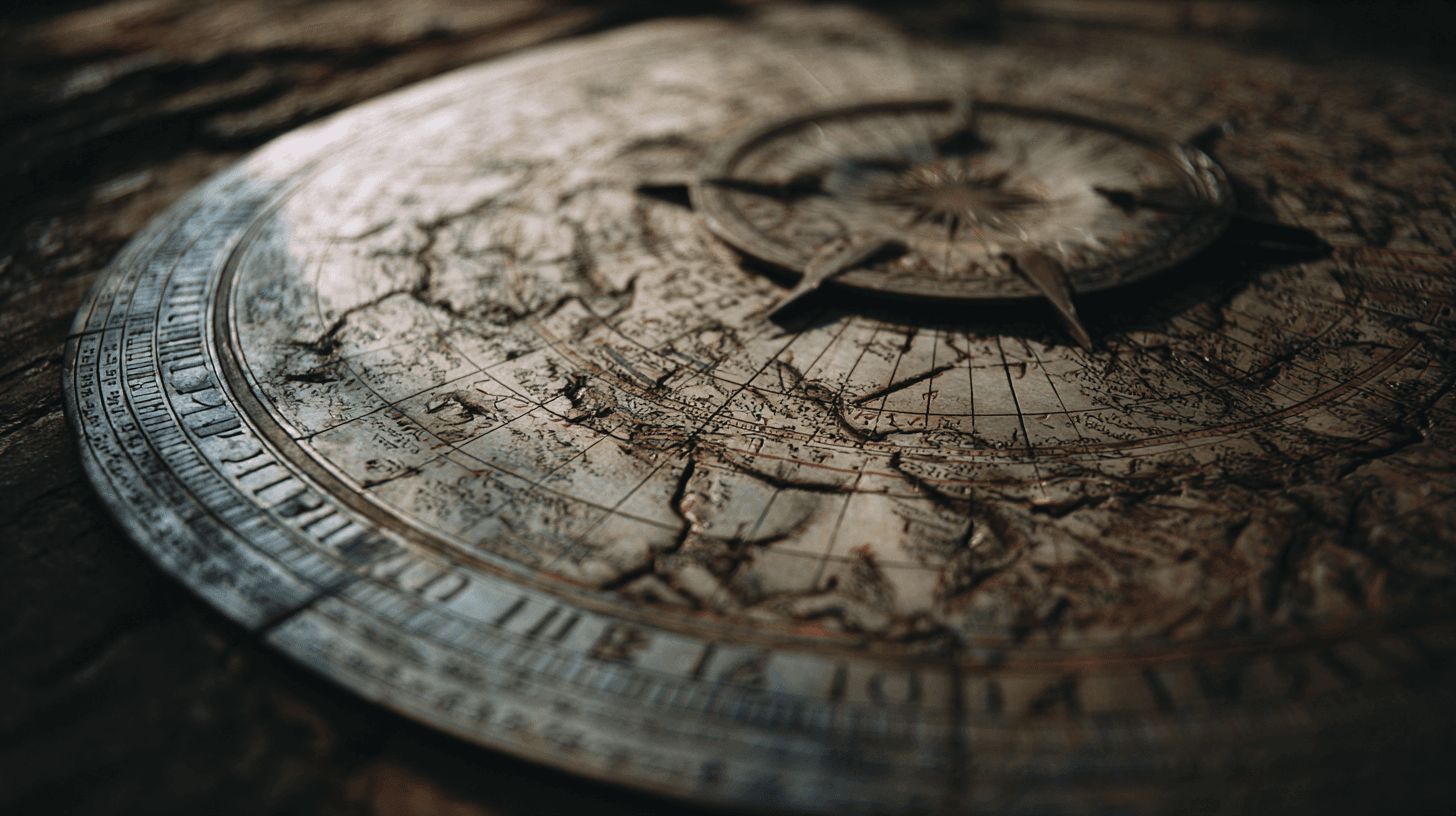
The result, completed in 1154, was the Tabula Rogeriana: a world map engraved on a silver disc six feet in diameter, weighing 450 pounds. A silver globe accompanied it. Alongside these was a book—formally titled 'The Pleasure Excursion of One Who Is Eager to Traverse the Regions of the World'—containing seventy sectional maps and detailed descriptions of each region.
The map was oriented south-up, following Islamic tradition, with Arabia at the center. It showed Europe and Asia in detail, including coastal outlines remarkably accurate for the time. It calculated Earth's circumference at 23,000 miles—only 1,901 miles short of the actual figure. It was the most sophisticated geographical work produced anywhere in the world.
Geographers copied it unchanged for three hundred years.
Roger II died just weeks after the map was completed. Al-Idrisi created an expanded version for Roger's successor, William I, but in 1160, during palace intrigue, Latin nobles burned the book and the silver disc disappeared—melted down, probably. Al-Idrisi fled to North Africa with his Arabic manuscripts, which became the basis for Islamic geographical knowledge for generations.
Europe didn't rediscover him until the 16th century. The Arabic text was printed in Rome in 1592. A Latin translation followed in 1619. By then, European exploration had rendered his geography obsolete—but for three centuries, al-Idrisi's world had been the world.
He died in 1165 or 1166, probably in Ceuta where he was born. He had traveled through North Africa, Spain, Anatolia, and the French Atlantic coast. He had interviewed merchants and sailors from across the known world. And he had created, for a Norman king in Sicily, a silver monument to what medieval scholars actually knew.
The silver is gone. The knowledge survives.
The Facts
- •Silver disc 6 feet diameter, 450 pounds
- •Completed 1154 after 15 years work
- •Earth circumference calculated: 23,000 miles (actual: 24,901)
- •70 sectional maps in accompanying book
- •Copied unchanged for 300 years
- •Arabic text printed Rome 1592
- •Silver disc melted down during 1160 palace intrigue
Sources
- Al-Idrisi, Kitab nuzhat al-mushtaq (1154)
- Ahmad, A History of Arab-Islamic Geography (1995)
- World History Encyclopedia, 'Al-Idrisi'