The Mint Tea Ritual
Three glasses, three meanings
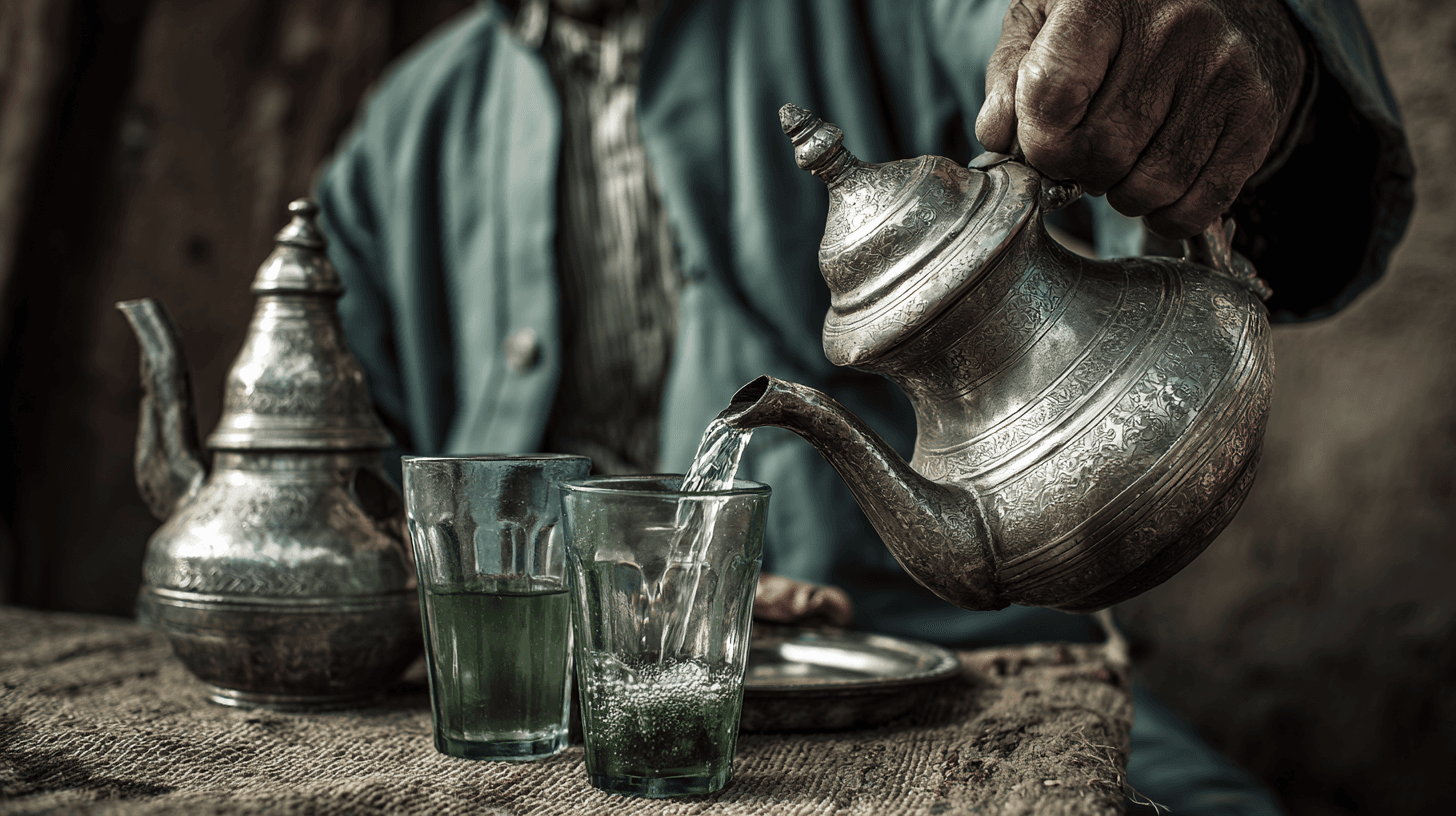
He pours from waist height, a stream of amber arcing into the glass. Not a drop spills. This is not showing off. This is aeration, cooling, and a welcome you can taste.
Mint tea is Morocco's secular sacrament. It accompanies every gathering, every transaction, every moment when humans acknowledge each other's presence. To offer tea is to offer hospitality. To refuse tea is to refuse the hand extended.
The preparation is ritual. Chinese gunpowder green tea — tightly rolled leaves that unfurl when steeped — forms the base. Fresh mint, preferably spearmint, is added in quantities that seem excessive until you taste the result. Sugar, always more than foreigners expect, dissolves into syrup that balances the bitter tea and the astringent mint.
The first steeping is thrown away — too bitter, not fit for guests. The second is served. The pot is refilled with water, steeped again, served again. Three glasses is traditional, each slightly different as the tea evolves.
The glasses themselves are part of the performance. Small, ornate, often painted or gilded, they hold just enough for a few sips. The tea is poured from height — sometimes a meter or more — for reasons that are functional as well as theatrical. The fall aerates the liquid, creating a light foam. It also cools the tea to drinkable temperature. A skilled pourer can fill three glasses in one continuous motion, leaving each with identical foam.
The proverb says: "The first glass is gentle as life, the second is strong as love, the third is bitter as death." The flavors do change as the pot empties. But the real message is simpler: stay for three glasses. Don't rush. Sit with us.
In business, the tea comes before any negotiation. In homes, the tea comes before any conversation of substance. To skip to business, to refuse the glass, is not efficiency — it is rudeness so profound it may terminate the relationship before it begins.
The tourist sees a charming custom, a good photo opportunity. The Moroccan sees a technology of social cohesion, a ritual that has survived colonization and globalization because it does something essential: it creates space for humans to recognize each other as humans, not as functions or transactions.
The glass is offered. The glass is accepted. Now we may speak.
The Facts
- •Chinese gunpowder green tea is traditional base
- •Fresh spearmint (Mentha spicata) preferred
- •Sugar quantities typically 1-2 tablespoons per glass
- •First steeping discarded
- •Three glasses is traditional service
- •Pouring from height aerates and cools
- •Tea ceremony documented since at least 18th century
- •Morocco is largest per-capita tea importer globally
Sources
- Kapchan, Deborah. 'Gender on the Market.' University of Pennsylvania Press
- Waterbury, John. 'North for the Trade.' University of California Press
- Morocco Tea Council documentation