The Moving Mountains
The dunes of Erg Chebbi are walking south at ten meters a year. The villages are in the way.
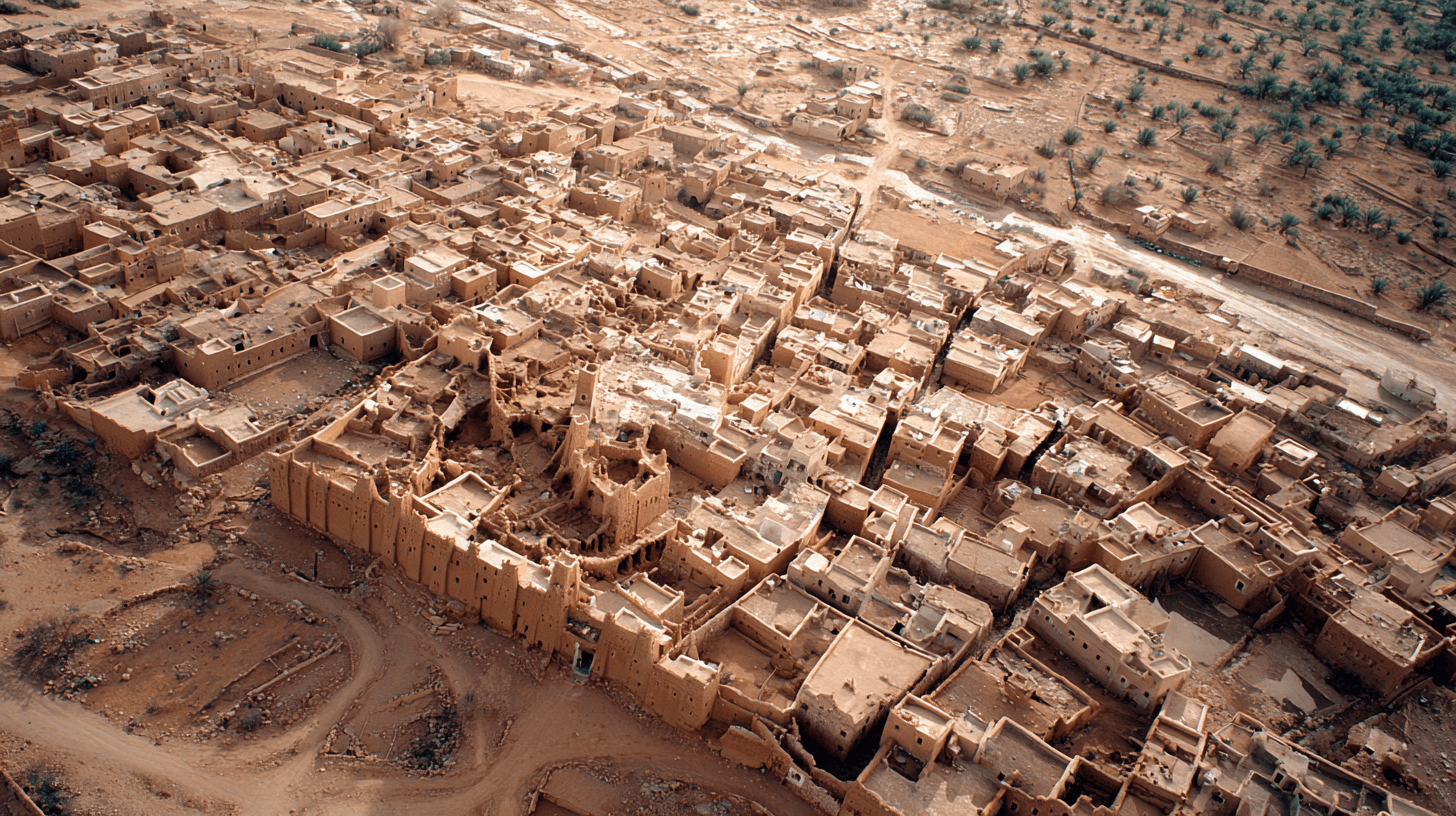
The village of Merzouga is being eaten.
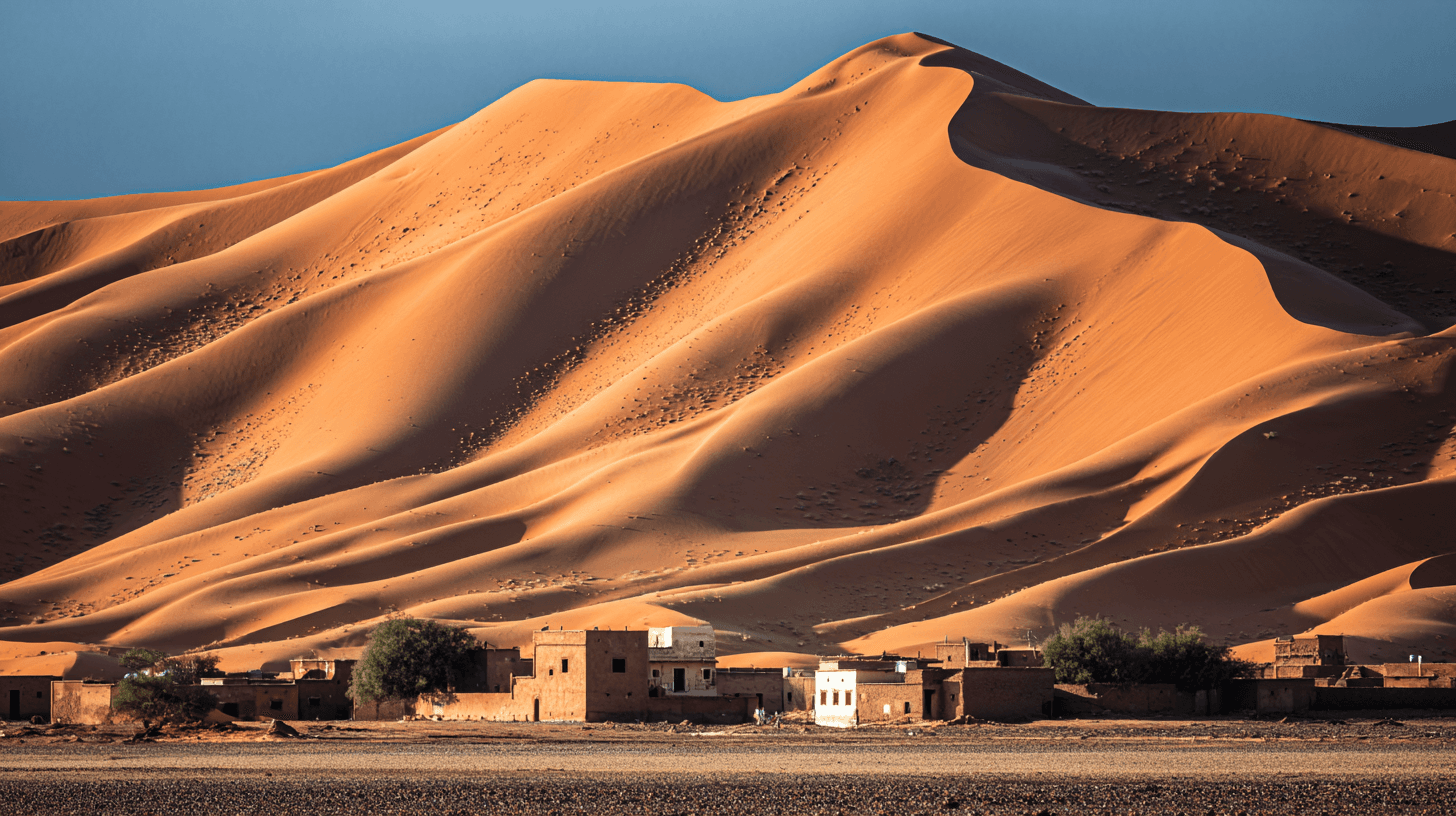
Not quickly. Not dramatically. But every year, the dunes of Erg Chebbi creep a little closer. Sand accumulates against walls. Doorways need digging out. Palm trees that stood in clearings now stand in dunes. The desert is patient, and it's winning.
An erg is a sand sea — a region where wind has piled sand into massive dune systems that dwarf everything around them. Erg Chebbi covers about 50 square kilometers, with dunes reaching 150 meters high. It's the landscape you picture when you think "Sahara": endless waves of orange sand against blue sky, photogenic and deadly.
But the waves are moving.
Dunes migrate. Wind pushes sand up the windward slope and drops it over the crest, creating a slow-motion avalanche that moves the entire dune forward. In Erg Chebbi, the dominant wind pushes south. The dunes follow — about 10 meters per year on average, faster in stormy years.
Ten meters doesn't sound like much. Over a decade, it's a hundred meters. Over a century, a kilometer. Villages that were founded at a safe distance from the sand are now fighting it at their doorsteps. Oases that existed for generations are being smothered. The geography your grandparents knew is not the geography you'll leave to your grandchildren.
The locals adapt. They build walls to deflect sand. They plant barriers of tamarisk and palm fronds. They abandon buildings that become untenable and rebuild elsewhere. Some have given up on agriculture entirely and converted to tourism — if the dunes are coming anyway, might as well charge visitors to see them.
Climate change is accelerating the process. Drought weakens the vegetation that anchors sand. Hotter, drier winds move more material. The Sahara is expanding — the southern edge has shifted about 250 kilometers southward since 1920. The dunes of Erg Chebbi are just one front in a larger advance.
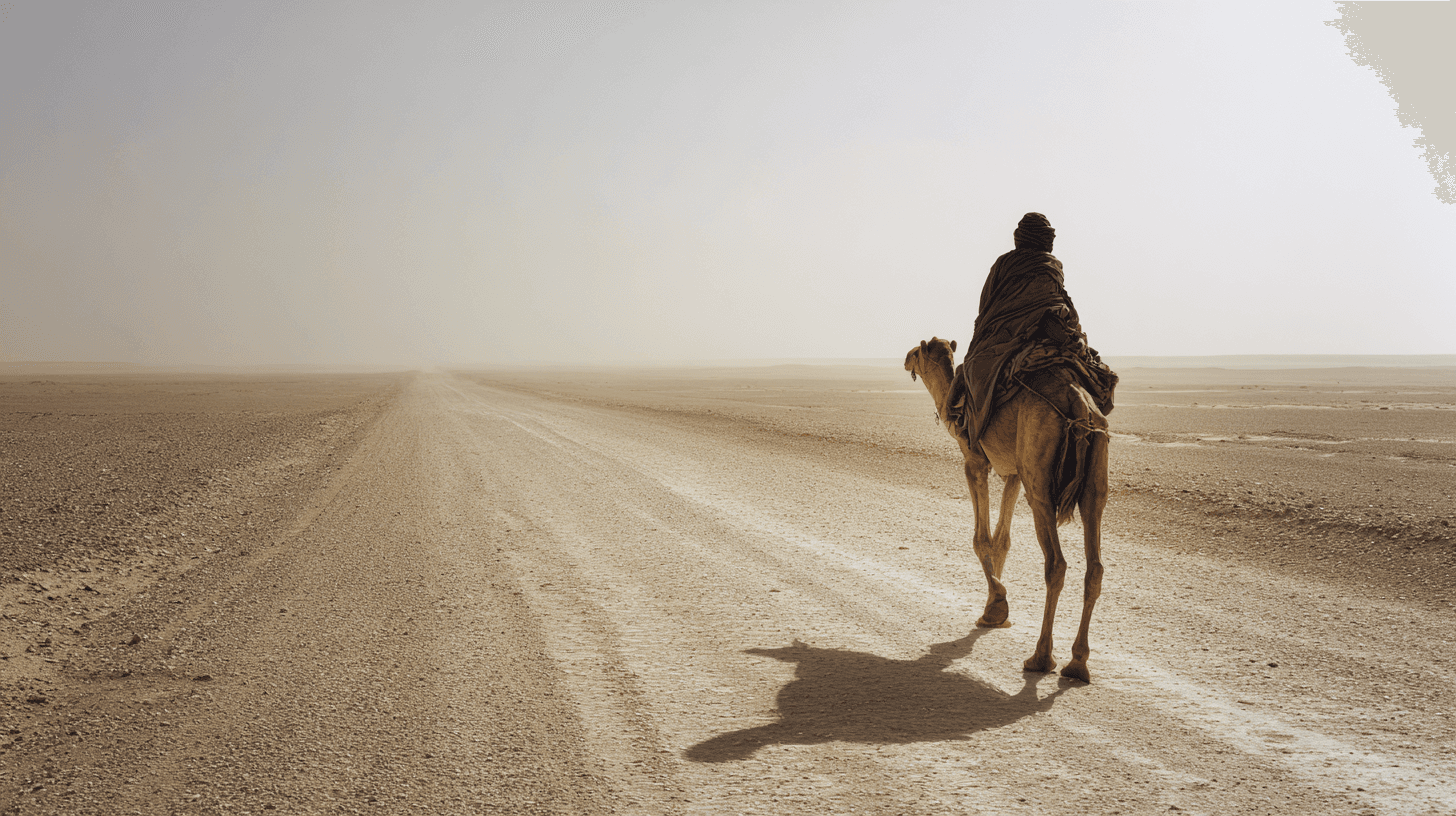
The tourists come for the beauty: camel rides, desert camps, sunrise over the dunes. They don't see the motion. The sand looks eternal. But ask anyone who's lived here fifty years, and they'll show you where the desert used to end and where it ends now.
The mountains are moving. They just move slow enough that we can pretend they're not.
The Facts
- •Erg Chebbi covers approximately 50 km² near Merzouga
- •Dunes reach heights of 150 meters
- •Average dune migration is 5-15 meters per year
- •The Sahara has expanded approximately 10% since 1920
- •Desertification affects over 90% of Moroccan oases
- •Traditional sand barriers use tamarisk and palm fronds
- •Erg Chebbi is one of two major ergs in Morocco (the other is Erg Chigaga)
Sources
- Lancaster, Nicholas. 'Geomorphology of Desert Dunes.' Routledge
- Thomas, David. 'Arid Zone Geomorphology.' Wiley
- Moroccan Ministry of Environment documentation on desertification