The Music of Resistance
The Aïta was protest music before protest music existed. The French banned it. Women kept singing.
The word "aïta" means "the call" — and the women who sang it were calling out everything.
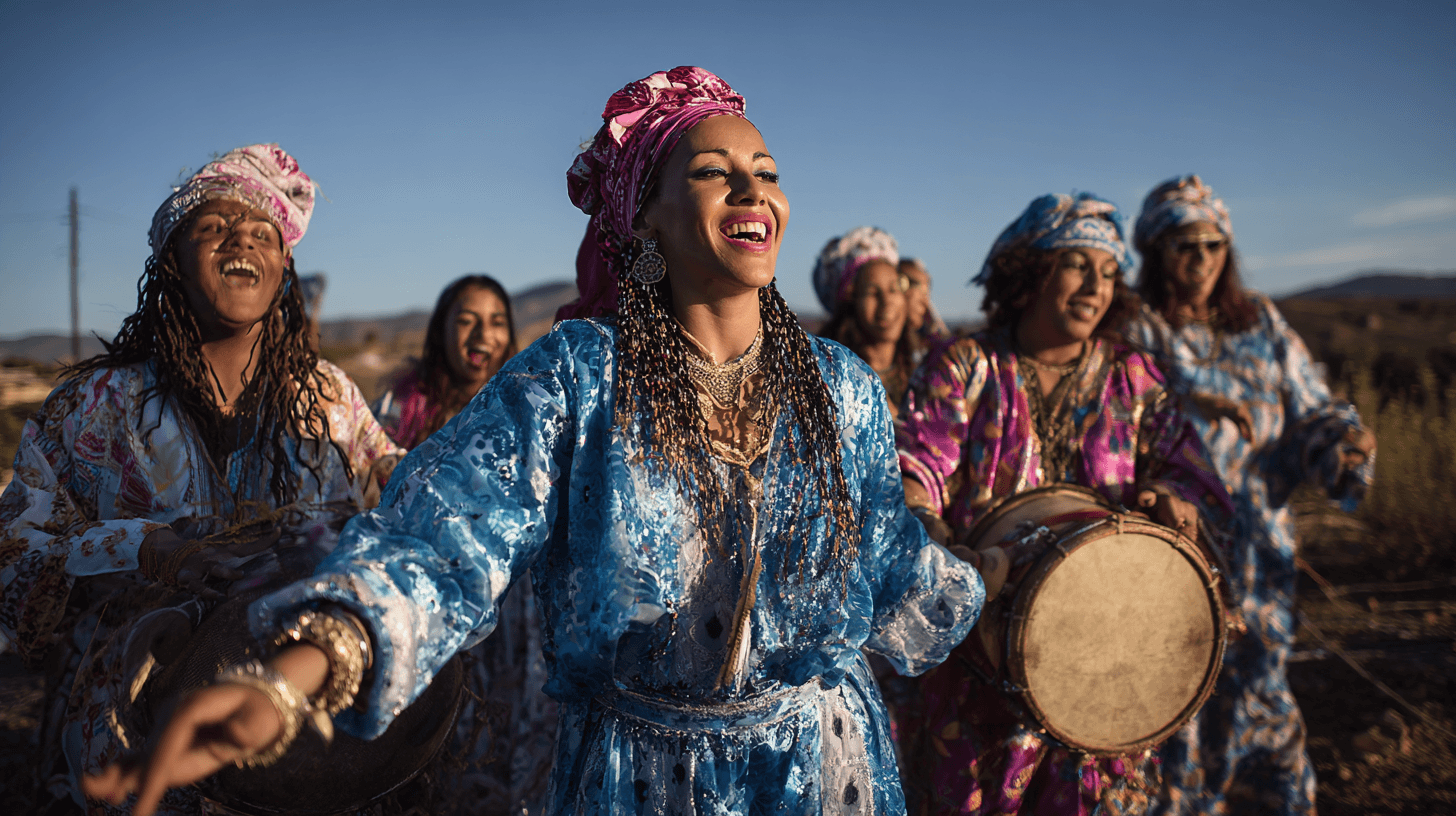
Aïta is the roots music of Morocco's Atlantic plains — Doukkala, Abda, Chaouia, the farmlands between Casablanca and Essaouira. It's sung by women called chikhates, who performed at festivals, weddings, and gatherings where the rules relaxed. The songs were raw: love and loss, sex and death, poverty and injustice. Nothing was off-limits.
When the French arrived, Aïta became political.
The chikhates sang about occupation. They mocked French soldiers. They celebrated resistance fighters. The songs spread news and fury through rural communities where newspapers didn't reach. The French understood the threat — they banned performances, arrested singers, tried to silence the call.
It didn't work. The Aïta went underground and grew stronger. During the independence movement, nationalist leaders recognized its power. The songs that once scandalized the bourgeoisie became anthems. Chikhates who'd been dismissed as disreputable women became symbols of resistance.
The music itself is unmistakable: a wailing voice over a sparse rhythm, call-and-response with the audience, lyrics that build from sorrow to ecstasy. The melodies are microtonal, bending notes in ways that Western scales can't capture. The poetry is dense with metaphor — lovers stand in for the nation, gardens stand in for freedom, lions stand in for the people.
After independence, the Aïta faced a different threat: respectability. The new Morocco wanted modern music, national unity, cleaned-up culture. The chikhates were again marginalized — tolerated at village festivals, excluded from official culture. The music survived in the countryside, passed from singer to singer, too rooted to die.
Today, Aïta is being rediscovered. Younger musicians sample its rhythms. Researchers document the surviving chikhates. The songs that the French tried to silence, that independence tried to forget, are finding new audiences.
The call is still calling.
The Facts
- •Aïta originated in Morocco's Atlantic plains (Doukkala, Abda, Chaouia)
- •Chikhates (female singers) performed at festivals and celebrations
- •The French banned political Aïta performances during the Protectorate
- •The music was used by independence movements in the 1940s-50s
- •Aïta uses microtonal scales uncommon in Western music
- •UNESCO has recognized Aïta as intangible cultural heritage
- •The tradition continues in rural Morocco today
Sources
- Schuyler, Philip. 'Music and Tradition in Morocco.' Routledge
- Ciucci, Alessandra. 'The Voice of the Rural: Aita and Identity in Morocco.' UCLA
- Kapchan, Deborah. 'Gender on the Market.' University of Pennsylvania Press