The Wedding Blanket
A virgin bride wrapped in sequins and symbols. What the blanket says, only women know.
The sequins are the point. And the sequins are not the point.
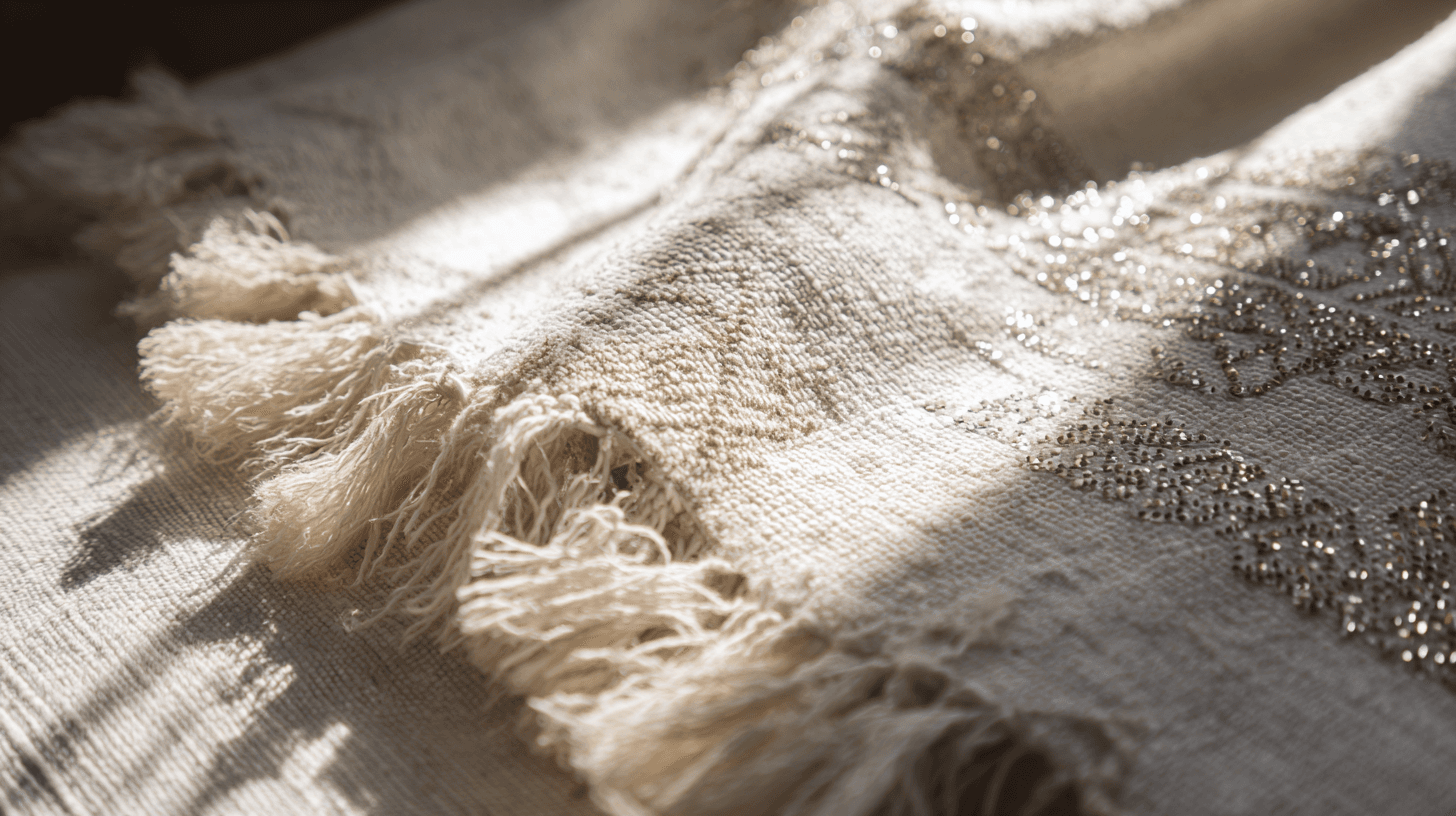
A handira is a wedding blanket from the Middle Atlas mountains. Cream-colored wool, often with stripes, covered in metal sequins or discs that make it shimmer like water in sunlight. It's the most photogenic textile in Morocco — which is why you've seen it on Instagram, on Etsy, draped over sofas in Brooklyn apartments.
What you haven't seen is what it means.
The handira is made by women for a specific bride. It's not a commodity; it's a message. The patterns — diamonds, zigzags, eyes, hands — are chosen for her. They're protection: against the evil eye, against infertility, against the dangers of transition from girl to wife. The sequins aren't just decorative; metal repels spirits. The blanket is armor.
On her wedding night, the bride is wrapped in the handira. She sits, veiled and shimmering, while guests celebrate around her. The blanket marks her as liminal — between families, between identities, between virgin and wife. It's the most vulnerable moment of her life, and the handira is her shield.
The symbols are women's language. Men see decoration. Women read biography, blessing, warning. A mother weaves her fears and hopes into the wool. A bride receives them, wears them, and eventually passes them down. The knowledge transmits along female lines, never written, never explained to outsiders.
Now the handiras travel. Dealers buy them from villages for a few hundred dirhams, sell them in Marrakech for a few hundred dollars, and ship them to design stores in Europe and America for a few hundred more. The blankets become "bohemian décor," "Moroccan style," "vintage textiles." The sequins still catch the light. The symbols are still there. But no one's reading them anymore.
In the villages, women still make handiras for brides. The real ones. The ones heavy with meaning, made for one woman, never for sale. The tourists get the copies — beautiful, empty, safe for sofas.
The sparkle is the same. The magic isn't.
The Facts
- •Handiras originate from the Middle Atlas Berber tribes
- •Traditionally made of wool with cotton or metal sequins
- •Each blanket is made for a specific bride
- •Symbols include diamonds (fertility), eyes (protection), zigzags (water)
- •Commercial handiras now sell for $300-800 internationally
- •Authentic wedding handiras are rarely sold
- •The blanket is worn during the bride's transition ceremony
Sources
- Becker, Cynthia. 'Amazigh Arts in Morocco.' University of Texas Press
- Ramirez, Francis & Rolot, Christian. 'Tapis et Tissages du Maroc.' ACR Edition
- Spring, Christopher. 'North African Textiles.' British Museum Press