The Nomad's Calendar
Reading seasons without writing
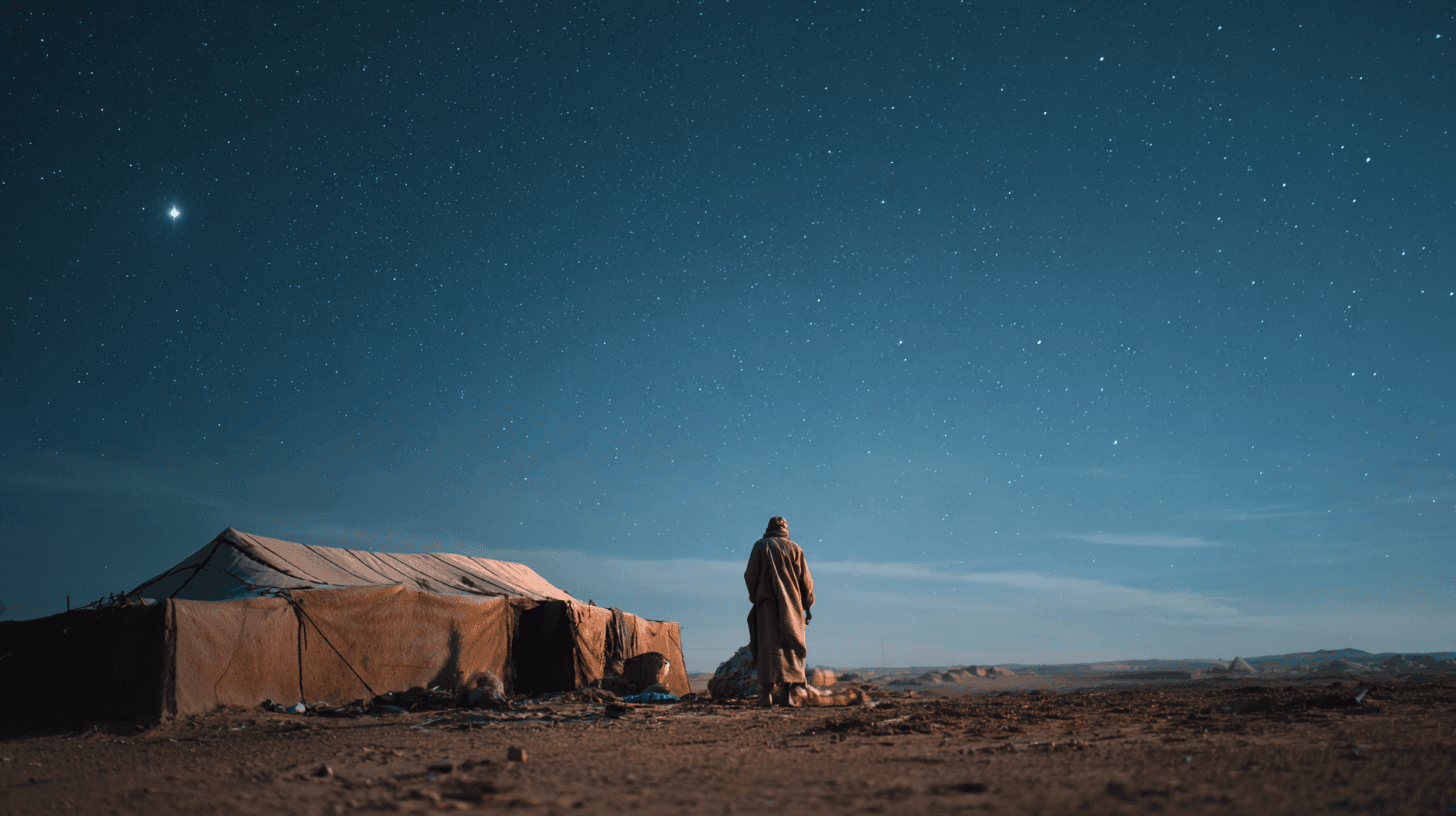
The old man points to a star cluster rising over the eastern ridge. "When the Pleiades appear at dawn," he says, "we move. The grass will be ready. It is always ready when they come."
The Amazigh agricultural calendar predates Islam, predates Christianity, predates any written record. It reads the sky, the plants, the behavior of animals — a system of knowing that kept people alive for millennia before the first book was printed.
The year begins not in January but with the autumn equinox — Yennayer in the old reckoning, now celebrated on January 12th after calendar reforms. From there, the year divides not into months but into agricultural phases, each with its own stars, its own plants, its own work.
When the Pleiades rise before dawn, it is time to plant wheat. When Canopus appears on the southern horizon, the date harvest begins. When Orion's Belt stands vertical at sunset, the ewes are ready to breed. The sky is a calendar you cannot lose, written in light that renews itself nightly.
But stars alone don't tell the whole story. The farmers read the almond blossoms — an early bloom means an early spring, but also the risk of late frost. They watch the ants — when ants seal their holes, rain is coming. They listen to the frogs — their first calls announce that the ground is warm enough for seeds.
The system carries redundancy. If you miss the stars, the plants will tell you. If you miss the plants, the animals will tell you. Everything confirms everything else, because the penalty for error is hunger.
Young people learn it not from lessons but from living — walking with grandparents who point and explain, sleeping under skies that become familiar as faces. The knowledge cannot be downloaded. It accrues, season by season, until the calendar lives inside you.
Some call it superstition. But the superstition fed families for ten thousand years in a landscape that forgives nothing. The iPhone in the young man's pocket cannot tell him when the Pleiades will signal the grass. His grandfather's eyes still can.
The Facts
- •Amazigh calendar based on Julian system, 13 days behind Gregorian
- •Yennayer (New Year) celebrated January 12-13
- •Pleiades rising signals wheat planting season
- •Canopus appearance marks date harvest
- •Calendar divides year into 7 agricultural seasons
- •System incorporates stellar, botanical, and zoological indicators
- •Some regions maintain 12-month and 13-month variants
Sources
- Chaker, Salem. 'Calendrier.' Encyclopédie Berbère
- Doutté, Edmond. 'Magie et Religion dans l'Afrique du Nord.' 1908
- Hammoudi, Abdellah. 'The Victim and Its Masks.' University of Chicago Press