The Pottery of Tamegroute
Green glaze from the end of the salt road
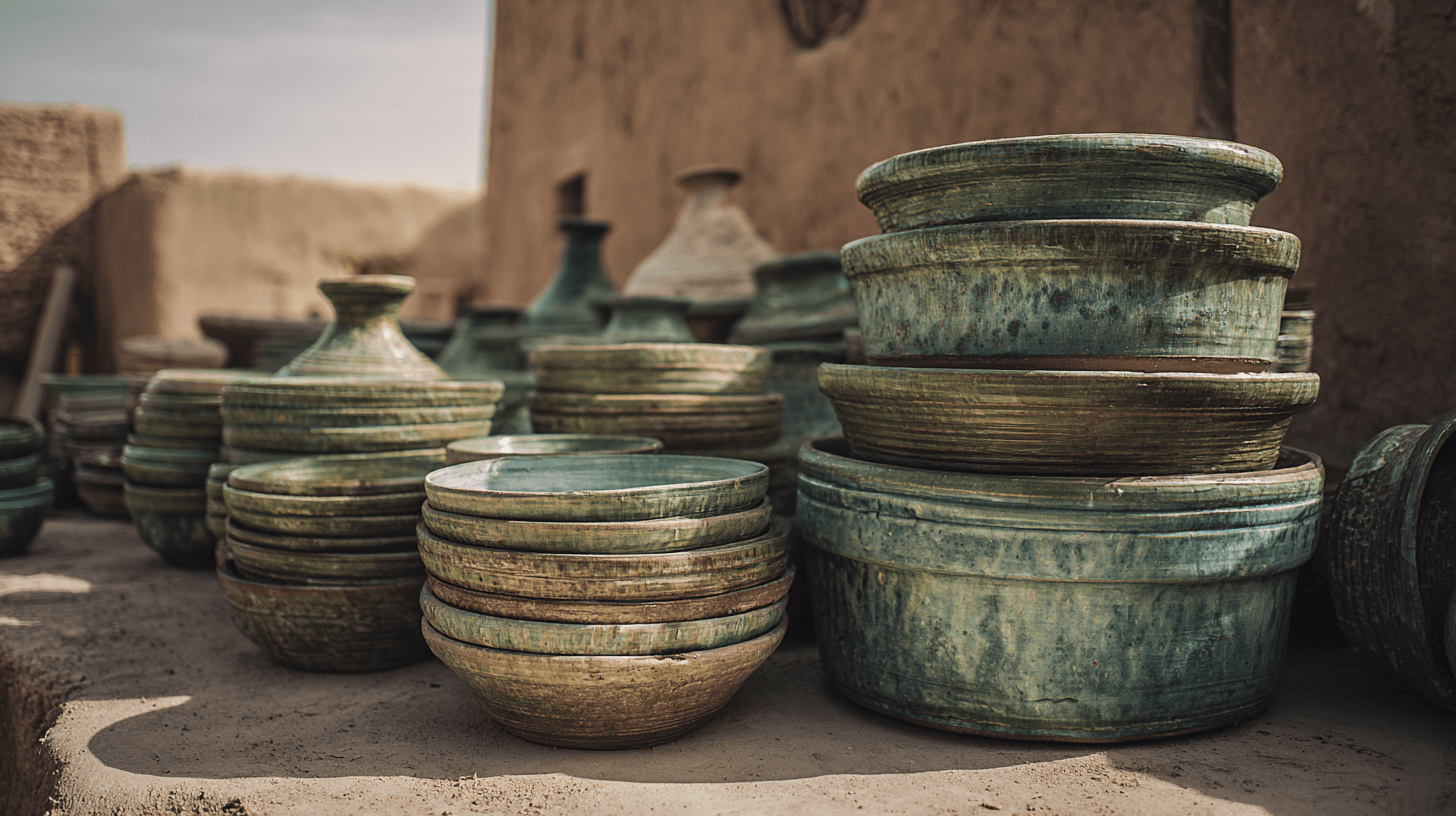
The green is like nothing else — deep, uneven, alive. No two pieces match. The secret is in the glaze, and the secret has stayed in one family for four hundred years.
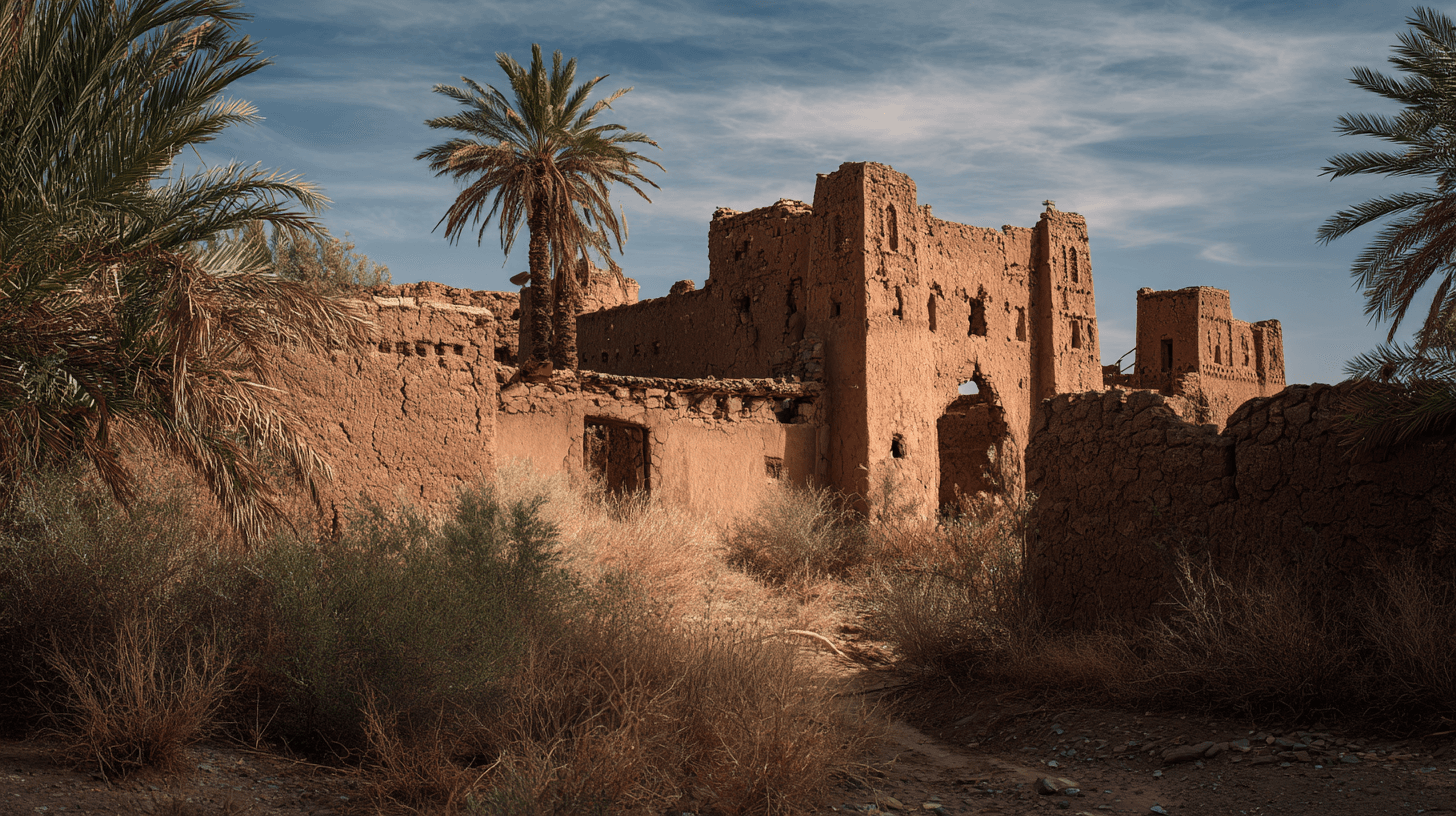
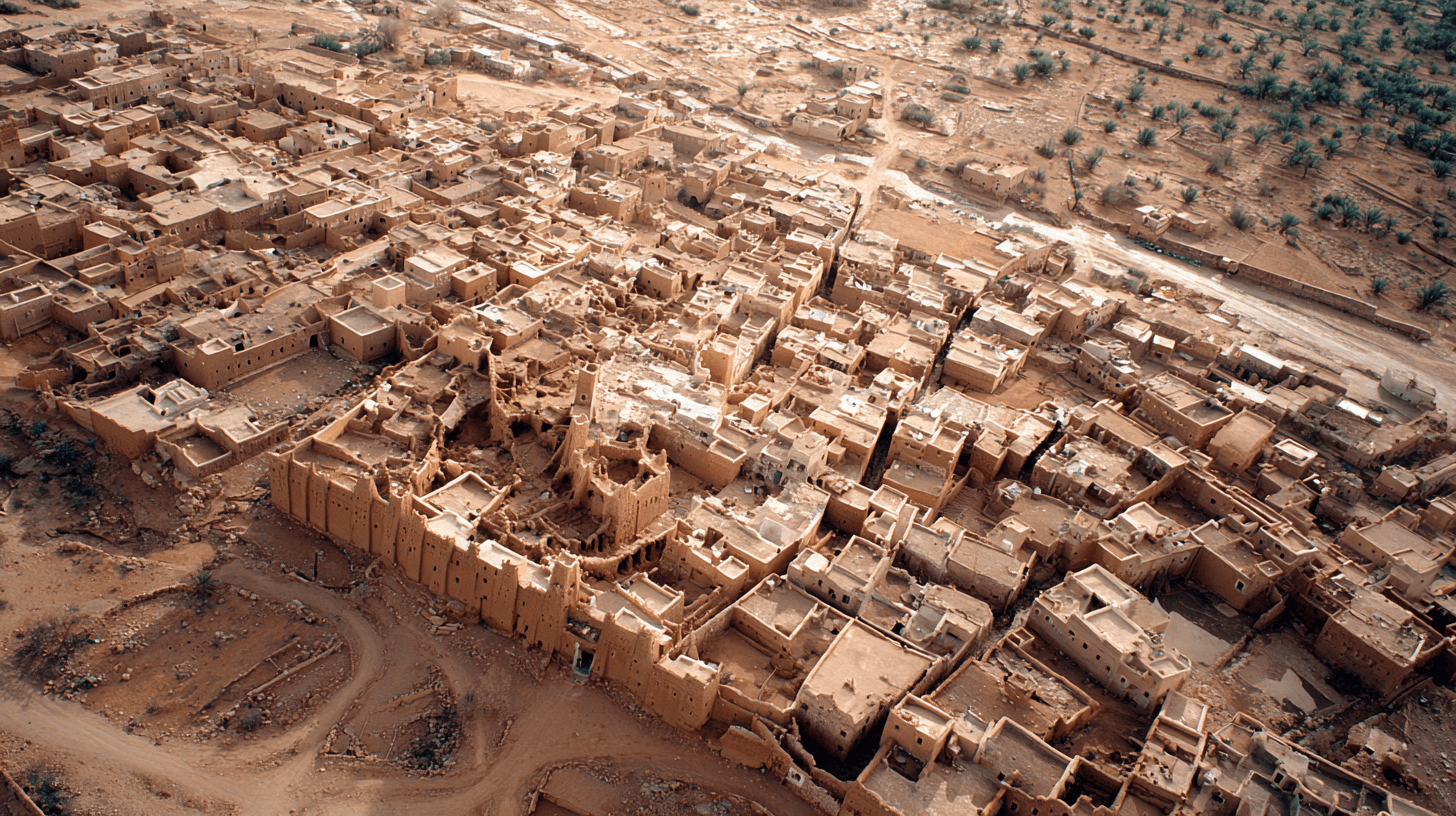
Tamegroute sits at the end of the salt road, where the Draa Valley gives way to the Sahara. For centuries, it was a stopover for caravans — a place to rest, pray at the ancient library, and buy pottery for the long journey ahead. The green-glazed ceramics of Tamegroute were traded across Africa and into Europe.
The technique is closely guarded. The base clay comes from the valley, shaped by hand on kick wheels that haven't changed in design since the Middle Ages. The forms are simple — bowls, plates, tagines, storage jars. Nothing delicate. These are objects built to survive rough use in harsh conditions.
The magic is the glaze. A mixture of copper oxide, silica, and compounds whose exact proportions are family secrets produces a green that shifts from jade to turquoise to emerald depending on the firing. The color is never uniform — it pools in depressions, thins on curves, breaks over edges. Each piece is unique because the chemistry is too complex to control perfectly.
Only a handful of families still work in the traditional way. Their kilns are mud structures built into hillsides, fired with palm fronds and olive pits. The heat is uneven, unpredictable, and this irregularity is part of the character. Modern kilns produce consistent results. Tamegroute pottery is cherished precisely because it isn't consistent.
The library next to the kilns holds manuscripts dating to the 11th century. Scholars came from across the Islamic world to study here, and they took home pottery with their books. Tamegroute green reached as far as Baghdad and Cordoba.
Today, the tourists arrive by SUV, stay an hour, buy a few pieces. The potters smile, accept the money, return to their wheels. The clay is the same clay their ancestors used. The glaze is the same glaze. The fire is the same fire. At the end of the salt road, time moves differently. The green endures because the family remembers how to make it.
The Facts
- •Production dates to at least 17th century
- •Green glaze from copper oxide mixture (exact formula secret)
- •Clay sourced locally from Draa Valley
- •Traditional kilns fired with palm fronds and olive pits
- •Associated library contains 4,000+ manuscripts
- •One of the last centers of traditional green-glaze pottery
- •Each piece unique due to variable kiln conditions
- •Exported historically via trans-Saharan trade
Sources
- Hedgecoe, John. 'Morocco.' Collins
- El Khayat, Mohammed. 'The Libraries of Tamegroute.' Journal of Islamic Manuscripts
- Moroccan Ministry of Culture documentation