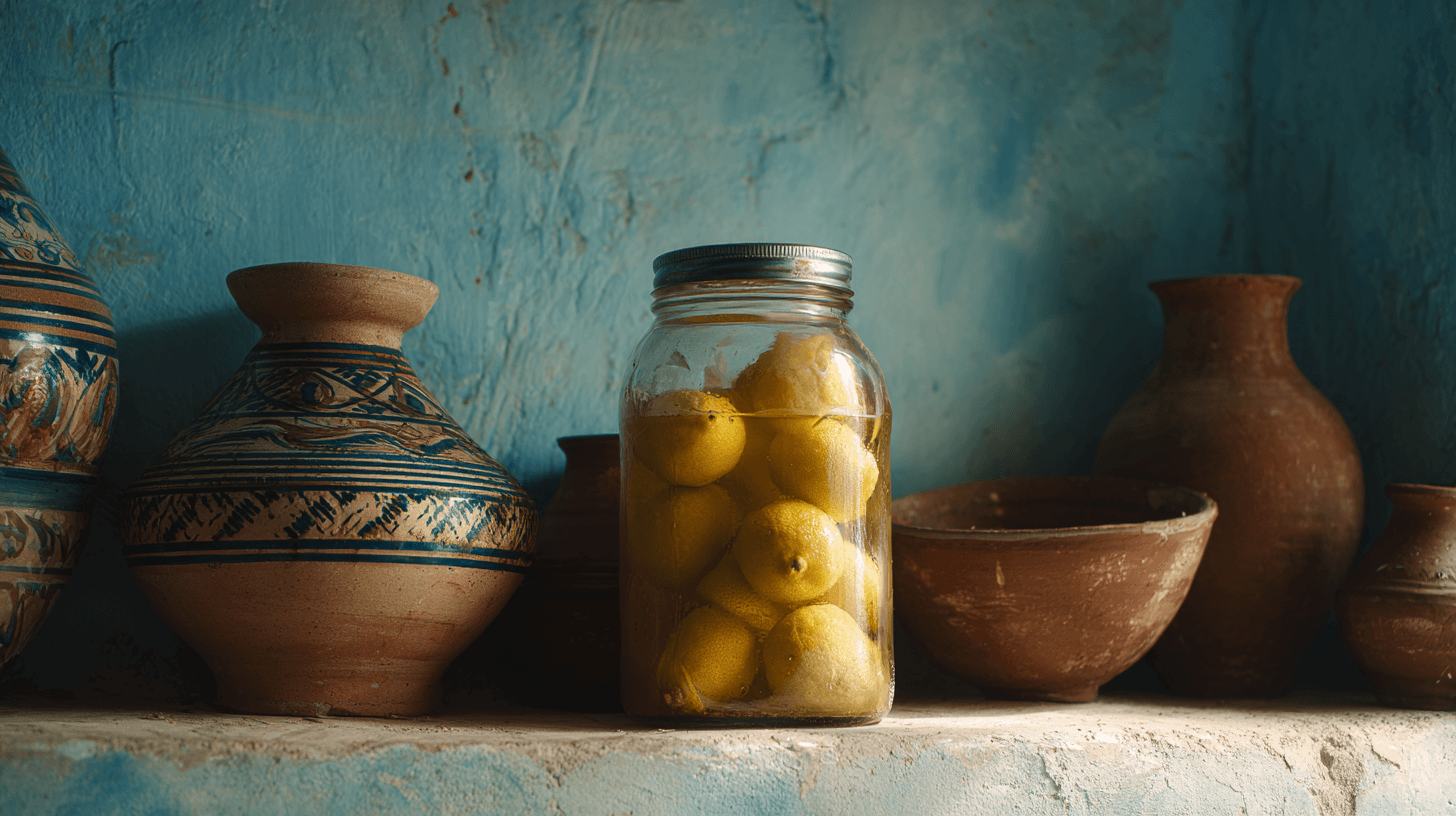
The Preserved Lemons
Time as ingredient
She adds salt and waits. In thirty days, the flesh will dissolve and the rind will become velvet. You cannot rush a preserved lemon. Time is the ingredient.
The preserved lemon is Morocco's signature flavor — a taste so distinctive that once learned, it is recognized instantly in any tagine, any salad, any dish that aspires to authenticity. But the thing itself is not complicated: lemons, salt, time.
The lemons are quartered but left attached at the base, then packed with coarse salt and pressed into jars. Lemon juice is added to cover. The jars are sealed and left at room temperature. And then — nothing. You wait.
Over the following month, chemistry does its work. The salt draws moisture from the lemons, creating brine. The citric acid prevents spoilage. The flesh begins to break down, becoming pulpy, soft, eventually dissolving almost completely. What remains is the rind, transformed utterly — soft as butter, intensely flavored, salty and sour and floral in ways the fresh lemon never suggested.
The rind is what you use. A single preserved lemon, its rind sliced into thin strips, transforms a chicken tagine. A spoonful of the pulp, mixed into dressings or sauces, adds depth that fresh lemon cannot match. The flavor is concentrated time — weeks of slow transformation rendered edible.
The technique is old. How old is uncertain — preserved lemons require lemons, which came to Morocco from Asia via Arab trade routes, so the practice cannot predate the Middle Ages. But by the time cookbooks began recording Moroccan cuisine, preserved lemons were already foundational. They were already "the way things are done."
In modern kitchens, the jars sit quietly on counters, doing their work while life continues around them. Every few days someone shakes them, redistributing the brine. Every week, the lemons look a little more collapsed, a little more transformed. When the month is up, the jar goes into the refrigerator, where the lemons keep for a year or more, ready when needed.
This is not fast food. This is slow food in its purest sense — value created not by labor but by patience, by the simple act of letting time do what only time can do. The preserved lemon does not taste like thirty days. It tastes like itself, like Morocco, like something that could not exist without the willingness to wait.
The Facts
- •Basic recipe: lemons, salt, lemon juice
- •Preservation time: 30+ days
- •Rind is primary culinary use
- •Brine can be used in dressings/marinades
- •Properly stored, keeps 1+ year refrigerated
- •Lemons arrived via Arab trade routes (medieval)
- •Technique documented since at least 17th century
- •Essential in tagines, salads, and many Moroccan dishes
Sources
- Wolfert, Paula. 'The Food of Morocco.' Ecco
- Morse, Kitty. 'Cooking at the Kasbah.' Chronicle Books
- Traditional recipes from Fes cooking families