The Priestess
The Berber queen who fought Rome's heirs
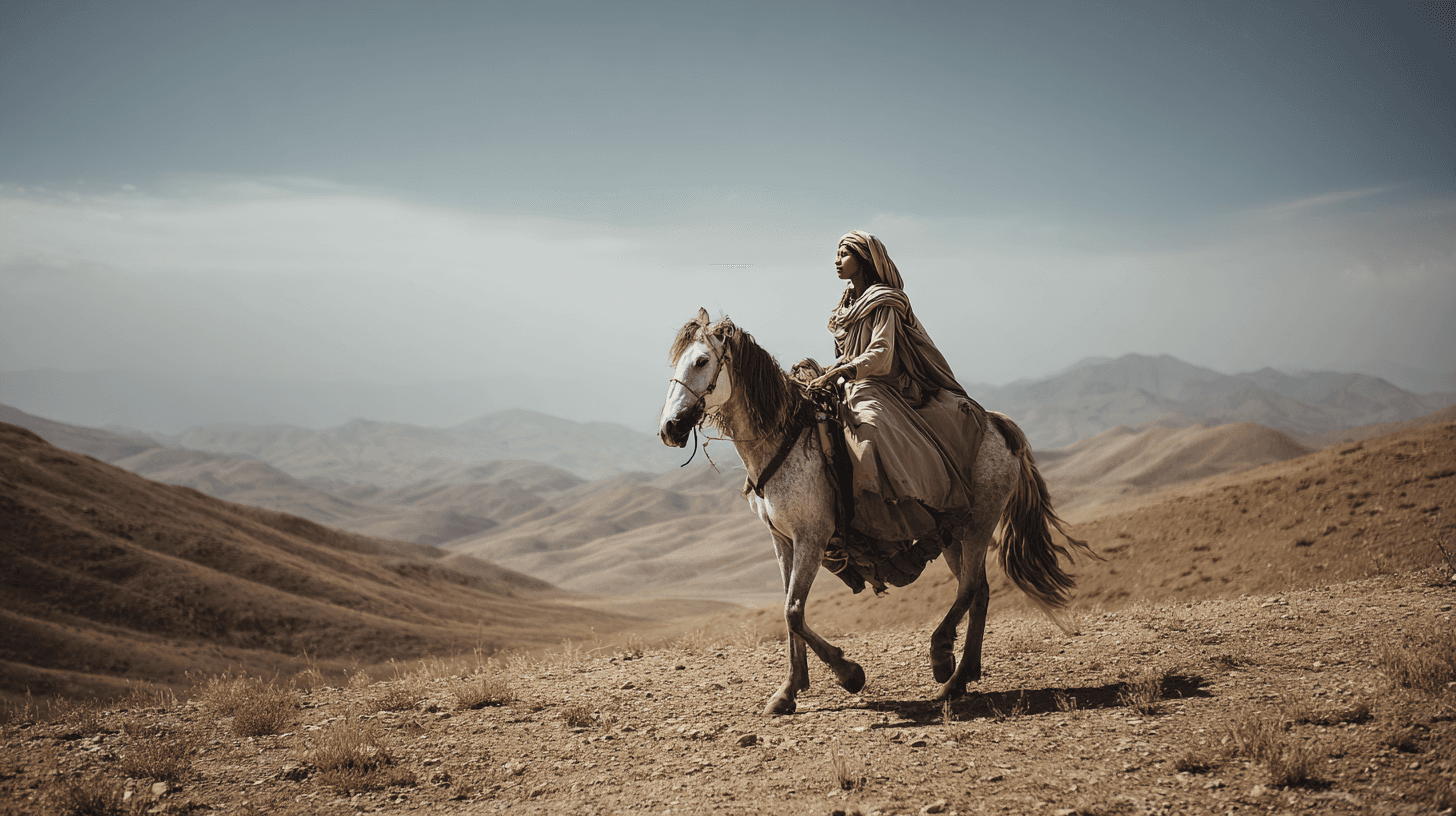
The Arabs called her al-Kahina—the prophetess, the sorceress, the witch. Her own people called her Dihya, which means 'beautiful gazelle' in Tamazight. She was neither priestess nor prophet. She was a war leader.
In 698 CE, Dihya commanded the Berber forces at the Battle of Meskiana, somewhere in the Aurès Mountains of what is now Algeria. Her opponent was Hasan ibn al-Nu'man, the Umayyad general who had already conquered Carthage and seemed unstoppable. She stopped him. The defeat was so complete that Hasan fled to Libya and stayed there for four or five years, waiting for reinforcements from Damascus.
For those five years, Dihya ruled the Maghreb.
The sources are fragmentary and contradictory. Ibn Khaldun, writing 700 years later, claims she was 127 years old when she died—clearly legend. What we know: she was the daughter or niece of a Berber king named Kusaila, who had himself led resistance against the Arab conquest before being killed in 688. She inherited his war.
Her religion remains disputed. Some sources say she was Jewish—her tribe, the Jarawa, may have practiced Judaism. Others claim Christianity, or traditional Berber beliefs. The Arab chroniclers called her a kahina because they had no other word for a woman who commanded armies and claimed visions.
When Hasan returned with fresh troops around 702, Dihya tried a scorched earth strategy—destroying oases and settlements to deny the Arabs resources. It backfired. The destruction turned her own people against her. At the Battle of Tabarka in 703, she was defeated. Some accounts say she died fighting, sword in hand. Others say she took poison rather than be captured. The Umayyads cut off her head and sent it to the Caliph in Damascus.
The irony is what came next. Her sons, Bagay and Khenchla, converted to Islam and joined the Arab armies. In 711, they crossed the Strait of Gibraltar under Tariq ibn Ziyad—part of the force that conquered Spain. The Berbers who had resisted the Arabs became the spearhead of Arab expansion into Europe.
Today, Dihya is a symbol of Berber identity and North African feminism. There's a statue of her in Baghai, Algeria, erected in 2003. Another stands in Paris, installed in 2001. In Algeria, her face appears in graffiti and on murals. Some governments have condemned her veneration as blasphemy. Others treat her as a national hero.
She ruled for five years, defied the caliphate, and lost. But she is remembered. The generals who defeated her are footnotes.
The Facts
- •Ruled North Africa 695-700 CE
- •Defeated Umayyad general Hasan ibn al-Nu'man at Battle of Meskiana 698
- •Her sons converted to Islam and helped conquer Spain in 711
- •Statue erected in Baghai, Algeria in 2003
- •Another statue in Paris 2001
- •Name means 'beautiful gazelle' in Tamazight
- •Religion disputed: possibly Jewish, Christian, or traditional Berber
Sources
- Ibn Khaldun, Kitab al-Ibar (14th century)
- Laroui, The History of the Maghrib (1977)
- Modéran, Les Maures et l'Afrique romaine (2003)