The Quarry
Where Marrakech gets its bones
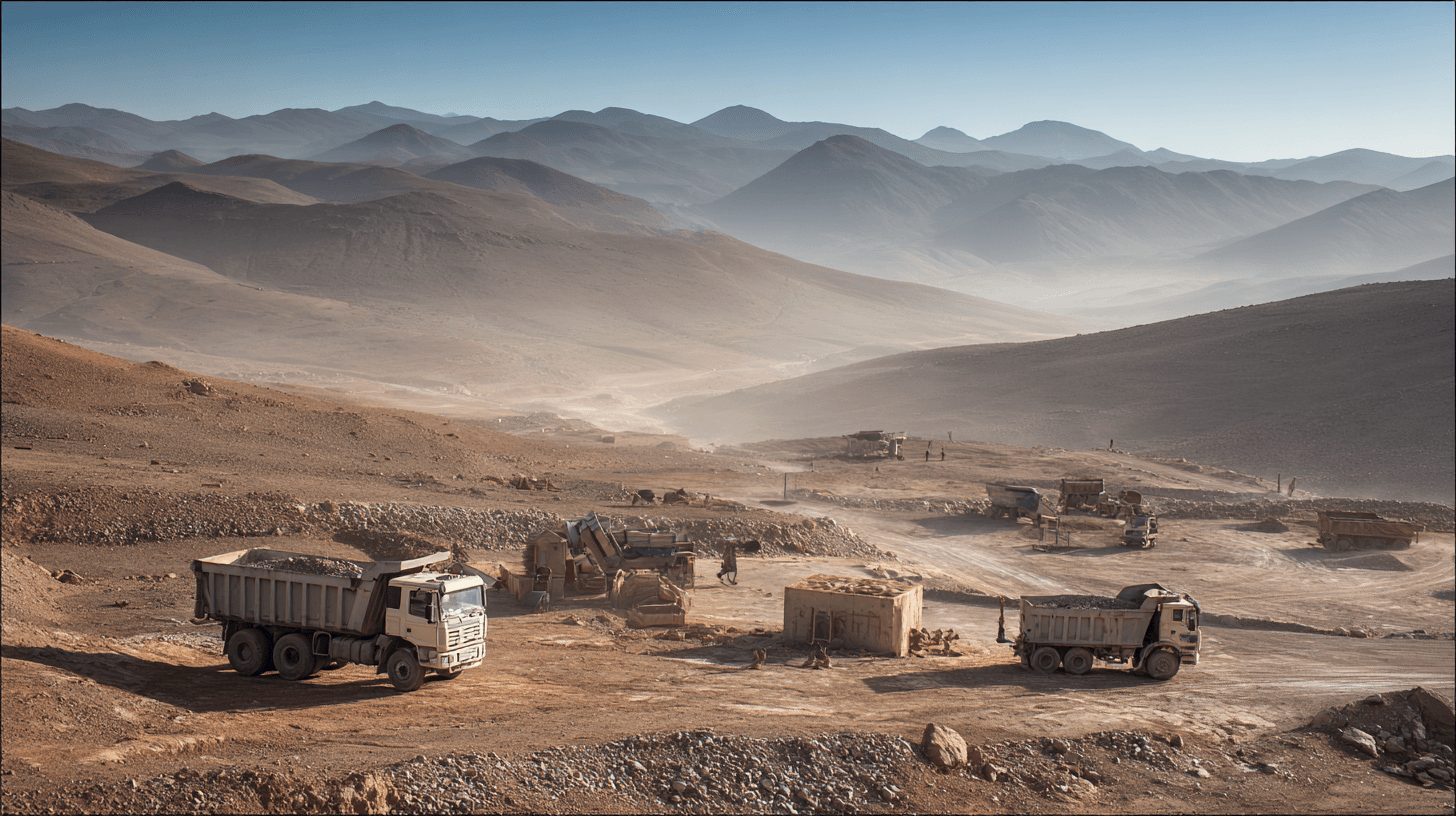
Behind the photogenic ridge, past the camel trails and the infinity pools, the trucks are working. The Agafay is not just a backdrop for leisure. It is a quarry — a source of the stone that builds the city you just left.
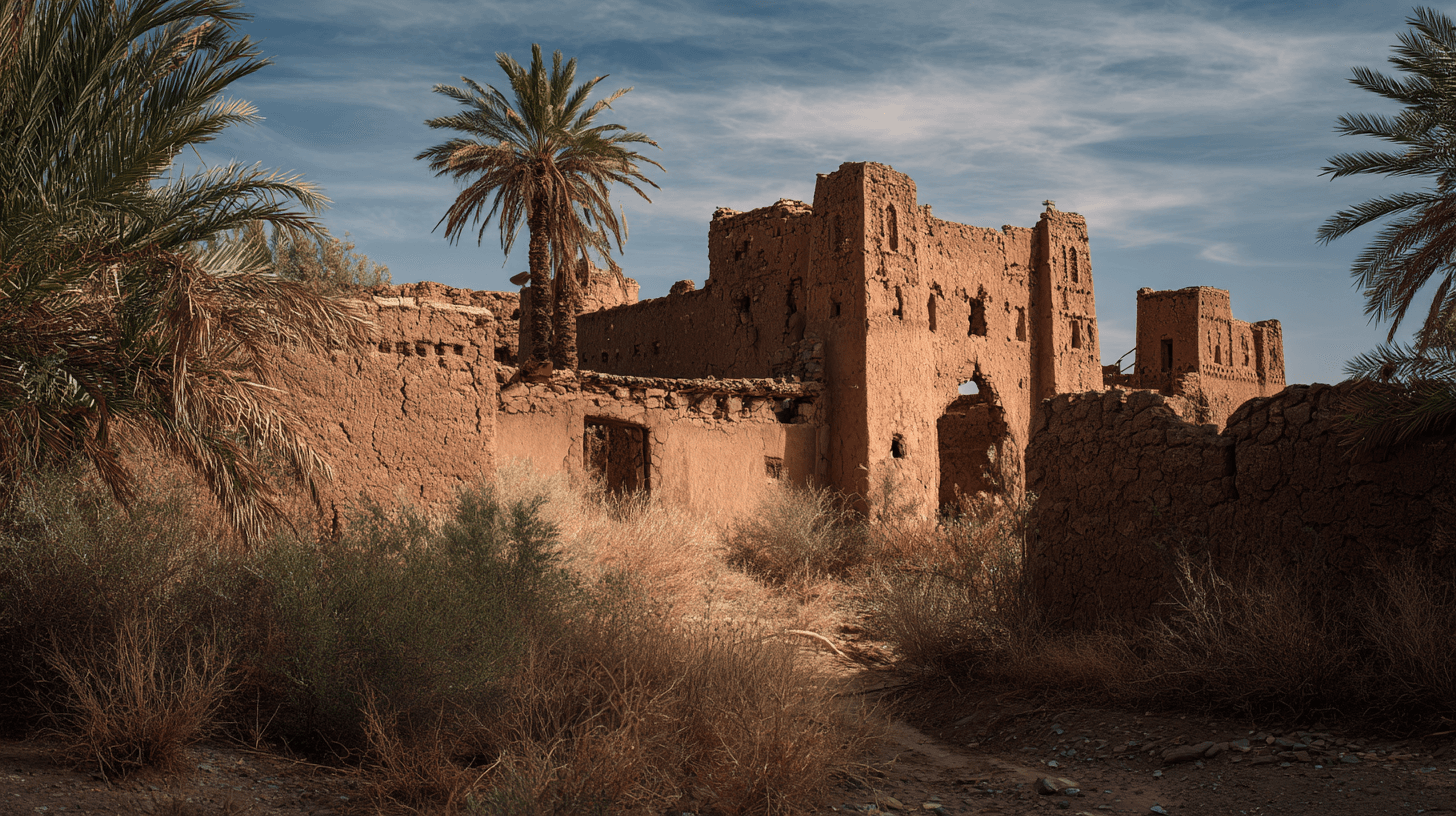
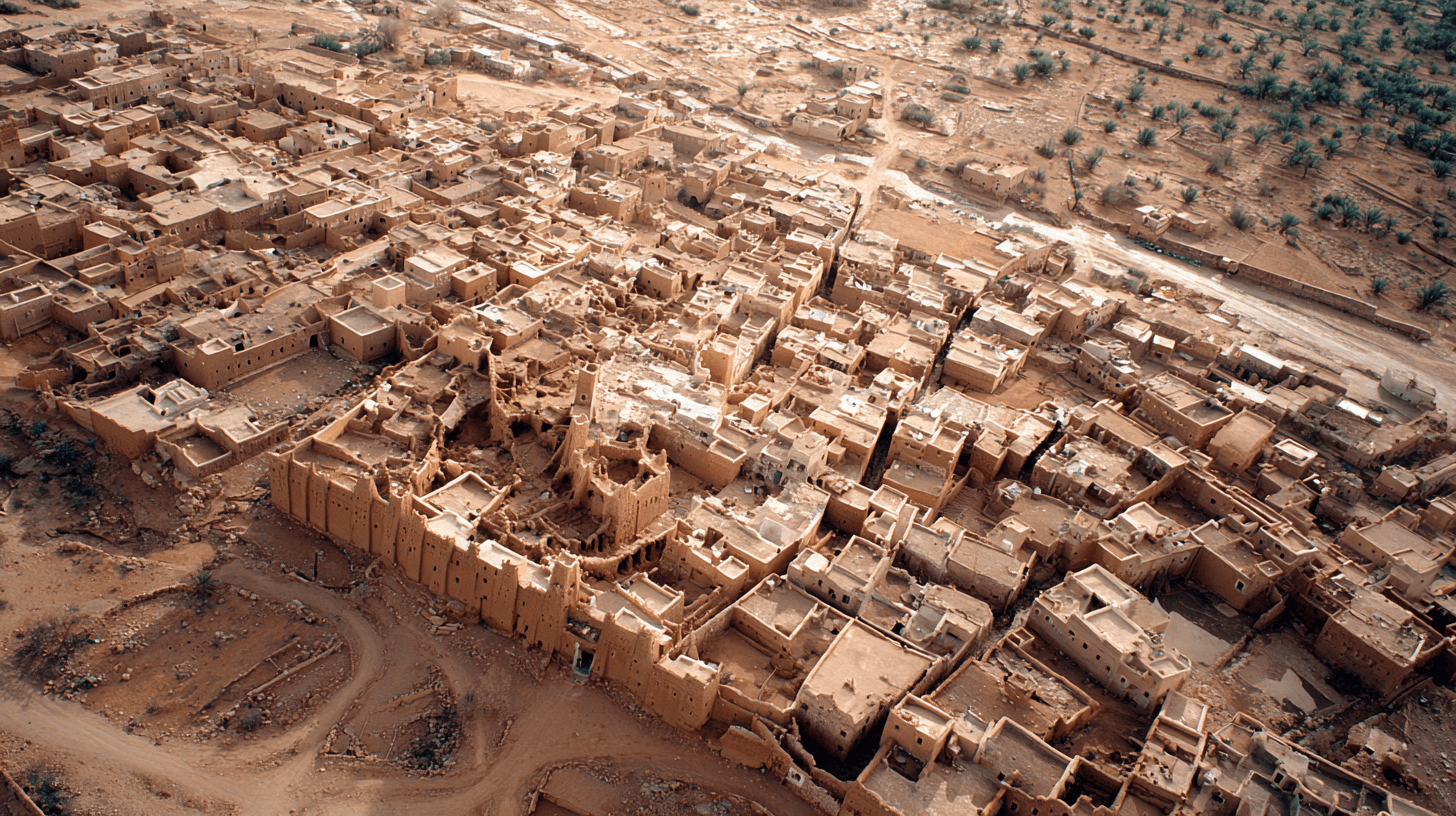
Marrakech has always been a city of earth. The medina walls are rammed clay — pisé — and so are the kasbahs, the riads, the palaces. But modern construction requires something harder. The roads need aggregate. The foundations need fill. The terraces need pavers. The stone comes from somewhere, and for Marrakech, that somewhere is often the plateau to the southwest.
The quarries are invisible from the camps — mostly. The operators know which ridgelines hide the extraction, which valleys keep the dust and noise at bay. Occasionally, early-morning hikers discover the truth: that the romantic desert landscape is also an industrial one, its resources being harvested like any other.
This is not a scandal. It is simply how places work. The stone that builds the tourist hotels comes from the same land the tourists visit. The concrete in the airport runway came from somewhere nearby. The marble in the hammam was cut from a hillside. Every city is made of its surroundings, and the Agafay is part of what Marrakech is made of.
The ancient Marrakechis understood this. They built with what was underfoot — clay and straw for walls, palm trunks for beams, stone where strength was needed. The aesthetic we admire in the medina is not a choice separate from materials. It is a consequence of materials. The buildings look like the earth because they are the earth.
The modern city has expanded that equation. Steel comes from abroad. Glass comes from factories. But the basic fill, the stuff beneath the streets, the aggregate in the concrete — much of that still comes from the plateau, from quarries that have operated, in some form, for generations.
The tension is real. The camps sell emptiness, solitude, a landscape untouched by time. The quarries extract that same landscape, truck by truck, and send it to construction sites where it becomes foundations and roads. Both industries want the same thing — the Agafay — and both are changing it, in different ways.
At sunrise, before the trucks start, you can stand on a ridge and see nothing but stone desert stretching to the Atlas. No camps. No quarries. No evidence of anything but geology and time. The view is accurate and incomplete. Behind every horizon, something is happening that the view does not include.
The Facts
- •Quarries operate in the Agafay region, often hidden from tourist areas
- •Stone and aggregate used in Marrakech construction
- •Traditional Marrakech construction uses local materials: pisé (rammed earth), palm wood, local stone
- •Modern construction requires harder materials: concrete aggregate, road fill
- •Extraction and tourism coexist uneasily on the same plateau
- •Early morning hikers sometimes discover quarry operations
- •Industrial activity predates tourism boom
- •Sustainable tourism advocates call for better land-use planning