The Queen Who Built Fez
Fatima al-Fihri and the world's oldest university
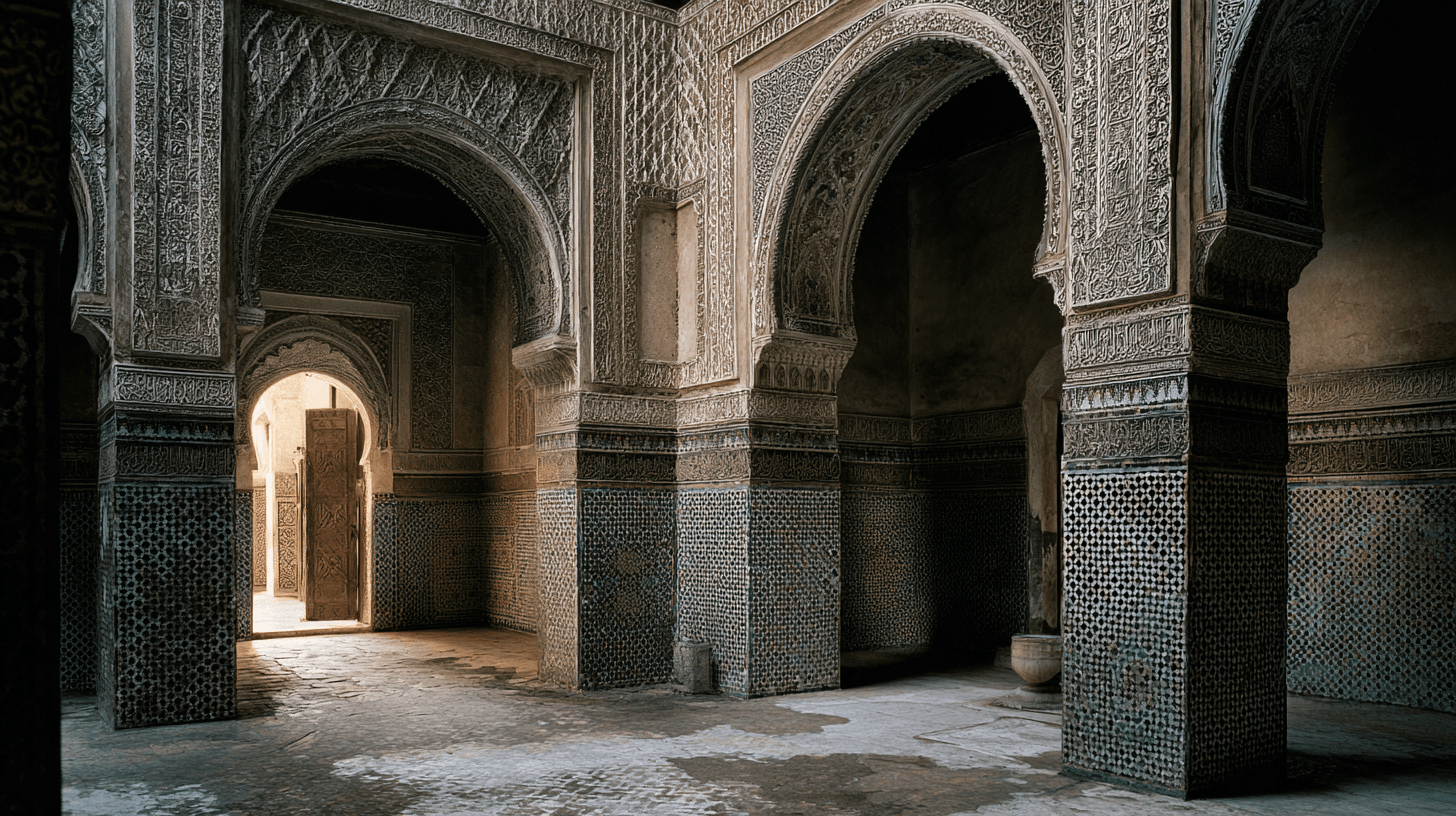
The year was 859 CE. In the young city of Fez, a woman named Fatima al-Fihri began construction on a mosque. She had inherited money from her father, a wealthy merchant who had migrated from Kairouan (in modern Tunisia), and she spent it all on the project. The mosque was completed in 877. Today it is called Al-Qarawiyyin—and it holds a Guinness World Record as the oldest continuously operating educational institution on Earth.
Fatima al-Fihri is not a legend; she is documented. Contemporary sources confirm she commissioned and funded the mosque. Her sister Maryam built another mosque, Al-Andalusiyyin, in the same period. Two sisters, two mosques, both still standing.
What grew around Fatima's mosque was extraordinary. By the 10th century, Al-Qarawiyyin had evolved from a place of worship into a center of learning. Students came from across the Islamic world to study theology, grammar, rhetoric, logic, medicine, mathematics, astronomy, chemistry, and geography. The great geographer Al-Idrisi studied there. So did the philosopher Ibn Rushd (Averroes). So, possibly, did Pope Sylvester II—then known as Gerbert of Aurillac—who is credited with introducing Arabic numerals to Europe.
The comparison to European universities is telling. Bologna, often called the oldest university in Europe, was founded in 1088—over two centuries after Al-Qarawiyyin. Oxford dates to 1096. Cambridge to 1209. The Sorbonne to 1257. When these institutions were taking their first steps, Al-Qarawiyyin already had a library of 4,000 manuscripts.
The institution survived the Almoravids, the Almohads, the Marinids, the Wattasids, the Saadians, the Alaouites, the French protectorate, and independence. It is still operating. Students still study there. The mosque still holds Friday prayers.
But Fatima herself remains elusive. We know she was pious. We know she fasted throughout the construction, refusing to eat until the building was complete. We know she died in Fez, though the date is uncertain. We don't know what she looked like, what else she said, or what she thought about the institution that would carry her legacy for 1,200 years.
What survives is the building. What survives is the library, which underwent a major restoration completed in 2016 and now allows scholars access to manuscripts that had been locked away for decades. What survives is the idea: that a woman in 9th-century Morocco could fund an institution that would outlast empires.
The Guinness certificate is nice. The reality is better.
The Facts
- •Founded 859 CE‚ÄîGuinness certified oldest university
- •Bologna founded 1088, Oxford 1096, Cambridge 1209
- •Library held 4,000 manuscripts by 10th century
- •Fatima fasted throughout construction
- •Sister Maryam built Al-Andalusiyyin mosque
- •Library restoration completed 2016
- •Ibn Rushd and Al-Idrisi studied there
Sources
- UNESCO World Heritage documentation
- Guinness World Records
- Makdisi, The Rise of Colleges (1981)
- Bennison, The Almoravid and Almohad Empires (2016)