The Saffron Harvest
Taliouine and the most expensive spice
4 AM. The headlamps bob across the field like fireflies. The flowers opened overnight. They must be picked before the sun finds them.
Taliouine, in the Anti-Atlas, produces most of Morocco's saffron — itself a significant fraction of the world supply. For two weeks each November, the purple crocus flowers bloom. And for those two weeks, everything else stops.
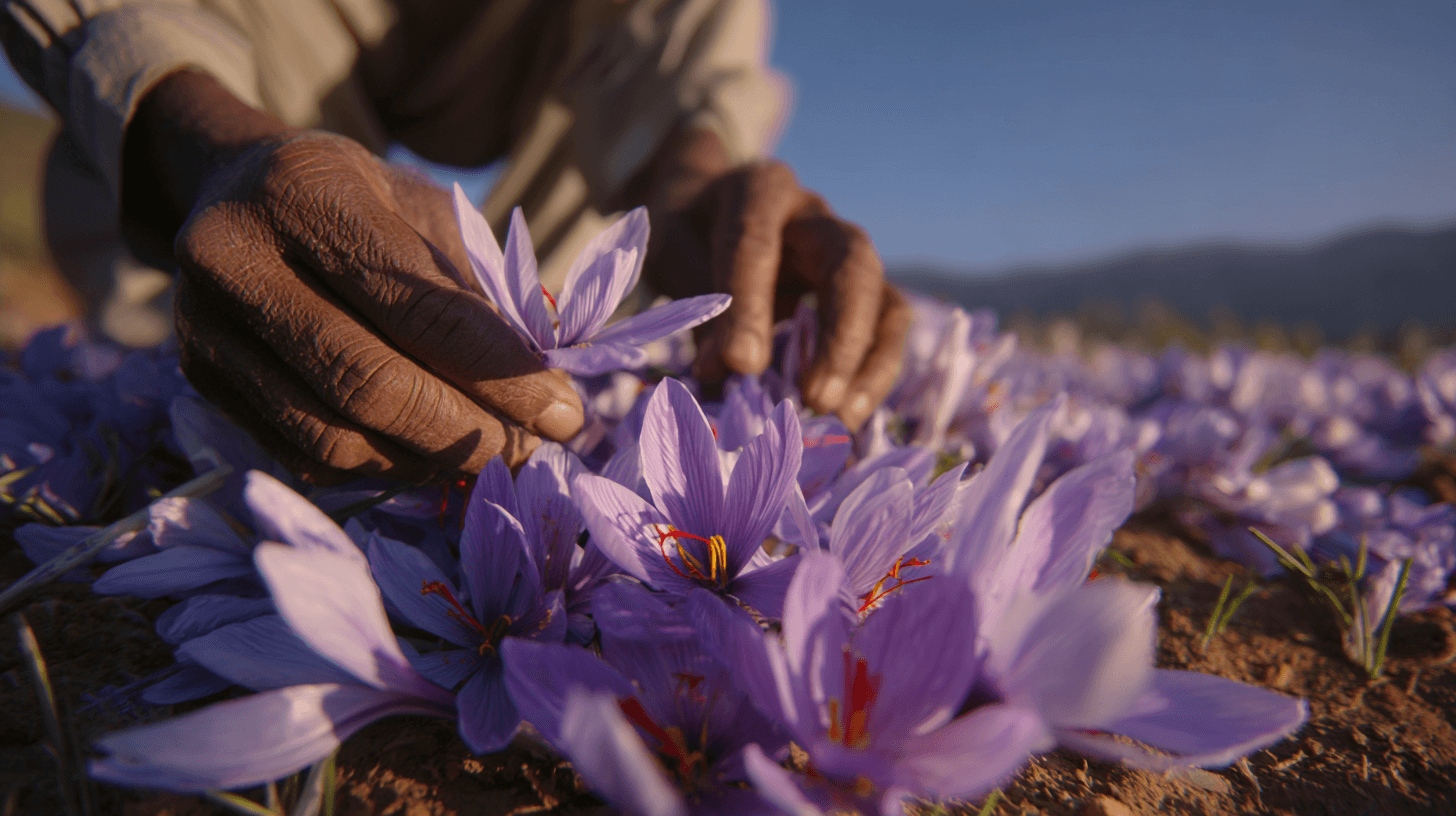
The flowers must be harvested before sunrise. Once the sun touches them, they open fully, and the three red stigmas — the only part that matters — become harder to extract. Worse, heat degrades the volatile compounds that give saffron its color, flavor, and value. Speed is not preference. It is necessity.
Workers move through the fields in darkness, each carrying a basket, each plucking flowers with movements made automatic by years of practice. A good picker can harvest several thousand flowers before dawn. Several thousand flowers yield perhaps 30 grams of dried saffron. The math is punishing.
After picking comes separation. The flowers are laid out on tables where women — always women, for this delicate work — remove the three stigmas from each bloom. They work in groups, talking softly, their fingers moving with precision that seems impossible at such speed. The petals and stamens are discarded. Only the red threads are kept.
The stigmas must be dried immediately, traditionally over gentle heat from charcoal. Too much heat destroys the saffron. Too little allows mold to grow. The dried threads shrink to a fraction of their fresh weight, concentrating the compounds that make saffron worth more per gram than gold.
The price is not arbitrary. It reflects labor so intensive that no machine has ever successfully replicated it. One kilogram of dried saffron requires 150,000 to 200,000 flowers, each picked by hand, each separated by hand. The harvest window is two weeks. The flowers bloom once per year.
In Taliouine, the cooperative system ensures that farmers receive fair prices. The saffron carries geographical indication protection, like champagne. When you buy Taliouine saffron, you are buying not just a spice but the specific labor of a specific place, hands that have harvested these flowers for generations, knowledge that cannot be outsourced or accelerated.
The headlamps move through the darkness. The baskets fill. Somewhere, the sun prepares to rise. The race continues.
The Facts
- •Taliouine produces 90%+ of Moroccan saffron
- •Harvest window: approximately 2 weeks in November
- •Flowers must be picked before sunrise
- •150,000-200,000 flowers yield 1kg dried saffron
- •Three red stigmas per flower are used
- •Morocco is 4th largest global producer
- •Price: $5,000-10,000+ per kilogram
- •Geographical indication protection since 2010
Sources
- Fernández, José-Antonio. 'Biology and Uses of Saffron.' Springer
- Moroccan Ministry of Agriculture documentation
- Taliouine Saffron Cooperative records