The Same Spirit
Gnawa and Voodoo share the same roots
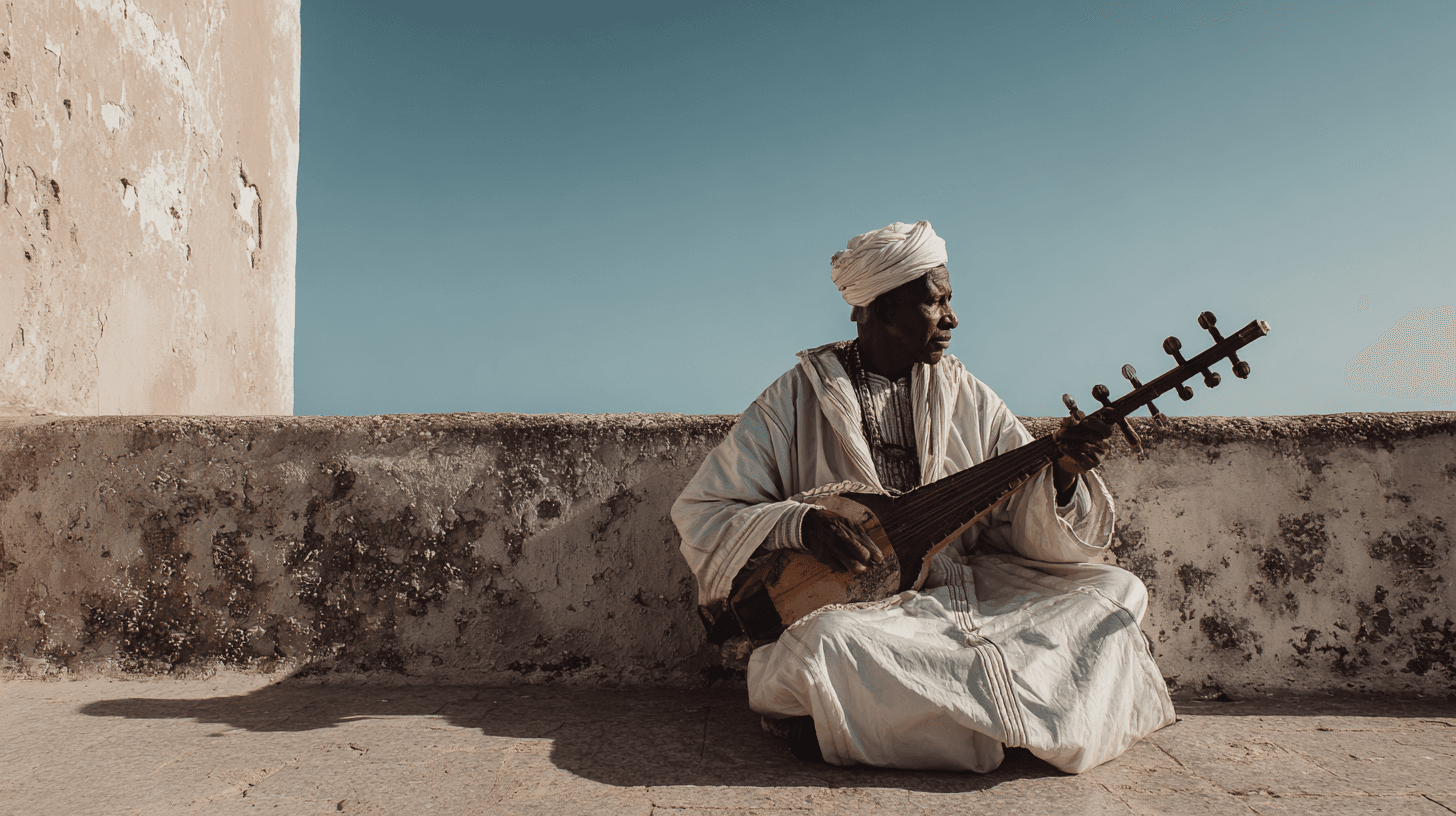
In the Gnawa ceremonies of Essaouira, musicians enter a trance state called jedba. The bass notes of the guembri, a three-stringed lute made of camel skin, drive the rhythm. Dancers wear colored cloths: black for Sidi Mimoun, blue for Sidi Moussa, white for Lalla Mira. Each color summons a different spirit, a mlouk.
In the Vodou ceremonies of Haiti, participants enter a trance state called possession. The drums‚ three of them, consecrated to the spirits‚ drive the rhythm. Practitioners wear colored scarves and clothes: white for Damballa, blue for Agwe, red and black for Petro spirits. Each color invokes a different lwa.
The parallels are not coincidental. They are the echo of a shared origin.
The Gnawa trace their ancestry to sub-Saharan Africans brought to Morocco as slaves, beginning in the 16th century and intensifying after Ahmad al-Mansur's conquest of Timbuktu in 1591. They came from the Sahel, from the Hausa and Bambara peoples, and they brought their spiritual practices with them.
The Haitian Vodou tradition traces to the same region‚ the Fon and Ewe peoples of Dahomey and the Yoruba of Nigeria. When the Atlantic slave trade carried them to Saint-Domingue, they brought their spirits with them.
Both traditions fused West African beliefs with the religion of their captors. The Gnawa adopted Sufism, wrapping their spirits in Islamic saints. The Haitians adopted Catholicism, disguising their lwa as Catholic saints. Both found in trance a space for the spirits to speak.
The musicology confirms what the rituals suggest. The pentatonic scales of Gnawa music resemble the scales of Haitian Vodou drumming. The call-and-response patterns are cognate. The function of the music‚ to summon spirits into human bodies‚Äîis identical.
Morocco's Gnawa were not shipped across the Atlantic. They stayed in North Africa, becoming part of Moroccan culture over centuries. But they remember the same Africa that Haitian Vodou remembers. The Atlantic Ocean separated two branches of a single tradition.
Today, Gnawa music has entered the world music circuit. The annual Gnawa and World Music Festival in Essaouira draws musicians from across the globe. Collaborations with jazz and blues artists are common, and those collaborations carry their own resonance, since blues and jazz themselves descend from enslaved African musical traditions.
The spirits know each other. The music knows itself.
The Facts
- •Gnawa trace to sub-Saharan slaves from 16th century
- •Timbuktu conquest 1591 intensified slave trade
- •Spirits called mlouks in Morocco, lwa in Haiti
- •Same colors invoke corresponding spirits
- •Pentatonic scales shared
- •Gnawa Festival in Essaouira annually
- •Both traditions fused African beliefs with captors' religion
Sources
- Baldassarre, 'Gnawa Music in Morocco' (2010)
- Jankowsky, Stambeli (2010)
- Thompson, Flash of the Spirit (1983)