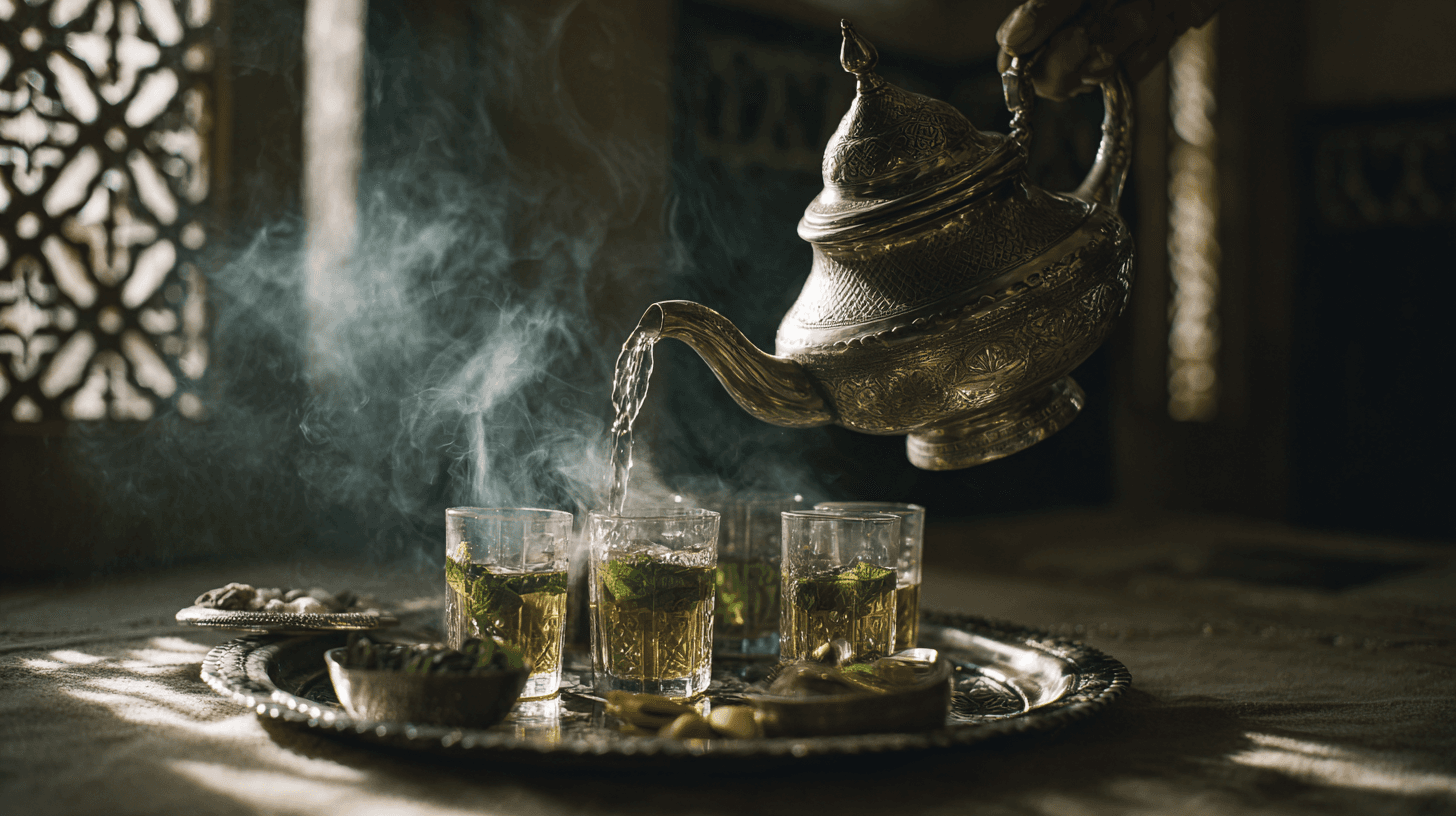
The Three Glasses
The code hidden in mint tea
The first glass is bitter as death. The second is strong as life. The third is sweet as love. You will be served all three. Refusing any is an insult. This is the code.
No one knows exactly when the Moroccan tea ritual began. The drink itself arrived late — Chinese gunpowder tea reached Morocco only in the 18th or 19th century, a gift from British merchants. But the ritual that formed around it is entirely Moroccan, and it's older than the tea. The hospitality code was waiting for the right vessel.
Watch how it's made. The pot is rinsed with boiling water. A fistful of gunpowder tea goes in — the tight-rolled green pellets that unfurl as they steep. A massive block of sugar follows. Then fresh mint, stuffed until the pot can hold no more. More boiling water. And then the waiting.
The first brew is poured into a glass and poured back into the pot. This is the "spirit" — it cleans the tea, tests the strength, begins the oxygenation. Back and forth, glass to pot, pot to glass. The server is tasting, adjusting, making decisions you cannot see.
Then the pour. From height — a foot, sometimes two feet above the glass — the tea falls in a controlled arc. This isn't performance. The height cools the tea, mixes the sugar, creates the foam that should crown each glass. A pour without foam is a pour without skill.
Three glasses is the minimum. "The first glass is as gentle as life," goes one version of the proverb, "the second is as strong as love, the third is as bitter as death." The order varies by teller. The meaning doesn't: you drink all three. You stay long enough to drink all three. Time is being given. Time must be received.
To refuse tea in Morocco is to refuse the host. It doesn't matter if you're late, full, diabetic, or hate mint. You drink. You might hold the glass without sipping much. You might claim a stomach ailment, inshallah. But the glass must go in your hand, and you must stay until three have been offered.
This is business protocol, family protocol, stranger protocol. The tea creates a space outside transaction. Whatever you came to negotiate, you negotiate after the third glass. The tea room is neutral territory. Wars have paused for tea. Feuds have thawed. The ritual is not about the drink. The ritual is about the time — the enforced slowness, the hospitality that cannot be rushed.
The pot empties. The host begins the process again. In a Moroccan home, the tea never ends. It is refilled before you notice it emptying. This is the code: as long as you are here, you are held. The third glass is as sweet as love, and there is always another third glass.
The Facts
- •Chinese gunpowder green tea arrived in Morocco 18th-19th century
- •'Atay' (tea) became national drink, replacing earlier beverages
- •Fresh spearmint (nana) is traditional; other herbs regional
- •Sugar is essential — traditionally whole cones, now cubes
- •Pour from height aerates tea and creates foam
- •Three glasses minimum for hospitality
- •Refusing tea is serious social offense
- •Tea service traditionally performed by male head of household
- •Modern variations include adding orange blossom, saffron, or verbena