The Thuya Woodworkers
Essaouira and the buried roots
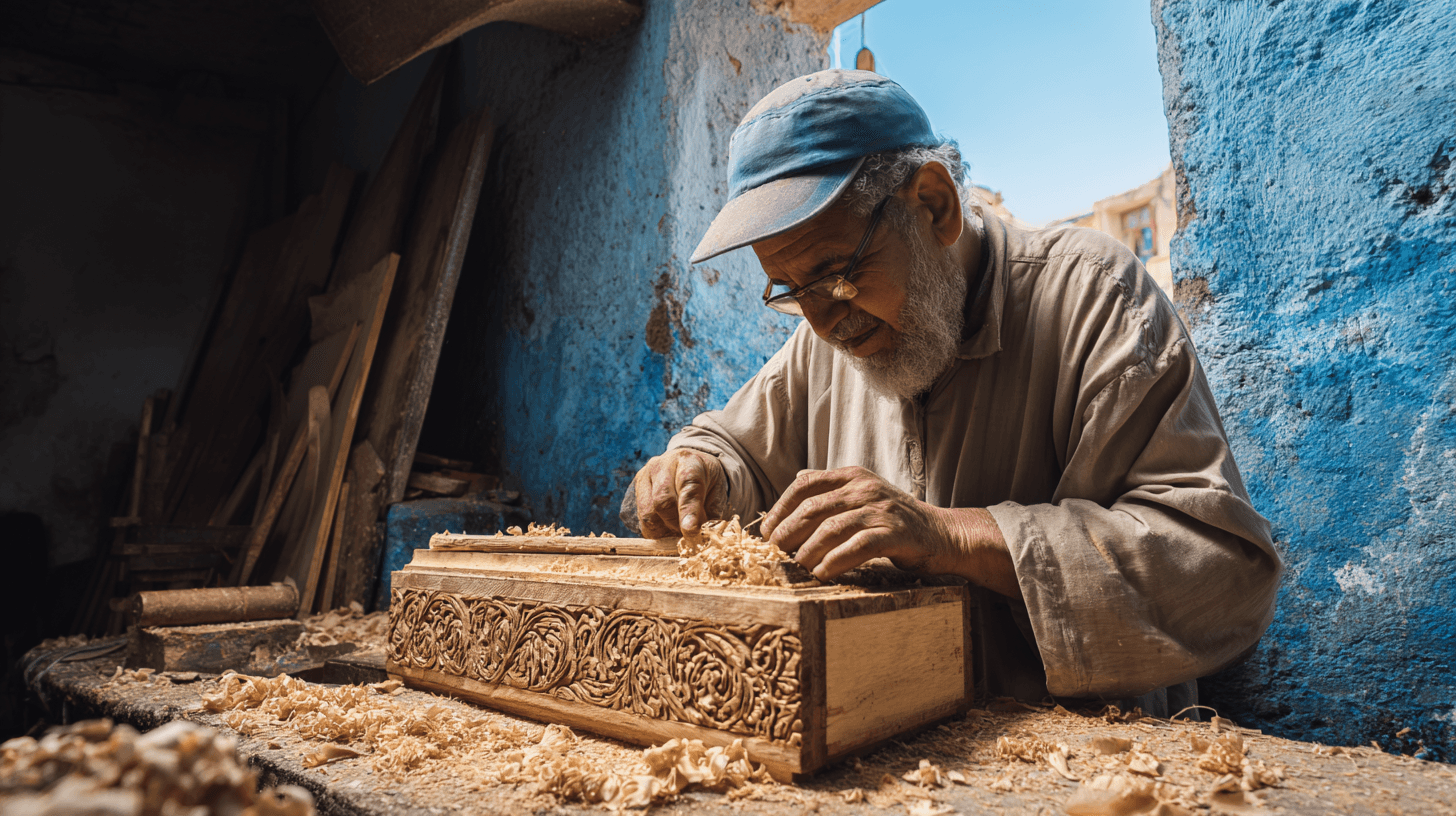
The wood comes from the roots, not the trunk. Burled, twisted, dense with patterns no tree planned. He holds a block to the light, reading the grain like scripture.
Thuya (Tetraclinis articulata) grows only in a narrow strip of Morocco, from Essaouira to the High Atlas. The trees are modest — rarely exceeding ten meters — but their roots, buried in rocky soil, develop burls of extraordinary density and figure. When sliced, the wood reveals galaxies: swirling grain patterns that look like aerial photographs of storms, like topographic maps of imaginary continents, like nothing else in the world of wood.
The craft is centered in Essaouira, where workshops line the streets of the medina and the smell of cedar (used for less visible parts) mixes with the sweeter scent of thuya. The marquetry tradition here dates to the 18th century, when the port's connections to Europe created a market for luxury goods.
The process is meticulous. The raw burl is sliced into thin sheets, each one unique. A craftsman studies the grain, deciding which patterns suit which purposes. The veneer is laid over a base of cedar or cheaper wood, fitted precisely, then polished until it glows. The finish is traditionally lemon juice and beeswax — nothing synthetic — creating a luster that deepens with age.
The finest work involves inlay. Thin strips of thuya, lemon wood, ebony, and mother-of-pearl are cut and fitted into geometric patterns — stars, interlocking polygons, arabesques. A single box lid might contain a thousand individual pieces, each cut by hand, each fitted without visible gaps.
The market has cheapened some of the work. Tourist shops sell boxes mass-produced from inferior wood with synthetic finishes. The tourist cannot tell the difference. The craftsman can, and it pains him.
But the masters remain. In the quieter workshops, away from the main streets, men still work as their fathers worked. They still let the wood tell them what it wants to become. They still cut inlay pieces so fine they must be handled with tweezers. The thuya burls, slowly accumulated over decades of growth, become boxes that will last centuries — spiral galaxies of wood grain, held in human hands, passing from maker to keeper in an exchange as old as beauty itself.
The Facts
- •Thuya grows only in specific Moroccan regions
- •Burls form underground over decades
- •Wood density makes it difficult to work
- •Essaouira is primary production center
- •Inlay tradition dates to 18th century
- •Traditional finish: lemon juice and beeswax
- •Master craftsmen train for 10+ years
- •Thuya is protected species — only fallen/dead trees legally harvested
Sources
- Skilton, Charles. 'The Wood Carvers of Morocco.' Crafts Council
- Lonely Planet Morocco
- Moroccan Ministry of Handicrafts documentation