The Anatomy of a Riad
Courtyard, fountain, zellige, tadelakt — 12 elements, 6 passive climate systems, 0 street-facing windows
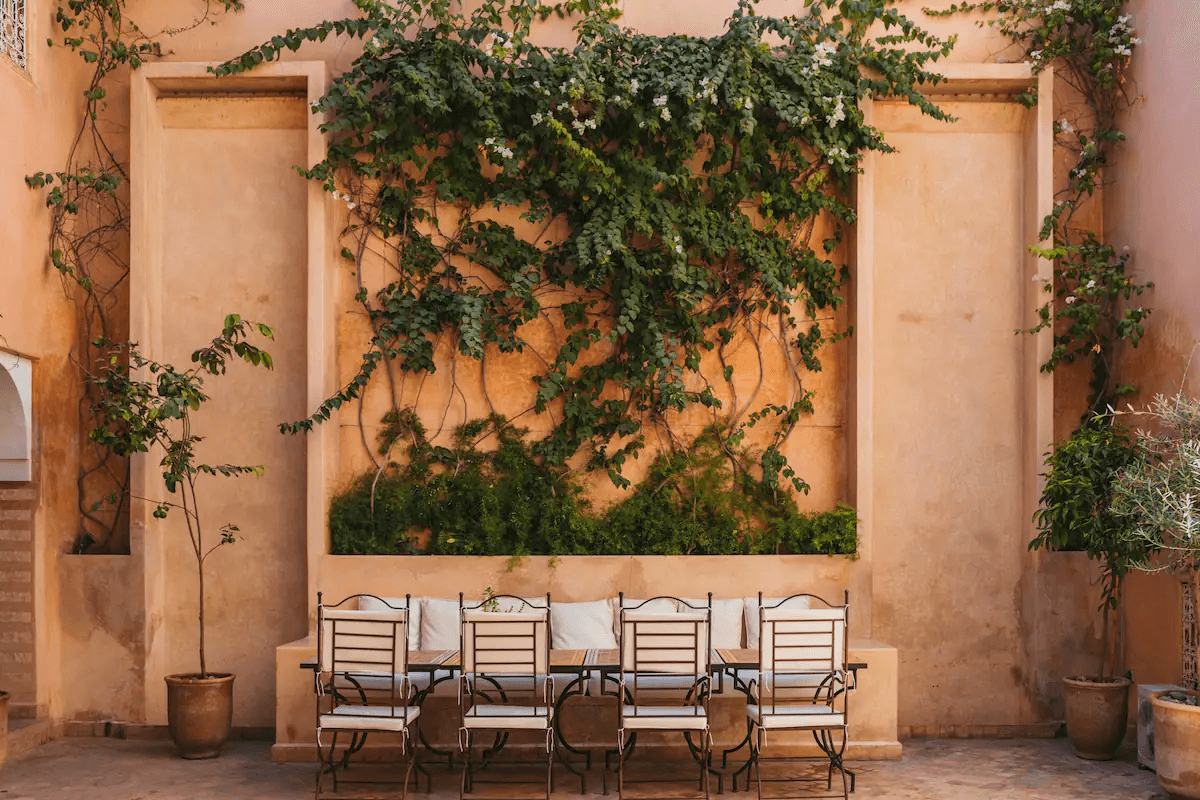
The word riad comes from the Arabic ryad — garden. But the building is not about the garden. It is about the relationship between interior and exterior, between family and street, between earth and sky.
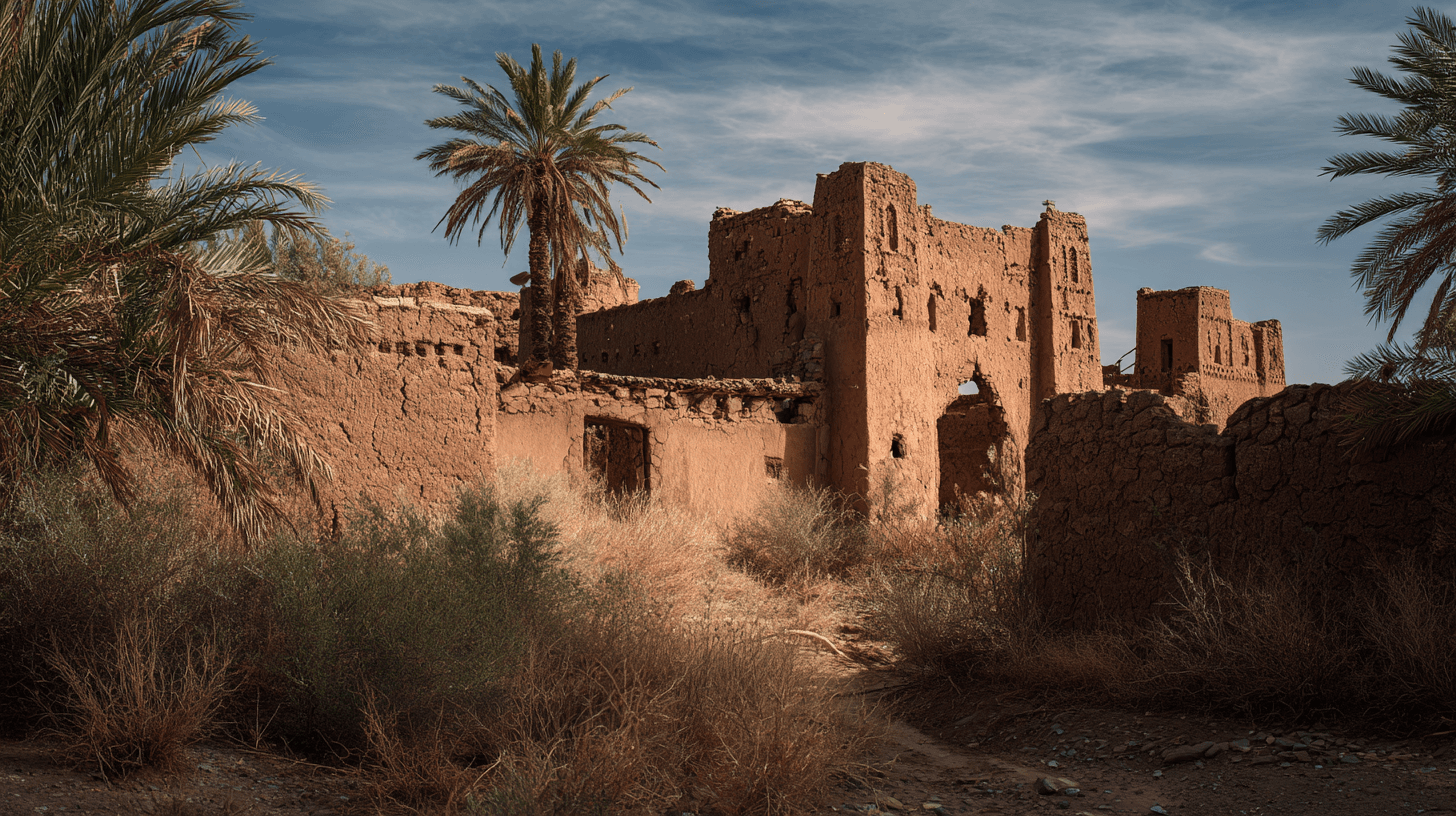
From the outside, a riad shows nothing. No windows face the derb. The entrance is a bent passage — a chicane — designed so that even with the door open, nobody can see inside. Privacy is not a feature. It is the architecture.
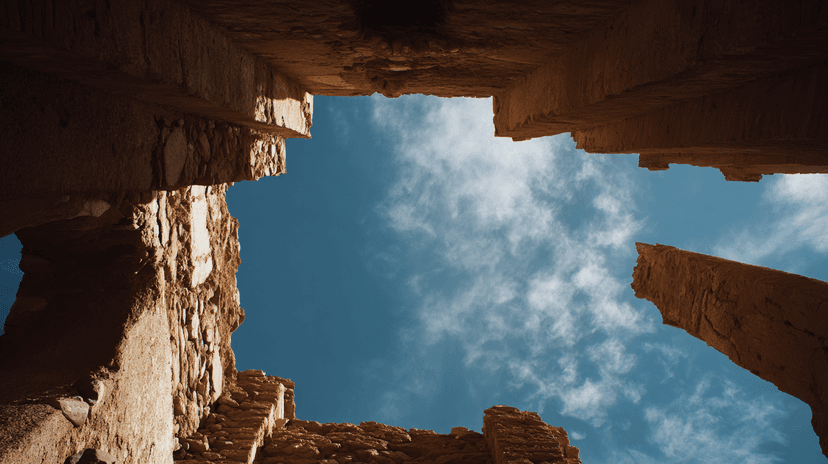
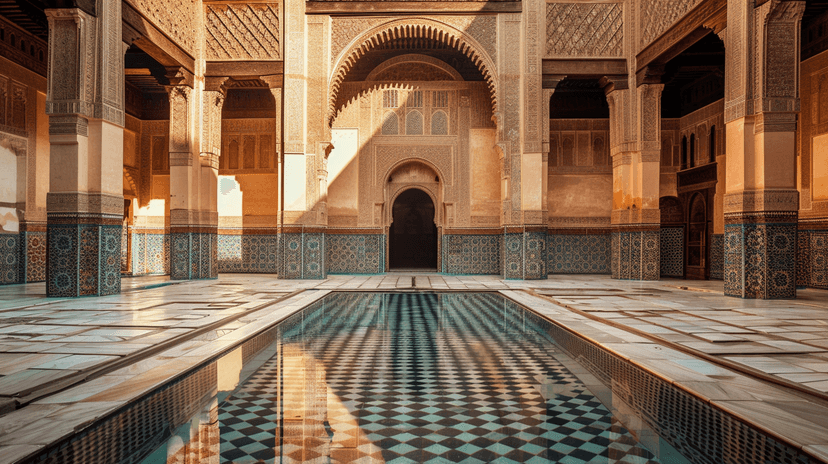
Inside, the courtyard is the lung. Open to the sky, it creates a microclimate. Hot air rises out of the central void. Cool air is drawn in at ground level through the tiled floors and the fountain basin. The temperature difference between a riad courtyard and the street outside can reach 8°C in summer. No compressor. No fan. Just geometry.
The fountain at the centre is not decoration. Moving water cools air through evaporation and masks sound from the street. The zellige tilework on the walls is not merely beautiful — glazed ceramic is a thermal mass that absorbs heat during the day and releases it slowly at night.
Tadelakt, the polished lime plaster found in hammams and wet rooms, is waterproof without any synthetic sealant. It is made from limestone fired at 900°C, mixed with local pigment, polished with river stones, and sealed with olive oil soap. The technique is at least 500 years old.
The moucharabieh — carved wooden screens on upper windows — filters light and allows air circulation while maintaining privacy. Women could observe the courtyard or the street without being seen. It is ventilation, light control, and social architecture in a single element.
Cedar wood from the Middle Atlas forms the ceilings, doors, and structural beams. Cedar contains natural oils that repel insects — a passive pest control system that has functioned for centuries.
Gebs — carved plaster — covers the upper walls with geometric and floral patterns. Unlike zellige, which is assembled from cut pieces, gebs is carved freehand into wet plaster. A master gebs carver works with no template.
Every element serves at least two purposes. Every surface manages heat, light, water, or sound. The riad is not a style. It is an engineering solution to living well in a hot, dense, ancient city.
Explore the full interactive module — with architectural diagrams, passive climate systems, and the 12-element breakdown — at Dancing with Lions: https://www.dancingwiththelions.com/data/anatomy-of-a-riad
Interactive Module
Data and visualisation by Dancing with Lions